

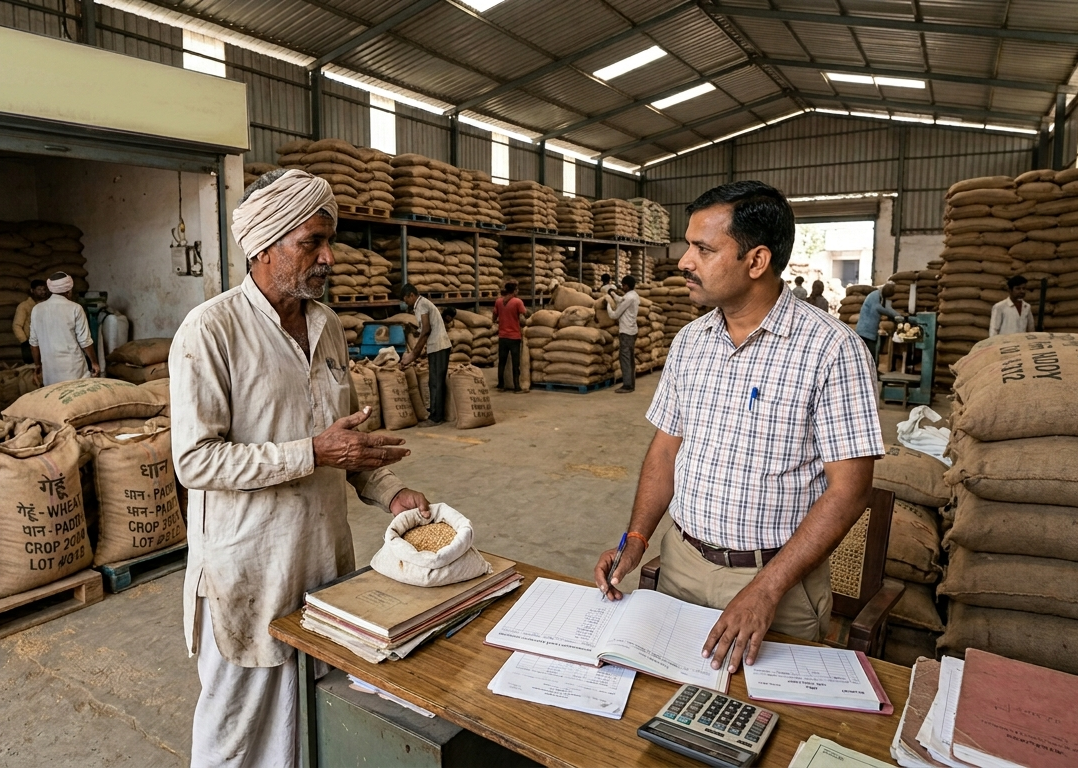
Harvest season should ideally be the most rewarding time for farmers and agri-traders. But in reality, it often becomes the most financially stressful.
Why?
Because the moment crops arrive in the market, prices tend to come under pressure. Supply increases rapidly, storage access remains uneven, and many farmers are forced to sell immediately, not because they want to, but because liquidity cannot wait.
This is where one financial tool is becoming far more important in Indian agriculture than most people realise: Warehouse Receipt Finance.
At first glance, it may sound like just another lending product. But in reality, it has the potential to reshape how agricultural commodities are stored, financed, and traded after harvest.
And as India’s agricultural ecosystem becomes more integrated and data-driven, Warehouse Receipt Finance could emerge as one of the most critical pillars of post-harvest agriculture.
The real problem begins after harvest
India’s agricultural production continues to rise steadily. India has set a food production target of 362.5 Million Tonnes in 2025-26. But post-harvest liquidity continues to remain a major challenge across the ecosystem. Farmers, traders, processors, and agri businesses often require immediate working capital after harvest:
- to manage operations,
- repay short-term obligations,
- fund procurement,
- or plan the next crop cycle.
Without adequate financing access, many are forced into distress selling, offloading commodities immediately, even when market conditions are unfavourable. This affects not just farmers, but overall supply-chain efficiency.
So, what exactly is Warehouse Receipt Finance?
The concept is relatively simple.
When agricultural commodities are stored in a recognised warehouse, the depositor receives a warehouse receipt, a document representing ownership of the stored commodity. That receipt can then be used to access financing without immediately selling the stock.
In other words, commodities themselves become working capital. This changes the entire post-harvest dynamic. Instead of selling under pressure, farmers and agri businesses gain the flexibility to:
- hold inventory strategically,
- wait for better market conditions,
- improve cash flow,
- and manage supply-chain operations more efficiently.
And as India’s warehousing ecosystem becomes increasingly digitised through electronic Negotiable Warehouse Receipts (e-NWRs), the process is becoming more transparent and scalable.
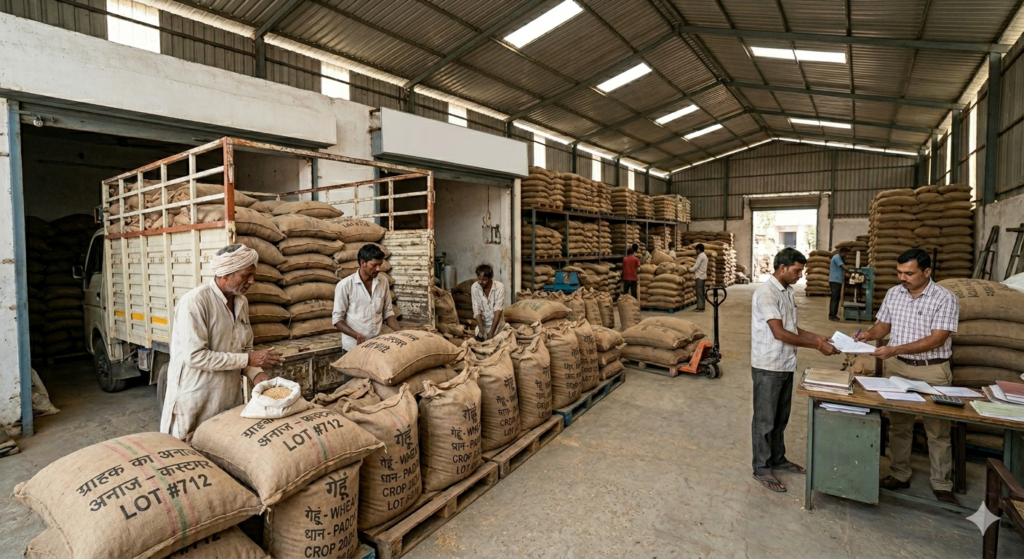
Why is it important
Agriculture today is increasingly about timing, visibility, and liquidity. Modern agricultural supply chains move fast. Commodity prices fluctuate rapidly. Procurement windows are becoming more dynamic. Export opportunities can emerge suddenly.
In such an environment, immediate distress selling creates inefficiencies across the ecosystem. Warehouse Receipt Finance helps reduce that pressure. More importantly, it creates stronger integration between:
- storage,
- financing,
- trade,
- and supply-chain movement.
This is why the future of agricultural finance may increasingly depend on post-harvest intelligence rather than just conventional lending.
Globally, commodity-backed financing and inventory-linked lending models are gaining importance as supply chains become more data-driven and integrated.
Warehousing is becoming financial infrastructure
Traditionally, warehouses were viewed mainly as storage facilities. Today, they are becoming much more than that. Modern warehousing ecosystems now influence:
- financing access,
- commodity traceability,
- collateral management,
- procurement planning,
- and supply-chain visibility.
This is especially important in agriculture because inventory itself carries significant financial value. When warehouses become digitised and inventory visibility improves, financing becomes faster, more transparent, and more scalable.
In many ways, warehouses are gradually evolving into financial infrastructure for agriculture. And that is one of the biggest structural shifts happening in the sector today.
How Agriwise fits into this ecosystem
As agricultural finance evolves, Agriwise Finserv is strengthening the connection between warehousing, trade, and liquidity. Agriwise offers Warehouse Receipt Finance solutions designed to help farmers, traders, and agri businesses unlock working capital against stored commodities instead of immediately liquidating inventory.
What makes this increasingly relevant is the broader integrated ecosystem surrounding it. As part of the larger StarAgri ecosystem, Agriwise operates within a connected agricultural infrastructure that includes:
- warehousing,
- collateral management,
- digital agri trade,
- and AI-led agricultural intelligence.
This integration becomes important because financing decisions in agriculture are becoming increasingly data-driven. Better warehouse visibility, digitised inventory systems, and stronger commodity intelligence can help create faster and more efficient post-harvest financing ecosystems.
Today, Agriwise has partnered with 25+ banks and financial institutions and has facilitated disbursements exceeding ₹2,500 crore across agricultural financing solutions.

The future of agricultural liquidity may be inventory-led
For years, agriculture focused heavily on production financing. But the next phase of agricultural finance may revolve around inventory financing. Because after harvest, commodities are not just produce sitting in storage. They are valuable, waiting to move through the supply chain.
And the ability to unlock liquidity without forcing immediate sale could become one of the biggest advantages in modern agriculture.
Warehouse Receipt Finance could become one of the most important financial tools supporting a smarter, more resilient, and more connected agricultural ecosystem in India.
FAQs
- What is Warehouse Receipt Finance?
Warehouse Receipt Finance allows farmers and agri businesses to access loans against commodities stored in recognised warehouses. - How does Warehouse Receipt Finance help farmers?
It helps farmers avoid distress selling by enabling them to access liquidity without immediately selling stored produce. - What is an e-NWR?
An electronic Negotiable Warehouse Receipt (e-NWR) is a digitised warehouse receipt issued against stored commodities in WDRA-registered warehouses. - Why is post-harvest financing important in agriculture?
Post-harvest financing improves liquidity, supports better price realisation, and helps strengthen agricultural supply chains. - How does Agriwise support warehouse-backed financing?
Agriwise offers Warehouse Receipt Finance solutions integrated with broader warehousing and agricultural ecosystems.
Disclaimer
The content published on this blog is provided solely for informational and educational purposes and is not intended as professional or legal advice. While we strive to ensure the accuracy and reliability of the information presented, Agriwise make no representations or warranties of any kind, express or implied, about the completeness, accuracy, suitability, or availability with respect to the blog content or the information, products, services, or related graphics contained in the blog for any purpose. Any reliance you place on such information is therefore strictly at your own risk. Readers are encouraged to consult qualified agricultural experts, agronomists, or relevant professionals before making any decisions based on the information provided herein. Agriwise, its authors, contributors, and affiliates shall not be held liable for any loss or damage, including without limitation, indirect or consequential loss or damage, or any loss or damage whatsoever arising from reliance on information contained in this blog. Through this blog, you may be able to link to other websites that are not under the control of Agriwise. We have no control over the nature, content, and availability of those sites and inclusion of any links does not necessarily imply a recommendation or endorsement of the views expressed within them. We reserve the right to modify, update, or remove blog content at any time without prior notice.