
Category Archives: Uncategorized

8 Things Farmers Check Before Choosing The Right Agri Finance Partner

November 26, 2025

Choosing the right agri finance partner can shape the entire farming journey from timely sowing to profitable harvesting. As of 2025, India’s agricultural credit ecosystem has grown significantly, with institutional farm credit crossing ₹18 lakh crore annually and Kisan Credit Card (KCC) coverage extending to over 7.7 crore farmers. With more formal lenders entering rural markets, farmers now have options, but the right choice depends on careful evaluation.

But the question is, what should farmers assess before selecting an agri finance partner? How specialised institutions like Agriwise simplify access to structured, farmer-first financial solutions?

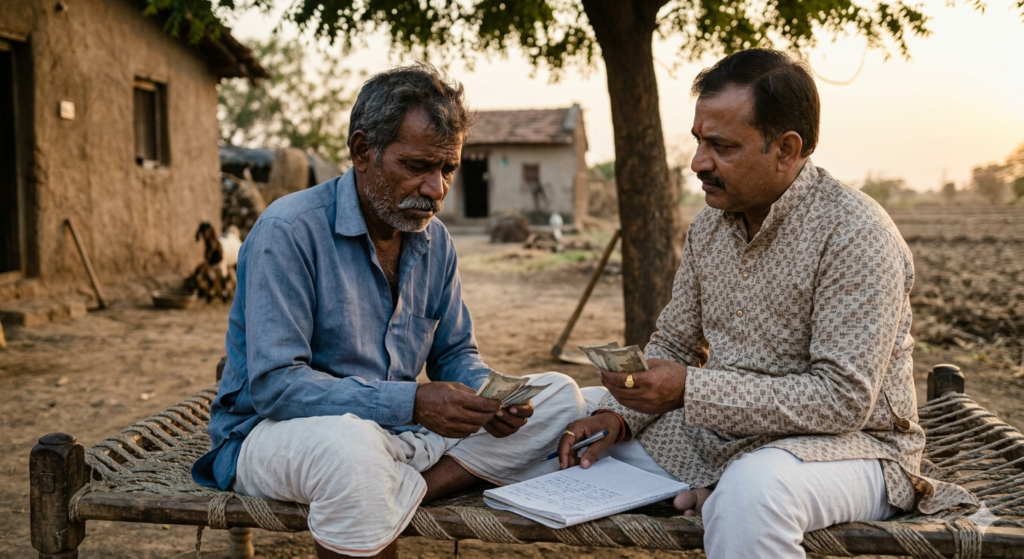
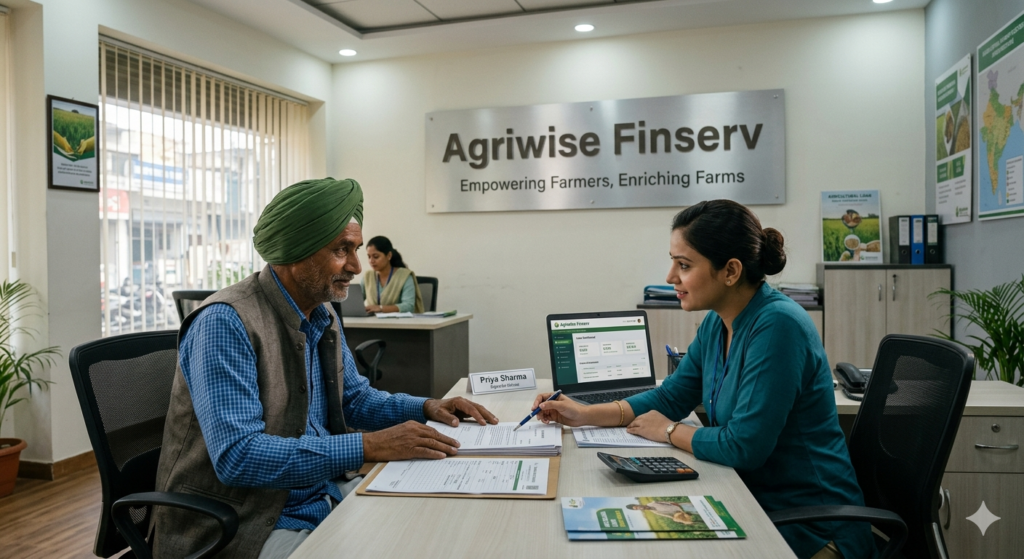
The best finance partner for farmers does more than disburse funds. It aligns financial products with crop cycles, input needs, market volatility and long-term farm sustainability. With rising input costs, increased demand for mechanisation, and climate-linked risks, the need for customised financing is stronger than ever. Farmers should look for partners who understand agricultural seasonality, offer flexible repayment structures, and support them through the entire credit lifecycle, not just at disbursement.

finance partner

Key factors to check before selecting the right agri finance partner

  • Sector expertise and agricultural understanding: Your finance partner should have proven experience in agricultural lending. This includes familiarity with crop cycles, regional risks, MSP trends, price volatility and post-harvest realities. Institutions specialising in agri finance are better equipped to evaluate farm-level risk and provide context-specific loan solutions.
  • Range of financial products offered: A dependable agri finance partner should provide diversified loan options catering to different farm needs, including:
    • Short-term working capital
    • Equipment and infrastructure loans
    • Crop cultivation financing
    • Post-harvest and storage-linked credit
      This is where Agriwise stands out as an agri-focused NBFC offering tailored solutions such as:
    • Warehouse Receipt Finance Enables farmers to unlock liquidity by using stored produce as collateral, helping them avoid distress sales.
    • Loan Against Property (Agri LAP) – Supports larger funding requirements for agri expansion, infrastructure, or diversification.
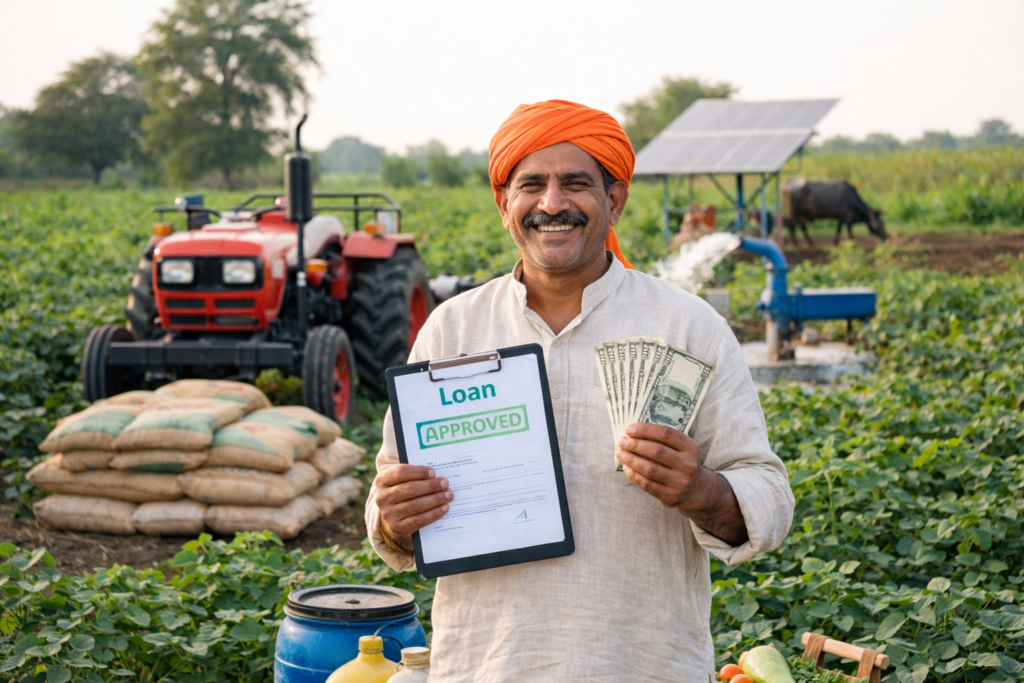
    • Solar Finance – Helps farmers adopt renewable energy solutions, reducing operational costs and increasing sustainability.
    • Invoice Discounting / Supply Chain Finance – Provides working capital support to agri MSMEs and farmers dealing with bulk buyers and aggregators.
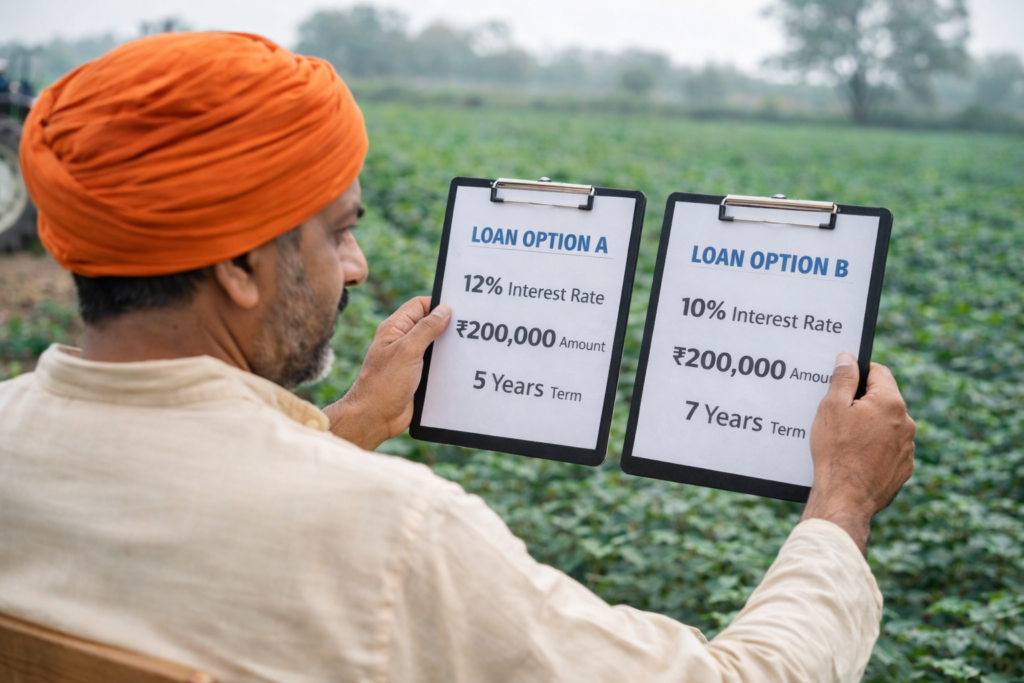
  • Transparency in cost and terms: Every farmer should clearly understand the total borrowing cost. Before finalising your partner, ensure transparency in:
    • Interest rates
    • Processing fees
    • Prepayment charges
    • Insurance premiums
    • Penal clauses
      Ask for a complete repayment schedule and an effective annual cost breakdown. A transparent partner builds long-term trust and enables better financial planning.
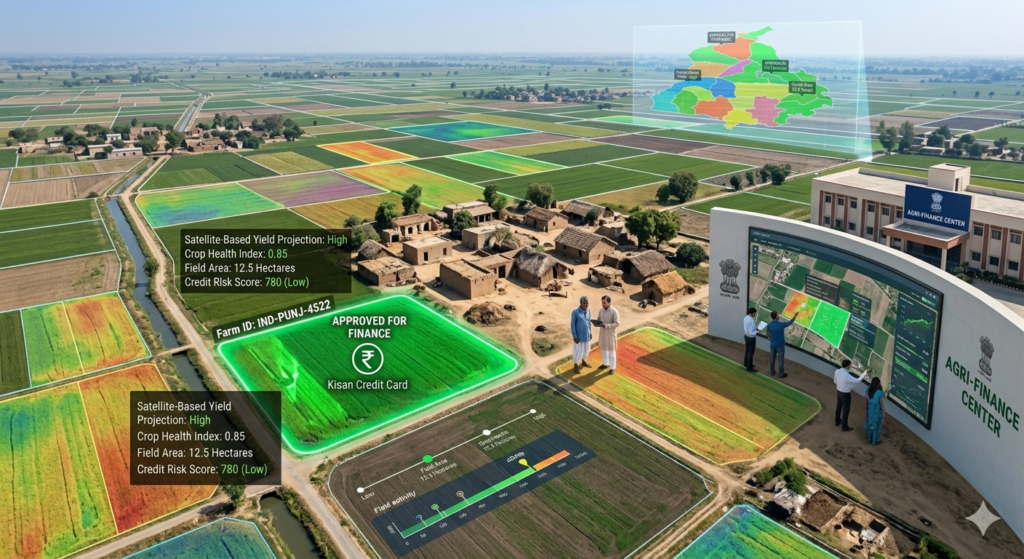
  • Speed and timing of disbursement: Agriculture is time-sensitive. Delayed funding can disrupt sowing or harvest plans. A good agri finance partner ensures quick processing, simplified documentation, and digitally enabled approvals so funds reach farmers exactly when needed. Leading agri finance institutions now leverage alternative data, satellite insights, and transaction histories to accelerate credit decisions while maintaining strong compliance.
  • Collateral flexibility and security options: Not all farmers prefer land-based collateral. Modern agri finance partners provide alternatives such as warehouse receipts, invoice-backed loans or asset-based lending. Understanding evaluation processes, stock inspection norms and release terms is critical to avoid future bottlenecks.
    Agriwise’s Warehouse Receipt Finance model enables farmers to use stored produce as security, ensuring better price realisation and liquidity management.

finance business partner

  • Integration with risk mitigation tools: A strong finance partner integrates insurance solutions, crop covers and advisory services to mitigate risks. This includes guidance on crop insurance, credit protection products and emergency support during unforeseen events like climate shocks or market disruptions.
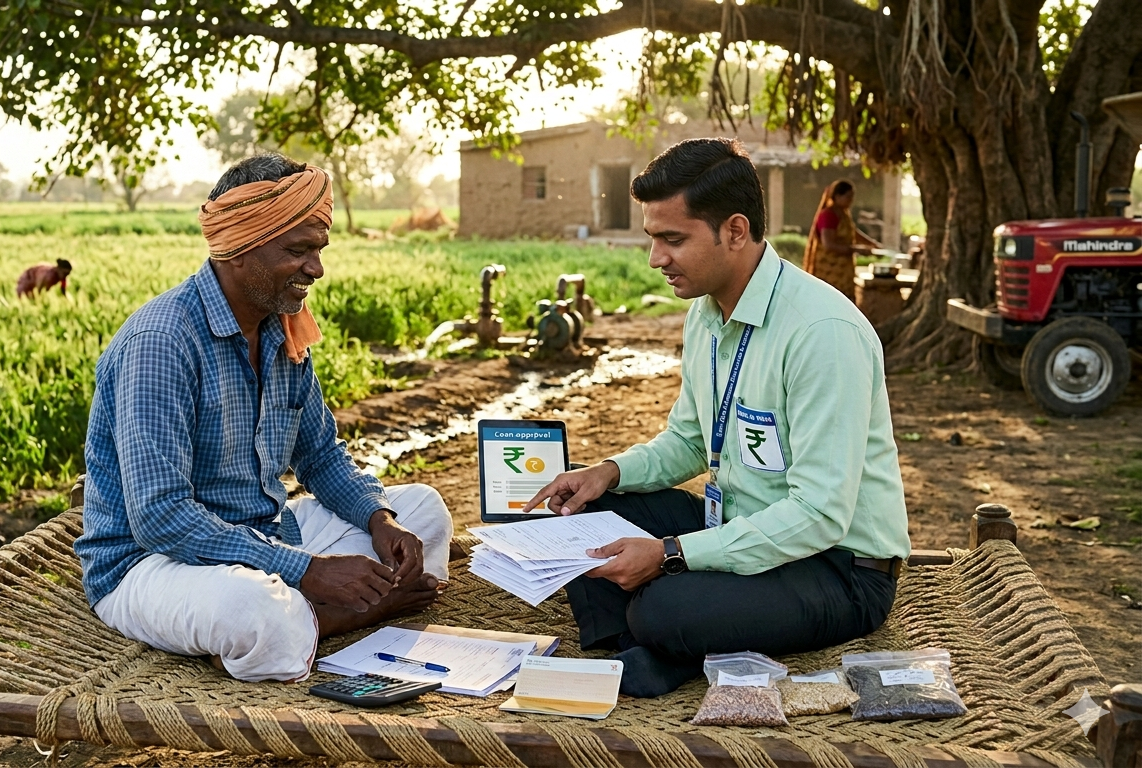
  • Digital accessibility and farmer support: Look for finance partners offering mobile-based loan tracking, multilingual support, real-time alerts and local field assistance. These features reduce reliance on paperwork and make financial management more farmer-friendly.
    Agriwise combines financial services with farmer-centric support, ensuring simplified access and continuous guidance throughout the loan lifecycle.
  • Compliance and credibility: Always verify that your finance partner follows RBI and NBFC regulatory standards, maintains grievance redressal mechanisms and has a credible operating history. This ensures stability and accountability of your financial engagement.

Why Agriwise is a reliable agri finance partner for farmers?

Agriwise is part of the StarAgri Group, one of India’s leading agri-service providers with warehousing, collateral management, and market linkage expertise. This allows Agriwise to understand farmers’ real challenges and offer practical financial solutions tailored to their needs.
Agriwise focuses on empowering farmers and agri MSMEs by improving access to structured credit. Its offerings are designed to bridge the gap between formal finance and on-ground agricultural needs. By combining technology-driven credit assessment with sector expertise, Agriwise ensures that farmers receive customised financial solutions across cultivation, storage and expansion stages.
As a specialised agri finance partner, Agriwise supports smoother cash flow, enables infrastructure investment and promotes sustainable farming practices through renewable energy financing. Agriwise has dedicated RMs, periodic follow-ups, and grievance resolution to ensure farmers receive continuous support throughout the loan cycle.

partnership loan

Final words

Selecting the right agri finance partner is a strategic decision that impacts profitability, resilience and long-term farm growth. With India’s agricultural financing ecosystem evolving rapidly, farmers now have the opportunity to align with partners who offer transparency, flexibility and agricultural understanding.
Whether you need funding for crop cycles, solar adoption, storage or expansion, the right finance partner will act as a growth enabler — not just a lender. By evaluating expertise, product diversity and service quality, farmers can secure financial stability and drive sustainable agricultural success.

FAQs:

  1. What type of loan is best for small farmers?
    Small farmers usually benefit from short-term working capital loans such as KCC or crop cultivation finance. These offer flexible repayment aligned with seasonal income.
  2. How can farmers reduce the cost of borrowing?
    Farmers can lower costs by choosing interest subvention schemes, maintaining good repayment history and comparing total loan costs across finance partners. Transparency in fees also helps avoid hidden charges.
  3. What documents are required to apply with a finance partner?
    Basic documents include Aadhaar, PAN, land records or lease papers, bank statements and crop details. Some loans may also require warehouse receipts or proof of income.
  4. Is warehouse receipt finance suitable for seasonal crops?
    Yes, it allows farmers to pledge stored produce and access funds without selling at low post-harvest prices, supporting better cash flow management.
  5. How do I know if a finance partner is trustworthy and RBI-compliant?
    Check if the lender is RBI-registered, offers transparent terms and has a clear grievance process. A strong track record in agri-lending is also a good indicator.
  6. Can farmers apply for multiple types of loans simultaneously?
    Yes, multiple loans are possible if repayment capacity allows. A responsible finance partner will assess overall exposure for sustainable borrowing.

Disclaimer

The content published on this blog is provided solely for informational and educational purposes and is not intended as professional or legal advice. While we strive to ensure the accuracy and reliability of the information presented, Agriwise make no representations or warranties of any kind, express or implied, about the completeness, accuracy, suitability, or availability with respect to the blog content or the information, products, services, or related graphics contained in the blog for any purpose. Any reliance you place on such information is therefore strictly at your own risk. Readers are encouraged to consult qualified agricultural experts, agronomists, or relevant professionals before making any decisions based on the information provided herein. Agriwise, its authors, contributors, and affiliates shall not be held liable for any loss or damage, including without limitation, indirect or consequential loss or damage, or any loss or damage whatsoever arising from reliance on information contained in this blog. Through this blog, you may be able to link to other websites that are not under the control of Agriwise. We have no control over the nature, content, and availability of those sites and inclusion of any links does not necessarily imply a recommendation or endorsement of the views expressed within them. We reserve the right to modify, update, or remove blog content at any time without prior notice.

How does solar finance work? A step-by-step guide for farmers

November 20, 2025

As more farms turn to clean energy, solar finance has become a vital tool that helps farmers install solar pumps, rooftop systems, and field-mounted arrays without large upfront costs. This guide breaks down how solar finance works in practical steps and highlights why it’s an attractive option for small and medium farmers in India today.

Why is solar finance important for farmers?

Solar finance provides the capital support needed to transition from expensive traditional power sources to clean solar energy. India’s transition to solar is accelerating. By 2025, the country’s utility-scale and distributed solar capacity crossed the 100+ GW mark, reflecting rapid adoption across sectors. In 2025, India continued to install solar pumps, with significant progress reported under the Pradhan Mantri Kisan Urja Suraksha evam Utthaan Mahabhiyan (PM-KUSUM) scheme. As of July 31, 2025, 8.53 lakh solar pumps were installed.
These shifts make solar finance not just an environmental choice but a smart economic decision: predictable energy bills, higher irrigation reliability, and, often, access to government subsidies or favourable loan schemes.

solar finance

How does solar finance work for a farmer?

  • Assess energy need and costs: Estimate the system size you need (pump horsepower or kW for a roof/field system), expected energy generation, and total system cost (equipment, installation, wiring). Many local vendors or solar installers will provide a free site assessment and a quotation.
  • Explore subsidies & grants: Central and state schemes frequently offer capital subsidies or incentives for agricultural solar (pump and feeder schemes, rooftop incentives). These subsidies can reduce the upfront cost and improve loan viability. Verify current schemes at the local nodal agency or state renewable energy department.
  • Choose a financing option: Solar finance for farmers typically comes in several forms: Farmers have multiple avenues to finance solar installations. Government programmes such as the PM-KUSUM scheme provide capital subsidies and facilitated credit support to lower the cost burden of adoption. In addition to these subsidised mechanisms, farmers may also access conventional bank financing, asset-specific equipment loans, or secured term loans offered by banks and NBFCs.

    1. Retail/consumer loans from banks and NBFCs (secured or unsecured, with tenors matching equipment life).
    2. Asset-backed loans collateralised by the solar system itself.
    3. Pay-As-You-Go / Lease / Energy-as-a-Service models, where a provider installs and owns the system — the farmer pays a predictable monthly fee tied to energy delivered.
    4. Blended finance where subsidy + concessional credit + commercial loan are combined to lower the effective cost. 
  • Loan application and documentation: Typical documents: KYC, land proof /7/12, farm electricity bill, quotation from installer, and subsidy sanction proof (if applicable). Lenders will assess repayment capacity, often using projected savings from fuel/electricity substitution and any additional farm income generated from reliable irrigation or cold-storage power.

  • Installation and inspection: After loan sanction and disbursal (sometimes partly to the vendor), the system is installed. Lenders or nodal agencies may require an inspection and performance guarantees. Modern finance models include remote monitoring to ensure generation meets promised levels.
  • Repayment & performance monitoring: Repayment schedules can be matched to crop cash flows (seasonal EMIs or grace periods). In meter-based or PAYG models, payments may be linked to generated energy or a flat monthly tariff. Many systems now offer remote telemetry so lenders and farmers can monitor generation and address issues fast.

Key data to consider

  • India’s large-scale and distributed solar capacity surged through 2025, making the technology widely available and competitive vs. diesel alternatives.
  • The solar irrigation rollout is sizeable; reports and company disclosures show tens of thousands of pump systems added in recent fiscal periods, underscoring demand from the agriculture sector.
  • Sustainable agriculture finance is increasingly channelled into climate-smart investments. Green finance reports show rising flows into agri-solar projects and related lending instruments.

How Agriwise supports farmers with solar finance?

Agriwise provides farmer-centric solar finance solutions designed for agriculture realities: flexible tenors that align with cropping cycles, options for equipment financing (pumps, panels, inverters) and tie-ups with verified installers to simplify procurement. Agriwise structures loans so that subsidy benefits and projected fuel/electricity savings are integrated into the repayment plan, reducing cash-flow stress for farmers.

Quick tips for farmers considering solar finance

  • Get multiple quotes; compare warranties and expected energy yield.
  • Check subsidy eligibility first; it varies by state.
  • Align loan tenure with expected equipment life 
  • Consider monitoring systems, which reduce downtime and protect your investment.

Adopting solar through smart solar finance can lower operating costs, improve irrigation reliability, and strengthen farm resilience. With the right financing partner (like Agriwise) and careful planning, farmers can switch to clean energy with minimal strain on cash flow — turning sunlight into a dependable farm asset.

Disclaimer

The content published on this blog is provided solely for informational and educational purposes and is not intended as professional or legal advice. While we strive to ensure the accuracy and reliability of the information presented, Agriwise make no representations or warranties of any kind, express or implied, about the completeness, accuracy, suitability, or availability with respect to the blog content or the information, products, services, or related graphics contained in the blog for any purpose. Any reliance you place on such information is therefore strictly at your own risk. Readers are encouraged to consult qualified agricultural experts, agronomists, or relevant professionals before making any decisions based on the information provided herein. Agriwise, its authors, contributors, and affiliates shall not be held liable for any loss or damage, including without limitation, indirect or consequential loss or damage, or any loss or damage whatsoever arising from reliance on information contained in this blog. Through this blog, you may be able to link to other websites that are not under the control of Agriwise. We have no control over the nature, content, and availability of those sites and inclusion of any links does not necessarily imply a recommendation or endorsement of the views expressed within them. We reserve the right to modify, update, or remove blog content at any time without prior notice.

Agri-fintech 2.0: How technology is redefining access to finance for India’s agri value chain

November 12, 2025

In Indian agriculture, agri FinTech is emerging as a transformative force, reshaping the way farmers and value-chain stakeholders access finance, manage risk, and scale operations. With increasing digitization, the entry of digital agri loans, and the rise of AI in agri finance, the sector is on the cusp of a new era: Agri-fintech 2.0. At Agriwise Finserv, our commitment to enabling this change through tailored agriwise loans and embedded finance solutions is more than a business priority—it is a strategic imperative for India’s food security and inclusive growth.

The urgency: A credit gap in India’s agriculture

India’s agriculture sector is the backbone of the economy, yet access to institutional credit remains limited. Only around 30% of farmers are reported to access formal financial services, leaving a significant 70% underserved. Meanwhile, credit flow from mainstream institutions, referred to as Ground-Level Credit (GLC), has increased, rising from ₹8.45 lakh crore in FY15 to ₹25.49 lakh crore in FY24. These figures illustrate the gap that agri fintech in India is designed to close.

Traditional lenders face multiple barriers, including a lack of detailed farm-level data, informal supply chains, high transaction costs, and land-title challenges. But as digital adoption increases, agri lending platforms in 2025 are turning these challenges into opportunities.

agri fintech

What does agri fintech 2.0 look like?

The shift to agri fintech 2.0 is characterised by deeper digital integration across the agri value-chain:

  • Digitized credit underwriting: Platforms are now utilising remote sensing, geo-tagging of farmland, crop history, and supply-chain data to build borrower profiles and extend digital agri loans more efficiently.
  • AI in agri finance: AI-powered scoring engines enable faster loan approvals by automating income estimation, document verification, and risk profiling for assessing the loan proposals.
  • Embedded finance in value chain: Loans and working capital are no longer standalone but embedded into procurement, warehousing and trade flows—ensuring that agri lending platforms 2025 can offer tailored, context-aware financing.
  • Digital public infrastructure (DPI) & data stack: Schemes such as the Digital Agriculture Mission support farm registries, crop-sown registries, and digital mapping, forming the backbone for innovative credit systems.

Impact on the agri value-chain

The benefits of this transformation ripple across the agri value-chain:

  • Improved reach and inclusion: With digital onboarding and AI-driven assessment, small and marginal farmers gain access to formal credit instruments, where they were previously locked into high-cost informal finance.
  • Lower transaction cost, better risk management: Through data-driven underwriting, platforms can lower default risk and reduce the cost of service, making smaller ticket loans viable.
  • Faster credit cycles tied to crops: Instead of waiting for monsoon or harvest, farmers can access working capital or input-financing aligned with crop stages, improving productivity and timely input usage.
  • Market linkages and value realisation: When finance is tied to transactions (procurement, warehousing, sale), the farmer’s income and cash-flow improve, supported by technologies embedded in agri fintech models.
  • For agribusinesses and downstream players: Better financial access means smoother procurement, reduced risk of delayed payments, and stronger supply-chain reliability.

Role of Agriwise Finserv in this ecosystem

At Agriwise, we understand the nuanced requirements of agri-business—whether in procurement, warehousing, export trade or input supply. Our Agriwise loans are built on three pillars:

  • Tailored underwriting: Leveraging alternative data (farm history, warehouse receipts, geospatial insights) to deliver credit even for non-traditional borrowers.
  • Embedded finance: Financing solutions integrated with supply-chain partners, enabling our clients and their farmer-vendors to transact seamlessly.
  • Technology-enablement: Use of digital platforms to minimise paperwork, speed disbursement, and monitor utilisation for making finances work in real time for farming cycles.
  • Tech-based monitoring tools are being integrated to predict potential delinquencies, assess commodity price volatility, and trigger early warning alerts to safeguard portfolio quality.

Outlook & key trends for 2025 and beyond

The outlook for agri fintech in India is optimistic and rapidly evolving:

  • The agritech-fintech ecosystem is expected to witness strong growth, underpinned by increasing smartphone and internet penetration in rural India.
  • With formal agricultural credit projected to exceed ₹31.5 lakh crore by FY26, the space for digital agri loans and tech-enabled credit is growing significantly.
  • Adoption of AI, remote-sensing and blockchain in supply-chain finance will drive new models of agri lending platforms 2025, where financing flows are dynamically priced, risk-adjusted and tightly integrated into farm ecosystems.
  • The convergence of agri-fintech with climate-resilient agriculture, ESG-driven capital flows and green finance will open additional channels for farmers and agribusinesses to access credit and insurance.

Conclusion

The era of Agri-Fintech 2.0 is not a distant vision—it is unfolding now. For India’s agrarian economy, the opportunity to democratise access to finance, reduce dependence on high-cost informal credit, and unlock the full potential of the agri value-chain is immense. Through technologies like AI in agri finance, digital agri loans and embedded finance models, agri fintech is redefining how money flows in agriculture.

At Agriwise, our Agriwise loans serve as a bridge linking farmers, agribusinesses and financial institutions in a smarter, faster and more equitable ecosystem. As we move into 2025 and beyond, the promise is clear: inclusive credit, resilient value chains and sustainable growth, enabled by agri fintech in India. Investing in this future today means more than financing—it means building prosperity, securing livelihoods and transforming agriculture for generations to come.

Disclaimer

The content published on this blog is provided solely for informational and educational purposes and is not intended as professional or legal advice. While we strive to ensure the accuracy and reliability of the information presented, Agriwise make no representations or warranties of any kind, express or implied, about the completeness, accuracy, suitability, or availability with respect to the blog content or the information, products, services, or related graphics contained in the blog for any purpose. Any reliance you place on such information is therefore strictly at your own risk. Readers are encouraged to consult qualified agricultural experts, agronomists, or relevant professionals before making any decisions based on the information provided herein. Agriwise, its authors, contributors, and affiliates shall not be held liable for any loss or damage, including without limitation, indirect or consequential loss or damage, or any loss or damage whatsoever arising from reliance on information contained in this blog. Through this blog, you may be able to link to other websites that are not under the control of Agriwise. We have no control over the nature, content, and availability of those sites and inclusion of any links does not necessarily imply a recommendation or endorsement of the views expressed within them. We reserve the right to modify, update, or remove blog content at any time without prior notice.

Green finance in agriculture: The next big leap for sustainable growth

November 07, 2025

As India strives to boost agricultural output while protecting the environment, a new force is quietly reshaping the sector—green finance. Could the future of farming lie not just in better seeds or machinery, but in smarter, eco-friendly funding?

With agriculture contributing nearly 18% to India’s GDP and supporting over 40% of the workforce, the potential impact of sustainable agri finance is enormous. From renewable energy adoption to climate-resilient farming, green finance is opening doors to opportunities farmers never imagined. Green finance, with investment flows directed toward environmentally friendly and climate-resilient initiatives, is transforming the way the sector produces, manages, and sustains growth.

green finance

Understanding green finance in agriculture

Fundamentally, green finance in agriculture refers to financial instruments and investments that promote sustainable agricultural practices, reduce carbon emissions, and enhance resource efficiency. It includes credit support for renewable energy adoption, efficient irrigation systems, low-emission machinery, organic farming, and waste management solutions.

In India, the focus on sustainable agri finance has gained momentum following policy initiatives such as the National Mission on Sustainable Agriculture (NMSA) and the Pradhan Mantri Kisan Urja Suraksha evam Utthaan Mahabhiyan (PM-KUSUM). These programs aim to encourage farmers to adopt renewable technologies like solar-powered irrigation and climate-resilient crop practices—key areas where green finance plays a pivotal role.

Why green finance matters for India’s agricultural future?

Traditional agricultural credit models often overlook environmental sustainability. However, the rising frequency of climate shocks—droughts, floods, and erratic rainfall—has underscored the urgent need for climate-smart agriculture in India. According to the World Bank, climate change could reduce India’s agricultural income by up to 25% by 2050 if adaptive and sustainable measures are not adopted.

Green finance bridges this gap by offering innovative credit structures and risk mitigation mechanisms that enable farmers and agri-enterprises to invest in sustainable technologies. From solar financing in India for water pumps to carbon-neutral warehousing and biofertilizer production, green finance acts as both a growth driver and a climate safeguard.

green loan

Market momentum and growing investments

The green finance ecosystem in India is witnessing rapid growth. As of December 2024, India’s cumulative aligned green/social/sustainability (GSS+) debt issuance stood at USD 55.9 billion, up 186% since 2021. Green bonds accounted for around 83 % of this volume.

While the agriculture‑specific breakdown for green finance is less frequently available, the broader momentum in sustainable capital flows is a strong signal for opportunity in the agri‑space. The development of India’s draft climate taxonomy and regulatory frameworks is expected to channel more capital into green agricultural activities in coming years.

Role of Agriwise & other NBFCs

Non-Banking Financial Companies (NBFCs) are playing a crucial role in driving green finance in agriculture by bridging last-mile credit access. Agriwise, for instance, has been actively promoting sustainable agri finance solutions tailored for farmers, agribusinesses, and supply chain partners.

Through Agriwise loans, farmers can access structured financial products to invest in renewable technologies, efficient irrigation systems, and sustainable farm inputs. The company’s focus on digitized lending and agri-data analytics allows it to assess borrower risk more accurately, ensuring faster and more transparent loan approvals.

Such technology-driven financing models are pivotal in empowering farmers to shift toward climate-smart agriculture in India without facing the traditional credit barriers of collateral-heavy systems.

green fintech

Green finance and renewable energy in agriculture

One of the most compelling applications of green finance in agriculture is in renewable energy adoption. Farms and rural agri‑units in India still rely heavily on diesel‑based irrigation pumps, contributing both to high fossil‑fuel costs and greenhouse‑gas emissions. Transitioning to solar‑powered alternatives via solar financing in India is not only cost‑effective for farmers but also pivotal for climate mitigation.

The government’s ambition — including targets such as installation of 10 GW of solar capacity through agricultural applications by 2030 — underscores the potential scale of opportunity. While specific agriculture‑loans data is limited, the broader driver is clear: renewable‑enabled farms benefit from reduced energy cost, reduced risk of fuel‑price shocks and improved sustainability.

Challenges and the road ahead

Despite its promise, green finance in agriculture faces several challenges—limited awareness among farmers, lack of standardized green credit frameworks, and the perception of high implementation costs. However, with increasing public-private partnerships, carbon credit opportunities, and the rise of ESG (Environmental, Social, and Governance) investing, the momentum is shifting positively.

To scale impact, policymakers and financial institutions must integrate sustainability metrics into credit assessment models. Simultaneously, digital platforms like Agriwise can continue leveraging data-driven tools to promote transparency and inclusivity in green lending.

Conclusion: The future of sustainable agri finance

The integration of green finance into India’s agricultural ecosystem is not just an environmental necessity—it is an economic imperative. By unlocking access to capital for sustainable practices, the sector can enhance productivity, build resilience against climate change, and ensure long-term profitability. As initiatives around sustainable agri finance, renewable energy, and climate-smart agriculture in India continue to evolve, the role of innovative financiers like Agriwise becomes increasingly vital. With tailored Agriwise loans and forward-looking credit models, India’s farmers can be at the forefront of the next big leap—toward a greener, more resilient agricultural future.

Disclaimer

The content published on this blog is provided solely for informational and educational purposes and is not intended as professional or legal advice. While we strive to ensure the accuracy and reliability of the information presented, Agriwise make no representations or warranties of any kind, express or implied, about the completeness, accuracy, suitability, or availability with respect to the blog content or the information, products, services, or related graphics contained in the blog for any purpose. Any reliance you place on such information is therefore strictly at your own risk. Readers are encouraged to consult qualified agricultural experts, agronomists, or relevant professionals before making any decisions based on the information provided herein. Agriwise, its authors, contributors, and affiliates shall not be held liable for any loss or damage, including without limitation, indirect or consequential loss or damage, or any loss or damage whatsoever arising from reliance on information contained in this blog. Through this blog, you may be able to link to other websites that are not under the control of Agriwise. We have no control over the nature, content, and availability of those sites and inclusion of any links does not necessarily imply a recommendation or endorsement of the views expressed within them. We reserve the right to modify, update, or remove blog content at any time without prior notice.

Financing agritech startups in India: What farmers and MSMEs should know?

October 30, 2025

Agritech startups are reshaping how Indian agriculture works — from digital marketplaces and precision farming tools to alternative credit models and supply-chain traceability. For farmers and MSMEs looking to partner with or benefit from these new players, understanding how agrifinance works and where to find reliable agri-financial services is essential.

Why funding matters for agritech startups?

Access to capital fuels product development, field pilots, and wider farmer adoption. In recent years, funding for agritech startups has stabilised after a period of rapid deal activity: AgFoodTech reports show investments staying relatively flat in 2024 with a focus on mature companies, while Indian startup funding momentum continued in H1-2025, driven by larger checks to scaleups.

For farmers and MSMEs, this means startups you engage with are more likely to be past the “idea” stage and closer to delivering reliable services — but also that investors expect clear unit economics, repeatable revenue, and strong farmer outcomes.

Key finance types agritech startups use

  • Equity funding (angel, VC, growth) — fuels scaling, hiring, product R&D and Technology 
  • Debt & credit lines — working capital from banks, NBFCs, financial institutions or specialised lenders (useful when startups provide credit-linked services to farmers).
  • Grants & concessional capital — from foundations, climate funds, or government incubators for pilot projects.
  • Trade and supplier finance — for startups handling procurement, warehousing or agri input distribution.
  • SCF/ Channel Financing: Working capital against the Invoices raised by the seller to buyers, for the procurement of raw materials.

Understanding the mix matters because it determines how aggressively a startup will pursue growth, the pricing of services, and its tolerance for long sales cycles.

What farmers and MSMEs should check before partnering?

  • Funding stability & runway: Companies backed by steady capital are likelier to support long rural sales cycles. Recent market analyses indicate many agritech startups raised larger, selective rounds in 2024–25, signalling a move toward consolidation and sustainable scaling.
  • Regulatory & credit links: If a startup offers credit or payments, confirm partnerships with credible agri financial services providers, NBFCs or banks (for example, an agriculture loan company or an agri finance India partner). Government schemes like the KCC remain central to short-term crop credit.
  • Farmer outcomes & traceability: Look for measurable yield or income gains and transparent pricing. Satellite and digital advisory integrations are increasingly common and backed by case studies.
  • Ease of accessibility: The platform should be user-friendly and easily accessible via mobile apps, in regional languages, and with simple onboarding processes suitable for rural users.
  • Simplified documentation: Startups that minimise paperwork through digital KYC, Aadhaar-based verification, and e-agreements ensure quicker access to finance and services.
  • Market linkage & buyer connectivity: The startup should offer direct market access, connecting farmers or MSMEs with buyers, traders, or processors to improve price realisation and reduce dependence on middlemen.

How do agrifinance products differ from standard loans?

Agrifinance products are tailored for the crop cycle: flexible repayment schedules, collateral-free microloans, warehouse-receipt financing, or input-linked credit. An agrifinance company in India that understands seasonal risk and local value chains can offer better terms than a generic lender. For MSMEs, trade finance or invoice discounting is often a better fit than term loans.

Where to find trustworthy partners?

  • Search for startups that disclose investor names, banking partners, and audited pilots. Industry trackers show that India will host well over a thousand agritech startups by 2025 — a sign of both opportunity and the need for careful selection.
  • Look for endorsements from NABARD, local agri departments, or reputed incubators. NABARD and other agencies continue to expand priority sector credit, improving formal agricultural finance flows.
  • Compare offerings from agri financial services players like the terms, interest, processing transparency and then consider the best agrifinance company India only after mapping service coverage to your needs.

Role of Agriwise

NBFCs like Agriwise agrifinance bridge the gap between farmers/MSMEs and capital by packaging tailored products — from agri business loans India to integrated insurance and receivables financing. When evaluating an agriculture finance or agrifinance partner, check product examples, default management practices, and whether they operate as an agriculture loan company or as a facilitator with bank/NBFC backing.

Practical tips before taking or offering credit

  • Ask for a clear amortisation schedule tied to crop cycles.
  • Ensure documentation is simple and available in local languages.
  • Verify whether the provider reports to credit bureaus — helpful for building a borrower’s credit history.
  • For startups offering buy-now-pay-later or embedded credit, confirm recourse and late-fee structures.

Conclusion

Agritech startups offer transformative services, but financing shapes how durable those services will be for farmers and MSMEs. By focusing on transparency, proven outcomes, and partnerships with credible agri financial services and agriculture loan companies, stakeholders can tap into a market where formal agri credit is projected to grow strongly through 2025 and beyond. Whether you’re a farmer seeking input finance or an MSME evaluating a tech partner, prioritise due diligence — and consider partners like Agriwise when scouting for reliable, agriculture-focused funding solutions.

Disclaimer

The content published on this blog is provided solely for informational and educational purposes and is not intended as professional or legal advice. While we strive to ensure the accuracy and reliability of the information presented, Agriwise make no representations or warranties of any kind, express or implied, about the completeness, accuracy, suitability, or availability with respect to the blog content or the information, products, services, or related graphics contained in the blog for any purpose. Any reliance you place on such information is therefore strictly at your own risk. Readers are encouraged to consult qualified agricultural experts, agronomists, or relevant professionals before making any decisions based on the information provided herein. Agriwise, its authors, contributors, and affiliates shall not be held liable for any loss or damage, including without limitation, indirect or consequential loss or damage, or any loss or damage whatsoever arising from reliance on information contained in this blog. Through this blog, you may be able to link to other websites that are not under the control of Agriwise. We have no control over the nature, content, and availability of those sites and inclusion of any links does not necessarily imply a recommendation or endorsement of the views expressed within them. We reserve the right to modify, update, or remove blog content at any time without prior notice.

The role of NBFCs in shaping rural credit access

October 16, 2025

Access to reliable rural credit is vital for India’s agricultural productivity, rural livelihoods, and inclusive growth. In areas where commercial banks are scarce, Non-Bank Financial Companies (NBFCs) are rapidly emerging as critical providers of credit, adapting their models to meet the unique challenges of remote and small-scale borrowers.

Why NBFCs matter for rural credit?

NBFCs offer flexibility, speed, and product innovation tailored to the needs of farmers and rural micro-entrepreneurs. Because of their lighter infrastructure and ability to work through field agents, partner organisations (such as Farmer Producer Organisations or Self Help Groups), and use alternate data, NBFCs reduce transaction costs and delays — two major obstacles for many seeking rural credit from traditional banks. For instance, in FY 2024–25, fintech NBFCs sanctioned approximately 10.9 crore personal loans amounting to ₹1,06,548 crore, a scale that has brought formal financial access to many who previously depended on informal sources.

rural credit

NBFCs + Microfinance: A credit accelerator

Microfinance NBFCs (NBFC-MFIs) are a fundamental source for supplying credit to small borrowers. As of 30 June 2025, the microfinance industry’s outstanding portfolio stood at about ₹3.07 lakh crore, supporting some 10 crore active loans with around 6 crore unique borrowers — many in rural areas with limited formal credit options. Moreover, in FY 2024–25, nearly 80% of microfinance loan books of NBFCs were from rural India, indicating a strong shift toward serving underserved borrowers.

Product innovation & improved quality of rural credit

NBFCs are not just increasing reach — they are improving the type of rural credit on offer. Examples of innovations include small-ticket credit for crop inputs, loans against warehouse receipts, pump-set financing, seasonal working capital aligned with harvest cycles, and two-wheeler financing for last-mile connectivity. NBFCs are also shortening approval times through remote onboarding and leveraging mobile or digital payments.

Partnership models are also key: NBFCs are co-lending with banks, entering into ATL (Agri Term Loan), WHR , FPO Financing, Cattle Financing with agri-firms, and working with FPOs/SHGs to build trust and reduce risk. These models help tailor credit products in rural areas that reflect local crop cycles, rainfall variability, and seasonal incomes.

rural farm credit

The broader context: Institutional credit & NBFC opportunity

Institutional credit to agriculture has more than doubled since 2014-15. For 2024-25, the official target for agri-credit was set in the range of ₹25-28 lakh crore, showing that government policy recognises the need for scale. NBFCs and MFIs are well-positioned to complement this push by reaching borrowers in areas with limited bank presence.

In regions where banks are sparse, NBFCs drive credit access; for example, the fintech NBFCs’ disbursals of over ₹1,06,548 crore via 10.9 crore personal loans in FY 2024-25 have helped many rural households move into the formal financial system.

Challenges & regulatory considerations

Scaling rural credit via NBFCs is not without challenges. Rural lending is exposed to climatic risks, commodity price fluctuations, and uncertainty in repayment cycles. NBFCs often face higher funding costs than banks, which may raise interest rates for borrowers. Ensuring consumer protection and transparent terms is essential, particularly for new borrowers with limited financial literacy.

Regulators have begun addressing these through co-lending guidelines, district-level credit plans (PLPs), and efforts to extend grievance redressal channels in rural areas. The goal is to ensure that rural credit remains accessible, affordable, and does not lead to overindebtedness.

The way forward: Scaling responsible rural credit

To build on the gains so far, NBFCs should:

  • Deepen partnerships with NABARD, banks, FPOs, and SHGs for last-mile delivery.
  • Use data-driven underwriting (e.g., using satellite imagery, payment histories, supply chain flows) to better assess risk in rural settings.
  • Offer bundled services — insurance, crop advisory, and digital payment/income smoothing tools — to improve borrower resilience.
  • Align loan tenors and repayment schedules with seasonal rural income flows so that credit is not burdensome during lean periods.

With rural areas contributing about 80% of NBFC microfinance loan books in FY 2024-25, and with the microfinance portfolio outstanding at ₹3.07 lakh crore supporting 10 crore loans, NBFCs are clearly playing an expanding role in formalising rural credit delivery. If these efforts are guided by responsible lending, NBFCs like Agriwise Finserv can help transform how rural India accesses finance — enabling innovation, investment, and sustainable growth.

Disclaimer

The content published on this blog is provided solely for informational and educational purposes and is not intended as professional or legal advice. While we strive to ensure the accuracy and reliability of the information presented, Agriwise make no representations or warranties of any kind, express or implied, about the completeness, accuracy, suitability, or availability with respect to the blog content or the information, products, services, or related graphics contained in the blog for any purpose. Any reliance you place on such information is therefore strictly at your own risk. Readers are encouraged to consult qualified agricultural experts, agronomists, or relevant professionals before making any decisions based on the information provided herein. Agriwise, its authors, contributors, and affiliates shall not be held liable for any loss or damage, including without limitation, indirect or consequential loss or damage, or any loss or damage whatsoever arising from reliance on information contained in this blog. Through this blog, you may be able to link to other websites that are not under the control of Agriwise. We have no control over the nature, content, and availability of those sites and inclusion of any links does not necessarily imply a recommendation or endorsement of the views expressed within them. We reserve the right to modify, update, or remove blog content at any time without prior notice.

The rise of sustainable agriculture finance in India

October 09, 2025

Sustainable agriculture is no longer a niche aspiration — it’s becoming central to how India funds its food future. As climate risks, soil degradation, and market shocks intensify, financiers, policymakers, and farmers are shifting capital toward practices that increase productivity while protecting ecosystems. This transition is evident in the rise of green debt markets, the expansion of agricultural credit, and the introduction of new public schemes designed to support climate-resilient farming.

Why is sustainable agriculture finance necessary now?

India’s farm sector supports nearly half the workforce but faces mounting stress from extreme weather and input-cost inflation. Financing models that reward water-efficient irrigation, regenerative soil management, agroforestry, and renewable energy on farms reduce long-term risk for both lenders and producers. Between FY2020-21 and FY2021-22, tracked financial flows into activities the Climate Policy Initiative classifies under sustainable agriculture averaged about ₹22,393 billion (≈USD 301 billion) per year, a clear sign that both public and private money are already moving into sustainability-aligned uses.

sustainable agriculture

Public support + Private capital: A blended push

Public budgets and banks remain the backbone of agricultural finance in India, but the composition is evolving. Government budget allocations and public sector undertakings supplied roughly one-third of those sustainable agriculture flows in the CPI study, while commercial financial institutions provided the lion’s share of private debt. This mix matters: public programmes de-risk new technologies, enabling private lenders to scale loans for solar pumps, precision inputs, and storage that reduce post-harvest losses.

At the same time, India’s broader green debt market is growing. As of December 2024, India’s cumulative aligned green, social, and sustainability (GSS+) debt reached approximately USD 55.9 billion, marking a rapid expansion that creates opportunities for climate-smart agri projects to tap into institutional investors seeking impact, as mentioned in the Climate Bonds Initiative’s 2024 report.

Agricultural credit at scale and shifting in quality

Access to credit is improving in absolute terms: ground-level agriculture credit hit about ₹19.28 lakh crore by December 31, 2024, against a FY25 target of ₹27.5 lakh crore, demonstrating banks’ willingness to provide large volumes of farm finance. While much of this remains short-term crop loans, regulators and development banks are nudging a portion of flows toward longer-term, sustainability-oriented lending such as watershed investments, on-farm renewable energy, and warehouse upgrades that enable better price realisation for farmers.

NABARD and other development institutions play a central role: their credit planning and refinance windows help scale innovations at the last mile, pairing technical assistance with concessional finance to make sustainable agriculture practices bankable.

Policy levers accelerating sustainable agriculture finance!

Two policy trends are particularly catalytic!

First, India’s draft climate finance taxonomy provides a framework to classify and direct capital toward low-emission and adaptation activities — including many agri investments — thereby reducing greenwashing and clarifying which projects qualify for “green” finance.

Second, recent budgetary increases and targeted schemes for climate-resilient agriculture signal sustained public intent to subsidise transition costs for smallholders. Together, these measures improve investor confidence and create standardised pipelines for sustainable agriculture projects.

Agriwise: Enabling sustainable agriculture through green finance

Agriwise is leading this transition with enabling farmers and agri-enterprises to access finance that supports eco-friendly practices. The company offers solar loans that empower farmers to transition from diesel-based irrigation to renewable energy, thereby significantly reducing fuel costs and carbon emissions.
Beyond solar financing, Agriwise provides structured warehouse receipt finance and customised working capital solutions for agribusinesses adopting sustainable models. By aligning credit products with long-term sustainability goals, Agriwise ensures that farmers not only secure capital but also build climate resilience. Its approach demonstrates how financial innovation can make sustainable agriculture both profitable and scalable across India’s diverse agri value chains.

Challenges & where opportunity lies!

Despite momentum, gaps remain. The CPI analysis highlights that domestic commercial banks account for most private sustainable agriculture finance due to priority-sector lending obligations, which can mask genuine market-driven investments and leave project-level green finance underdeveloped. Data limitations also make it hard to track the exact end-use of many loans, complicating impact measurement. Overcoming these hurdles — through stronger reporting standards, blended finance instruments, and aggregation vehicles for smallholder projects — would unlock institutional capital on a larger scale.

What does this mean for lenders?

For agribusinesses and lenders, the practical steps are clear: (1) structure products that link credit terms to measurable sustainability outcomes (soil health, water savings, emissions reduction); (2) use blended capital to lower first-loss risks for pilots; and (3) invest in data and verification to prove impact. For farmers, access to affordable loans for drip irrigation, bio-inputs, on-farm solar, and quality storage can raise yields and buffer climate shocks — making sustainable agriculture both a resilience strategy and a business proposition.

Conclusion

India’s shift toward sustainable agriculture finance is already underway, as evidenced by substantial tracked flows, expanding green debt markets, and rising agricultural credit targets. The next phase will require standardisation, better measurement, and creative finance structures that align farmer incentives with long-term ecosystem health. If policymakers, lenders, and agribusinesses coordinate effectively, sustainable agriculture can transition from a policy slogan to a mainstream investment that secures incomes, food supplies, and the environment for decades to come.

Disclaimer

The content published on this blog is provided solely for informational and educational purposes and is not intended as professional or legal advice. While we strive to ensure the accuracy and reliability of the information presented, Agriwise make no representations or warranties of any kind, express or implied, about the completeness, accuracy, suitability, or availability with respect to the blog content or the information, products, services, or related graphics contained in the blog for any purpose. Any reliance you place on such information is therefore strictly at your own risk. Readers are encouraged to consult qualified agricultural experts, agronomists, or relevant professionals before making any decisions based on the information provided herein. Agriwise, its authors, contributors, and affiliates shall not be held liable for any loss or damage, including without limitation, indirect or consequential loss or damage, or any loss or damage whatsoever arising from reliance on information contained in this blog. Through this blog, you may be able to link to other websites that are not under the control of Agriwise. We have no control over the nature, content, and availability of those sites and inclusion of any links does not necessarily imply a recommendation or endorsement of the views expressed within them. We reserve the right to modify, update, or remove blog content at any time without prior notice.

Collateral-free loan options for MSMEs in the Indian agri value chain

October 05, 2025

For MSMEs operating in the agricultural value chain—whether input suppliers, aggregators, processing units, cold storage operators, or rural logistics providers—access to credit without requiring collateral is a game changer. Collateral requirements often act as a barrier for smaller agribusinesses that lack land title or real estate. In 2025, a growing number of collateral-free loan schemes and guarantee-based instruments are opening the door to more inclusive finance across agribusiness segments.

Why collateral-free loan matters for agri MSMEs?

Agriculture and its allied activities remain capital-intensive and seasonally cyclical. In India alone, the total farm credit target for FY 2025–26 is projected at around ₹31–32 lakh crore. Yet, many agri-value MSMEs struggle to convert growth potential into scale because they can’t meet collateral demands. A collateral-free loan reduces entry barriers and promotes innovation, especially in areas such as post-harvest handling, food processing, cold chains, farm machinery leasing, and rural aggregation.

collateral-free loan

Further, the intensifying push for financial inclusion and rural development is prompting regulators and the government to expand guarantee schemes and concessional credit. For example, as of April 1, 2025, the Government of India has enabled collateral-free loans of up to ₹10 crore under certain categories, with guarantee coverage of up to 90%. This move signals a strategic tilt toward enabling MSME financing without the friction of security liens.

Key collateral-free loan schemes and programs in 2025

  1. Credit Guarantee Schemes (CGTMSE / MSME Guarantee Funds): The Credit Guarantee Fund Trust for Micro and Small Enterprises (CGTMSE) enables unsecured term or working capital loans up to ₹1 crore per borrowing unit. For agri processors or cold storage operators seeking expansion, CGTMSE-backed loans can be a strong option.

  2. Collateral-free agricultural credit (RBI / KCC / MISS): In December 2024, the Reserve Bank of India raised the limit for collateral-free agricultural loans from ₹1.6 lakh to ₹2 lakh per borrower, effective January 2025. Similarly, the MISS (Minor Irrigation and Allied Support Scheme) limit was enhanced from ₹3 lakh to ₹5 lakh, enabling small-scale agri entrepreneurs to access funds for pumps, drip irrigation, or allied projects.

  3. MUDRA loans / Unsecured business loans: Under the Pradhan Mantri MUDRA Yojana (PMMY), micro enterprises can receive unsecured loans up to ₹10 lakh. This suits smaller MSMEs in packaging, logistics, and rural processing.

  4. Joint Liability Groups (JLGs) and SHGs: Group lending models continue to support rural enterprises by leveraging shared responsibility instead of collateral. MSMEs tied to Farmer Producer Organisations (FPOs) can use JLG structures to access unsecured loans collectively.

  5. Scheme-based enterprise development loans: Several government MSME development programs provide unsecured loans up to ₹3 lakh for micro enterprises along with capacity-building and infrastructure support. 


The Agriwise advantage

While government and institutional schemes are widening access to collateral-free loan, MSMEs in the agri value chain often need customised lending solutions that reflect the realities of agriculture. This is where Agriwise Finserv, the NBFC arm of StarAgri, steps in:

  • Farmer Scorecard & AgriBhumi integration: Lending decisions are backed by satellite-verified land intelligence and credit profiling, ensuring that even smallholder farmers and MSMEs get fair access to finance.

  • Quick turnaround: With tech-driven processes, Agriwise ensures faster approvals and disbursements, a vital edge in time-sensitive agri cycles.

  • Supply chain financing: Agriwise supports not just farmers but also input suppliers, aggregators, and processors, enabling smooth flow of working capital across the agricultural value chain.

By combining multiple loan products with data-backed assessments, Agriwise is empowering MSMEs and smallholders to scale sustainably without being excluded from formal finance.

Challenges & risks to mitigate

  • Higher interest rates: Unsecured loans can be priced higher due to risk exposure.

  • Guarantee fees: Some schemes add a cost layer in the form of guarantee fees.

  • Loan size limitations: Many unsecured options are capped, requiring blended approaches for larger needs. 
  • Awareness gaps: Rural MSMEs often remain unaware of these schemes and rely heavily on intermediaries. 


Conclusion

A collateral-free loan is emerging as a powerful enabler for MSMEs in India’s agri value chain. With policy reforms, guarantee coverage, and fintech-led innovations, 2025 marks a turning point for unsecured agri financing.

For MSMEs, the right strategy is to blend institutional schemes with sector-specialised lenders like Agriwise. By doing so, they can gain access to timely, collateral-free working capital and trade finance—unlocking new avenues for scaling operations, strengthening value chains, and driving rural economic growth.

Disclaimer

The content published on this blog is provided solely for informational and educational purposes and is not intended as professional or legal advice. While we strive to ensure the accuracy and reliability of the information presented, Agriwise make no representations or warranties of any kind, express or implied, about the completeness, accuracy, suitability, or availability with respect to the blog content or the information, products, services, or related graphics contained in the blog for any purpose. Any reliance you place on such information is therefore strictly at your own risk. Readers are encouraged to consult qualified agricultural experts, agronomists, or relevant professionals before making any decisions based on the information provided herein. Agriwise, its authors, contributors, and affiliates shall not be held liable for any loss or damage, including without limitation, indirect or consequential loss or damage, or any loss or damage whatsoever arising from reliance on information contained in this blog. Through this blog, you may be able to link to other websites that are not under the control of Agriwise. We have no control over the nature, content, and availability of those sites and inclusion of any links does not necessarily imply a recommendation or endorsement of the views expressed within them. We reserve the right to modify, update, or remove blog content at any time without prior notice.

How does warehouse receipt finance help farmers unlock working capital?

September 24, 2025

In India’s agricultural economy, cash flow challenges are one of the biggest barriers for farmers, especially smallholders, in accessing inputs, waiting for good market prices, and avoiding distress sales. Warehouse receipt finance (WHR finance) has emerged as a powerful tool to enable farmers to convert stored produce into working capital, improve bargaining power, and reduce risk.
But how does warehouse receipt finance work? Let’s explore the current status in India, benefits and challenges, and how Agriwise is helping farmers access commodity finance via warehouse receipt systems.

What is warehouse receipt finance?

Warehouse receipt finance refers to a financial arrangement where farmers deposit their agricultural produce in approved warehouses and receive a warehouse receipt (physical or electronic) that acts as collateral to obtain a loan or loan‐equivalent financing. Because the produce is stored under regulated conditions, the receipt assures both the lender and borrower about quality, quantity, and storage integrity.

In India, with the advent of e-NWR (electronic Negotiable Warehouse Receipts), warehouse receipt finance India has become more formalised, efficient, traceable, and scalable.

According to data published on the WDRA portal, the country’s active regulated warehousing capacity as of the end of March 2025 is approximately 44.8 million tonnes. In 2023-24, India produced ~330 million tonnes of food grains, but only about 1.24 million tonnes have been financed using warehousing / e-NWR instruments.

warehouse receipt finance

How does warehouse receipt finance help farmers?

Here are the ways in which WHR finance (often a subset of wider commodity finance for farmers) can make a difference:

  • Avoiding distress sales & price timing: Farmers often have to sell produce immediately after harvest when supply is high and prices are low. By using WHR finance, they can store produce under good conditions, obtain liquidity via the receipt, and sell when market conditions improve.
  • Higher bargaining power: With the ability to hold produce, farmers aren’t forced sellers. They can wait for better demand, possibly export markets, better MSP, or private buyers who pay premiums for quality. The formal system of such finance in India (primarily through e-NWR) improves trust in the quality and condition.
  • Reduced post-harvest losses: Warehouses registered under WDRA and collateral managers ensure quality, pest control, good storage practices. When produce is stored properly, spoilage reduces, so less loss, better quality, which fetches higher price. WHR finance makes storing financially viable.
  • Improved access to formal finance: Receipt acts as collateral; banks, NBFCs more willing to lend against regulated receipts. This is especially critical for small/marginal farmers who often lack land or other strong collateral. Commodity finance for farmers can be more inclusive via WHR finance.
  • Better cash flow & working capital: Input purchases (seeds, fertilisers, labour), paying workers, transportation—all need working capital. By converting stored produce into cash via credit, farmers can plan, invest in inputs, improve yield, rather than relying on informal (often more expensive) borrowing.
  • Risk mitigation (price, weather, market): Storage plus delayed selling helps farmers mitigate risk of price drop. Also, some financial schemes are linked with insurance or regulated storage, so the risk of spoilage or theft is lower.

loan against warehouse receipts

What needs to improve?

While warehouse receipt finance has strong potential, several challenges hinder its full deployment:

  • Low awareness and adoption among small farmers about e-NWR and WHR finance mechanism.
  • Insufficient number of registered/regulatable warehouses, especially close to production centres. Logistics cost is high; many warehouses do not meet regulatory or quality standards.
  • Operational costs, documentation, and collateral valuation complexities; lenders may perceive risk due to storage, quality, warehousing fraud.
  • Price volatility and shelf life constraints of some commodities: some perish quickly, so storage + loan tenure may not match.
  • Regulatory & policy barriers: though WDRA is pushing regulation, more clarity, standardised processes, better infrastructure, and stronger guarantee schemes are required.

Agriwise & its role in facilitating warehouse receipt finance

Agriwise, as part of StarAgri’s platform ecosystem, plays a pivotal role in bridging the gap between farmers, warehouses, and financiers. Here’s how Agriwise helps:

  • Offering warehouse receipt financing services: Agriwise Finserv provides financing to farmers by accepting electronic warehouse receipts (e-NWRs) or other approved warehouse receipts as collateral, enabling access to working capital without forcing immediate sale.
  • Linking with registered warehouses & collateral managers: Agriwise ensures that warehouses used meet regulatory requirements (e.g. WDRA registration), which raises lender confidence and assures quality of stored commodities.
  • Leveraging commodity finance for farmers: Through its network and partnerships, Agriwise facilitates commodity finance for farmers, not just via loans but also via advisory and market linkages, helping farmers decide when to sell for best returns.
  • Technology & transparency: Use of digital platforms, real-time tracking, and valuation tools helps in credible issuance of warehouse receipts. Transparency in storage conditions, quality checks, and valuations improves lender and farmer trust.
  • Education & capacity building: Agriwise provides training, information & awareness to farmers about the benefits of warehouse receipt finance, documentation required, storage quality, and risk mitigation. These reduce friction in adoption.

warehouse receipt financing process

Policy & institutional support in India

To support and scale up warehouse receipt finance, the following institutional & policy supports are important (some already underway):

  • WDRA is regulating warehouses to make them eligible for e-NWR and building a framework for negotiable receipts.
  • Government guarantee schemes provides over 50% loan‐to‐value and applies credit guarantee for e-NWR based pledge financing.
  • Efforts to expand warehousing network: India aims to reduce post-harvest losses via scientific storage. Over 100,000 warehouses identified or being brought into regulatory fold.
  • MSP increases and stable procurement policies allow farmers to be more confident of selling if they wait; storage plus finance is more effective under such stable procurement frameworks.

What’s the best farmers can do?

Farmers looking to use warehouse receipt finance should consider:

  • WDRA warehouses: Using warehouses registered with WDRA or recognised collateral managers, so receipts are valid and lenders accept them.
  • Understanding loan terms: loan-to-value ratio, tenure (often limited by the shelf life of the commodity), interest rates, repayment schedule.
  • Ensuring proper quality: moisture, grading, packaging; as quality defects reduce value.
  • Monitoring storage costs and fees: warehousing and handling costs can eat into profits.
  • Timing the market: balancing storage costs vs price rise; sometimes selling earlier may be better, in other cases waiting yields more.
  • Using Agriwise or similar service providers: for advice, tech platforms, and connections to financiers.

warehouse receipt financing

Conclusion

Warehouse receipt finance is a key instrument in unlocking working capital for farmers in India, enabling them to store produce, access formal credit, and sell under favourable conditions. While uptake remains modest relative to the scale of India’s agricultural production, policy momentum, regulatory frameworks like WDRA, and service providers such as Agriwise are helping overcome obstacles. For commodity finance for farmers to truly reach its potential, awareness, infrastructure, transparency, and trust are critical.

As Agriwise continues to invest in building capacities, integrating technology, and facilitating credible warehousing and finance linkages, more farmers will benefit from warehouse receipt finance, unlocking capital, improving incomes, and building resilience in India’s agricultural sector.

Disclaimer

The content published on this blog is provided solely for informational and educational purposes and is not intended as professional or legal advice. While we strive to ensure the accuracy and reliability of the information presented, Agriwise make no representations or warranties of any kind, express or implied, about the completeness, accuracy, suitability, or availability with respect to the blog content or the information, products, services, or related graphics contained in the blog for any purpose. Any reliance you place on such information is therefore strictly at your own risk. Readers are encouraged to consult qualified agricultural experts, agronomists, or relevant professionals before making any decisions based on the information provided herein. Agriwise, its authors, contributors, and affiliates shall not be held liable for any loss or damage, including without limitation, indirect or consequential loss or damage, or any loss or damage whatsoever arising from reliance on information contained in this blog. Through this blog, you may be able to link to other websites that are not under the control of Agriwise. We have no control over the nature, content, and availability of those sites and inclusion of any links does not necessarily imply a recommendation or endorsement of the views expressed within them. We reserve the right to modify, update, or remove blog content at any time without prior notice.

Agri finance options in India: Which one suits your agribusiness?

September 17, 2025

India’s agriculture is evolving rapidly, shaped by inflationary pressures, climate challenges, and shifting policy priorities. Choosing the right finance options for your farm or agribusiness is now more crucial than ever. This article highlights the leading agri finance solutions—what they offer, who benefits most, and how Agriwise helps you identify and access the right fit for your needs.

Why does good agriculture finance matter?

Agriculture contributes about 16% of India’s GDP (as of FY 2024-25) and supports nearly 46% of the population. Yet one of the challenges remains access to sufficiently tailored agriculture credit or agriculture loan schemes, especially for smallholders. If you choose wrong, cost of capital drains profit; if you choose right, it can boost productivity, reduce risk, and raise incomes.

finance options

Key finance options available in India

Here are the main types of finance options you can consider, depending on your agribusiness size, purpose, and risk profile.

money investment plans

Other supportive elements: subsidy, working capital, policies

  • Agricultural subsidy schemes like input subsidy, fertilizer subsidy, electricity subsidy for pump sets etc still form part of farm finance. These reduce the effective cost of agriculture finance.
  • Agricultural working capital loans cover ongoing costs; many agriculture loan schemes provide for working capital (via KCC, crop loans, or MSME lines).
  • Government schemes like Pradhan Mantri Fasal Bima Yojana (PMFBY) provide risk coverage for crops. Budget 2025-26 allocated ₹69,515.71 crore from 2021-22 to 2025-26 for PMFBY & Restructured Weather Based Crop Insurance Scheme.

money investment plans

Choosing the right finance option

To decide among finance options, consider:

  • Your financial need: Are you funding inputs for one crop cycle (short-term), investing in infrastructure, or managing working capital for processing?
  • Your business entity & scale: Small/marginal farmers vs Farmer Producer Organisations (FPOs) vs agribusiness/processing firms.
  • Collateral and risk: Do you have collateral (Commodity, fixed assets), or only produce receivables? What risk are you taking (price, weather, market)?
  • Cost of finance: Interest rate, fees, moratorium, repayment schedule. Subsidised rates (crop loan, KCC) vs more commercial rates (invoice discounting, MSME).
  • Support & guidance: Navigating documentation, schemes, subsidies etc.

Agriwise offerings that help

At Agriwise, we offer services/products aligned to these finance-options to ease your journey:

  • Tailored agribusiness loan advisory: We help assess which agriculture loan or agribusiness loan suits your scale and purpose.
  • Assistance in obtaining crop loan: guiding documentation, eligibility, repayment options.
  • Facilitation of warehouse receipt finance: identifying licensed warehouses, helping you pledge produce to get credit.
  • Support for MSME loan applications and invoice discounting arrangements for agribusiness clients.
  • Linking farms with solar financing and subsidy programmes to reduce operational cost and enhance sustainability.

investments options

Summary: Which finance options suit your agribusiness?

  • If you are a small or marginal farmer needing funds for one crop cycle → crop loans / KCC / farmer loan with subvention or subsidy, low cost.
  • If you are selling produce post-harvest and need liquidity → warehouse receipt finance, avoid fire-sale prices.
  • If you’re an agribusiness/processor needing working capital for receivables or raw material input → invoice discounting / commodity finance / MSME loan.
  • If you’re building storage, cold chain or value-addition infrastructure → agriculture infrastructure loan under AIF or similar.
  • If you want to reduce recurring input cost / energy cost → solar financing + subsidy.

Conclusion

There is no one-size-fits-all when it comes to agriculture finance. The best finance options depend on your operations, cash flow, scale and risk appetite. With the right mix of agriculture credit, helpful agricultural subsidy support, and working with providers who understand the sector, your agribusiness can grow sustainably.
Agriwise is here to help you pick, apply and manage the right mix of agriculture loan, agribusiness loan, working capital, and funding solutions so your farm not only survives, but thrives.

Disclaimer

The content published on this blog is provided solely for informational and educational purposes and is not intended as professional or legal advice. While we strive to ensure the accuracy and reliability of the information presented, Agriwise make no representations or warranties of any kind, express or implied, about the completeness, accuracy, suitability, or availability with respect to the blog content or the information, products, services, or related graphics contained in the blog for any purpose. Any reliance you place on such information is therefore strictly at your own risk. Readers are encouraged to consult qualified agricultural experts, agronomists, or relevant professionals before making any decisions based on the information provided herein. Agriwise, its authors, contributors, and affiliates shall not be held liable for any loss or damage, including without limitation, indirect or consequential loss or damage, or any loss or damage whatsoever arising from reliance on information contained in this blog. Through this blog, you may be able to link to other websites that are not under the control of Agriwise. We have no control over the nature, content, and availability of those sites and inclusion of any links does not necessarily imply a recommendation or endorsement of the views expressed within them. We reserve the right to modify, update, or remove blog content at any time without prior notice.