

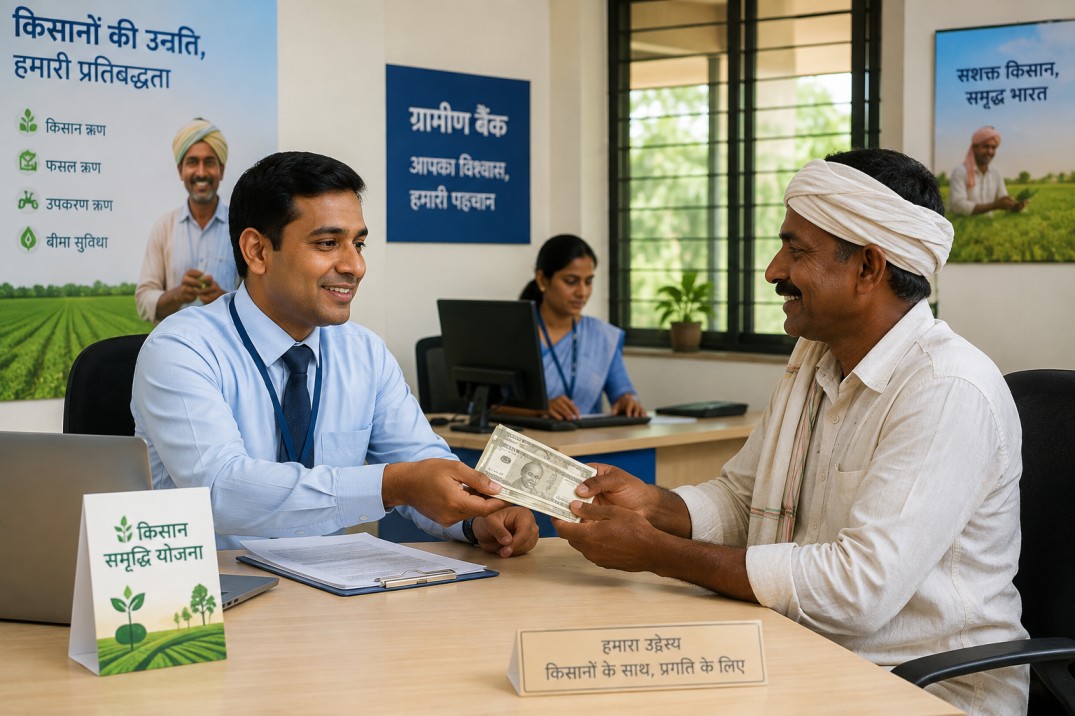
Farming runs on cycles, but money doesn’t always show up when needed. Seeds and fertilisers need to be paid for at the start of the season; income only arrives at the end of it, and even then, prices aren’t guaranteed. This mismatch between when farmers spend and when they earn is one of the oldest problems in agriculture and also one of the most solvable, given the right financial tools.
We will walk you through the main types of farmer finance available in India today, what they’re actually used for, and how thinking about them together, rather than one loan at a time, can make a real difference to a farm’s financial stability.
Why farmer finance looks different from other lending
Agricultural income is seasonal and unpredictable. Weather, pest cycles, and market price swings all sit outside a farmer’s control. That’s why farm finance has evolved its own set of instruments, built around flexibility: revolving credit lines instead of fixed EMIs, loans against stored produce instead of just fixed assets, and interest structures that reward timely repayment.
The core pillars of farmer finance
- Crop loans and the Kisan Credit Card (KCC): The KCC remains the backbone of institutional farm credit in India. It functions less like a traditional loan and more like a revolving overdraft. Farmers draw funds as needed for cultivation and post-harvest expenses, rather than reapplying every season. As of 2026, the scheme has over 7.72 crore operational cards nationwide, with total outstanding credit touching roughly ₹10.2 lakh crore. Recent updates have also raised the collateral-free borrowing limit to ₹2 lakh, up from ₹1.6 lakh, specifically to benefit tenant and marginal farmers.
- Warehouse receipt finance: Rather than selling produce immediately after harvest, farmers can store it in an accredited warehouse and borrow against the stock using a warehouse receipt as collateral. This avoids distress sales and lets farmers wait for better prices while still accessing working capital. Loans are typically extended against a significant share of the produce’s assessed market value.
- Investment and term loans: For longer-horizon needs like machinery, drip irrigation systems, greenhouses, or setting up allied activities like dairy or poultry, investment loans provide multi-year credit rather than a single-season facility. These are the loans that fund capacity growth rather than just keeping the current season running.

- Invoice and bill discounting: For farmers and agribusinesses selling through longer payment cycles, invoice discounting converts pending receivables into immediate cash, smoothing out the gap between delivering produce and actually being paid for it.
- Loan against property (LAP): For larger, longer-term capital needs such as expanding a farm business, diversifying into allied activities, or funding major infrastructure, a loan against property lets farmers and agribusinesses unlock the value of owned property to access higher-ticket financing than typical crop or working capital loans allow.
What’s changed in the credit landscape lately
India’s institutional agricultural credit flow is on a strong upward trajectory. NABARD projects that it will exceed ₹32.5 lakh crore for FY 2025–26. Digital infrastructure is catching up too: the Kisan Rin Portal, launched in 2023, now enables end-to-end digital loan applications and real-time tracking of interest subventions, cutting down the paperwork that used to slow disbursement.
Warehouse receipt financing, meanwhile, is still underused relative to its potential of roughly 330 million tonnes of foodgrain India produced in a recent year; only a small fraction was financed this way, pointing to real headroom for wider adoption.
Building a financial plan, not just taking a loan
The real upgrade in farmer finance isn’t just more credit, but more combinations of credit. A farmer relying solely on a crop loan is still exposed to the price risk of selling right after harvest. Layering in warehouse receipt finance changes that by adding investment credit on top supports longer-term productivity gains rather than just covering this season’s costs.
Thinking about farm finance holistically, crop loans for immediate needs, warehouse financing for price timing, and investment loans for growth creates a far more resilient structure than treating each loan as a one-off transaction.
How Agriwise supports this
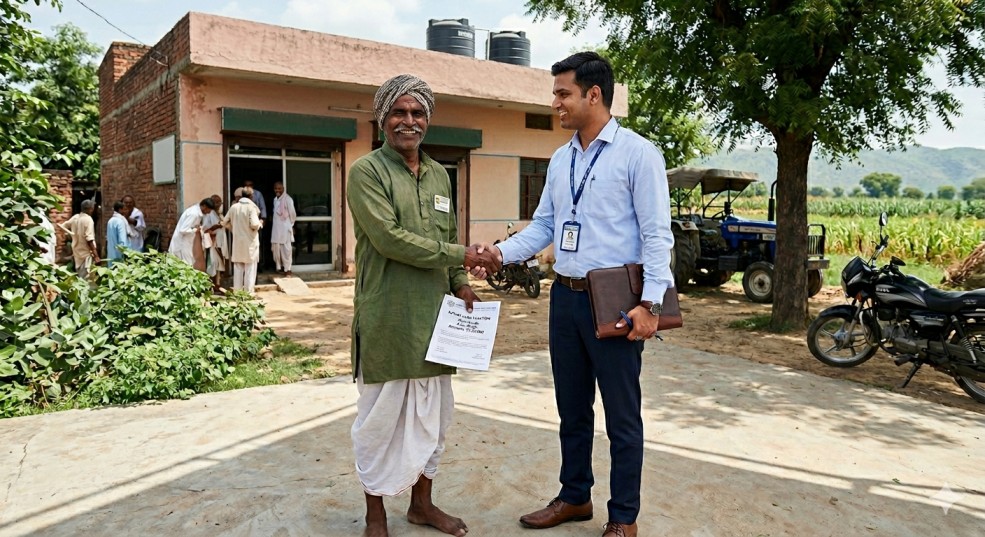
Agriwise offers a full suite of financing tailored to Indian agriculture: Secured Business Loans for working capital and expansion, Warehouse Receipt Finance to unlock liquidity from stored produce, Invoice Bill Discounting for smoother cash flow, and Farmer Financing for sustainable investment. The goal is to help farmers and agribusinesses move beyond single-purpose borrowing and build a financing mix suited to how their operations actually run through the year.
Final thought
Good farm financial planning isn’t about avoiding debt because credit is often exactly what’s needed to grow. It’s about matching the right instrument to the right need, and not defaulting to a distress sale simply because it’s the only lever available at that moment. As India’s credit infrastructure keeps modernising, farmers who understand and combine these tools are in a much stronger position than those relying on any single one.
FAQs
- What’s the difference between a crop loan and a warehouse receipt loan?
A crop loan funds cultivation costs upfront; a warehouse receipt loan is taken against already-harvested and stored produce, letting farmers delay selling. - Is the Kisan Credit Card only for crop loans?
No. It can also cover post-harvest expenses and, depending on the bank, allied agricultural activities. - Do I need to be a large landholder to access these financing options?
No. Several of these instruments, including KCC and warehouse receipt finance, are specifically structured to be accessible to small and marginal farmers. - What documents are typically needed to apply for farmer finance?
Requirements vary by lender and instrument, but generally include land or tenancy records, identity and address proof, and, for warehouse receipt finance, the receipt itself as proof of stored produce. - Can a farmer combine more than one type of financing at the same time?
Yes. In fact, many farmers use a mix, such as a KCC for seasonal cultivation costs alongside warehouse receipt finance for post-harvest liquidity, rather than relying on a single instrument.