

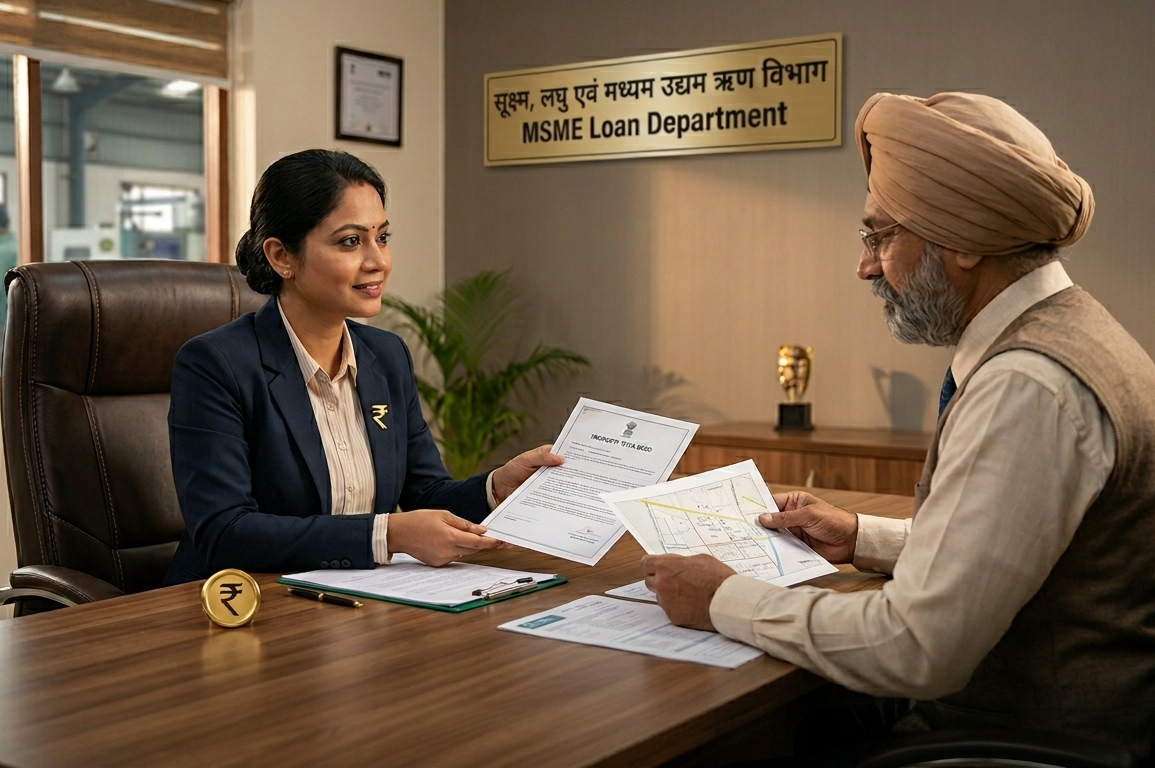
If you run a small or mid-sized business in India, chances are you’ve faced this question at some point: do I mortgage my property to raise capital, or do I go for a straightforward business loan? It sounds simple, but the answer can have a significant impact on your cash flow, your balance sheet, and your business trajectory for years.
Let’s cut through the noise and break it down clearly, especially in the context of where Indian MSME lending stands in 2026.
First, why does this even matter right now?
India’s MSME sector is at a critical inflexion point. According to the CRIF-SIDBI Small Businesses Report 2025, MSME credit exposure in India grew 19.3% year-on-year to ₹45.3 trillion as of June 2025, with active loan accounts rising to 6.9 crore. That’s strong headline growth, but here’s the catch.
Despite that momentum, SIDBI estimates that the sector still faces an addressable credit gap of ₹30 lakh crore, nearly 24% of total demand that formal institutions haven’t been able to meet.
That gap means millions of MSMEs are either paying too much for credit, picking the wrong product for their needs, or simply going without. Understanding the difference between a Loan Against Property (LAP) and an unsecured business loan isn’t just a financial decision but a strategic one.
What is a Loan Against Property?
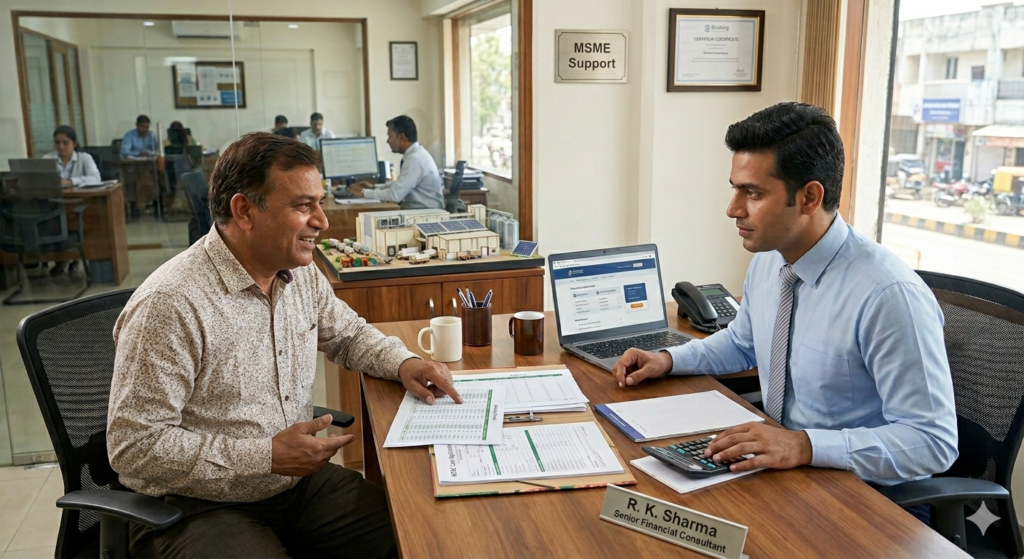
A Loan Against Property (LAP) is a secured loan where you pledge residential or commercial property as collateral. In return, you get access to higher loan amounts, longer repayment tenures, and significantly lower interest rates compared to unsecured credit.
As of 2026, LAP interest rates in India range from 8.45% to 15% per annum, depending on the lender, borrower profile, and property type. Major banks are offering rates from 9% to 13% for prime borrowers following the RBI’s accommodative rate stance. The repo rate now stands at 5.5% after successive cuts in 2025.
The Indian LAP market itself was valued at USD 758 billion in 2024 and is forecast to reach USD 2,369 billion by 2033, growing at a CAGR of 13.5%. Rising MSME credit demand in Tier 2-4 cities is one of the key growth drivers, as businesses in smaller markets increasingly leverage their property assets to fund expansion.
LAP is best suited for: capital-heavy needs like buying new facilities, purchasing equipment, long-term infrastructure investment, or scaling operations where you need a large ticket size and can afford longer processing timelines.
What is an unsecured business loan?
An unsecured business loan (often called an MSME loan) doesn’t require collateral. It’s faster to process, easier to access, and designed for immediate liquidity needs, but it comes at a cost. Interest rates on unsecured business loans typically start from 16% per annum and can go considerably higher depending on your risk profile. That’s a meaningful premium over LAP, sometimes 5 to 7 percentage points, which adds up significantly over a multi-year loan.
The trade-off is speed and simplicity. Business loans can be disbursed quickly, often without property documentation, and are widely available through banks, NBFCs, and government schemes like MUDRA and CGTMSE. For working capital shortfalls, emergency procurement, or short-cycle needs, they work well.
Business loans are best suited for: short-term working capital, bridging gaps between receivables and payables, or situations where you don’t want to (or can’t) pledge a property.
LAP vs Business Loan: The key differences at a glance
|
Factor |
Loan Against Property | Unsecured Business Loan |
|
Interest Rate |
8.45% – 15% p.a. |
16%+ p.a. |
|
Loan Amount |
Higher (up to 60-70% of property value) |
Lower ticket sizes |
|
Tenure |
Up to 15 years |
Typically 1-5 years |
|
Processing Time |
Longer (property valuation required) |
Faster |
|
Collateral |
Property required |
Not required |
| Best For | Long-term capital, expansion |
Short-term working capital |
So, which should an MSME choose in 2026?
The honest answer: it depends on what you need the money for and how urgently you need it.
If you’re investing in something that will generate returns over the medium to long term, new machinery, a bigger processing facility, or agricultural infrastructure, LAP’s lower interest rate will save you substantially more over the tenure of the loan. The upfront effort of property documentation pays for itself.
If you need cash fast to meet a vendor payment, bridge a seasonal working capital gap, or respond to a market opportunity with a short cycle, a business loan’s speed often outweighs its higher cost.
Many smart MSMEs use both: LAP for long-term structural investments, and a working capital line for day-to-day operational flexibility. The goal is to match the type of credit to the purpose. Using expensive short-term money for long-term assets is one of the most common (and costly) mistakes small businesses make.
What’s Agriwise’s role in all this
For agri-linked MSMEs, the decision is often more nuanced because the credit need is tied to seasonal cycles, commodity prices, storage infrastructure, and supply chain dynamics that a standard bank product isn’t designed to handle.
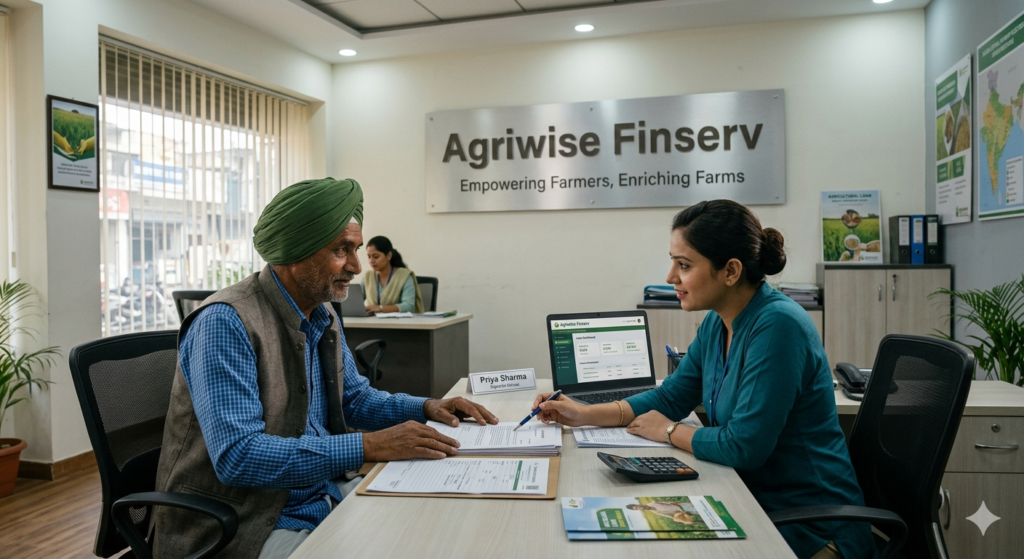
This is exactly the space Agriwise, the NBFC arm of StarAgri, is built for. Agriwise brings a deep understanding of the agri value chain to credit underwriting, offering:
- LAP: structured, property-backed financing for agri expansion, procurement scale-up, or infrastructure development, with rates designed to be competitive for agri-linked businesses
- Warehouse Receipt Finance: working capital against commodities stored in StarAgri’s 2,200+ warehouses, providing liquidity without forced selling at low post-harvest prices
- Supply Chain Finance: unlocking cash tied up in receivables for agri MSMEs, traders, and processors
- Solar Finance: financing for renewable energy adoption among farmers and agri businesses
Agriwise has disbursed over ₹2,500 crore across 5,500+ customers and works with various banking partners, building a credit infrastructure that understands what an agricultural season actually looks like.
The difference between a good financing decision and a poor one is often just context. A lender that understands your industry, your cash flow patterns, and your assets can structure credit that works, not just credit that’s available.
Conclusion
In 2026, both LAP and business loans will have a clear place in the MSME financing toolkit. LAP wins on cost for long-term, higher-value needs. Business loans win on speed for short-term, operational requirements. The mistake isn’t choosing one over the other. It is choosing the wrong one for the wrong purpose.
With India’s MSME credit gap still at ₹30 lakh crore, getting this decision right matters, not just for your business, but for the broader formalisation of Indian enterprise finance.
If you’re an agri-linked MSME trying to figure out which product fits your situation, Agriwise can help you navigate that decision, with the sector knowledge to back it up.
FAQs
- What is the main difference between a Loan Against Property and an unsecured business loan?
A LAP requires property as collateral but offers lower interest rates (8.45–15% p.a.) and higher loan amounts. An unsecured business loan needs no collateral but typically starts from 16% p.a. and suits shorter-term, faster-turnaround needs. - Which loan option is better for an agri-linked MSME?
For long-term investments like infrastructure or equipment, LAP’s lower rate saves significantly over the tenure. For seasonal working capital or short-cycle needs, Agriwise’s warehouse receipt finance is often a smarter, faster alternative to either. - What is warehouse receipt finance, and how is it different from a traditional loan?
It’s credit extended against commodities stored in a recognised warehouse, rather than against property or credit history. Farmers and agri-MSMEs can borrow against stored produce through Agriwise instead of being forced to sell at low post-harvest prices. - How does Agriwise assess creditworthiness for agri-MSMEs?
Agriwise uses proprietary credit models built on 16+ years of agri-sector repayment data, accounting for seasonal cash flows and commodity price cycles, resulting in NPAs consistently below 1%, well below industry norms. - Can an MSME use both a Loan Against Property and a business loan at the same time?
Yes, and many do. LAP works well for long-term structural investments, while a working capital line handles day-to-day operations. The key is matching the type of credit to the purpose. Mixing the two up is one of the most common and costly financing mistakes MSMEs make.
Disclaimer
The content published on this blog is provided solely for informational and educational purposes and is not intended as professional or legal advice. While we strive to ensure the accuracy and reliability of the information presented, Agriwise make no representations or warranties of any kind, express or implied, about the completeness, accuracy, suitability, or availability with respect to the blog content or the information, products, services, or related graphics contained in the blog for any purpose. Any reliance you place on such information is therefore strictly at your own risk. Readers are encouraged to consult qualified agricultural experts, agronomists, or relevant professionals before making any decisions based on the information provided herein. Agriwise, its authors, contributors, and affiliates shall not be held liable for any loss or damage, including without limitation, indirect or consequential loss or damage, or any loss or damage whatsoever arising from reliance on information contained in this blog. Through this blog, you may be able to link to other websites that are not under the control of Agriwise. We have no control over the nature, content, and availability of those sites and inclusion of any links does not necessarily imply a recommendation or endorsement of the views expressed within them. We reserve the right to modify, update, or remove blog content at any time without prior notice.