
Tag Archives: agri finance 2026

Innovations and Emerging Trends in Agricultural Insurance in India (2025–26)

March 05, 2026

India’s agriculture sector, contributing nearly 18% to the national GDP and supporting over 45% of the country’s workforce, is increasingly navigating a landscape shaped by climate uncertainty, fluctuating prices, and rising input costs. As erratic monsoons, heatwaves, and extreme weather events become more frequent, the question is no longer whether farmers need protection, but how that protection is evolving.

Today, agricultural insurance in India is moving beyond traditional coverage models, embracing innovations such as digital platforms, satellite-based crop monitoring, AI-led risk assessment, and progressive policy reforms. In 2025–26, the sector is steadily transforming into a data-driven risk management ecosystem, designed to make agricultural protection faster, smarter, and more responsive to the realities of modern farming.

The current landscape of agricultural insurance in India

India remains one of the largest crop insurance markets globally, primarily under the Pradhan Mantri Fasal Bima Yojana (PMFBY).

  • Since its launch in 2016, the scheme has insured over 78 crore farmer applications, with more than 19.61 crore farmers receiving claims.
  • Total claims paid to farmers under the scheme have crossed ₹1.72 lakh crore, while farmer premium contributions amount to around ₹34,507 crore.
  • In 2024–25 alone, about 4.19 crore farmers were enrolled, representing the highest participation since the scheme’s launch.
  • The number of farmer applications insured has increased significantly, from 371 lakh in 2014–15 to over 1,510 lakh in 2024–25.
  • Government subsidies play a major role in the program, with the Centre and states sharing most of the premium cost, while farmers pay only a small portion.

The scheme currently covers more than 70 notified crops and protects farmers against risks such as drought, floods, hailstorms, cyclones, landslides, and post-harvest losses. Despite strong government backing, penetration remains uneven across states, creating room for innovation and complementary private-sector solutions.
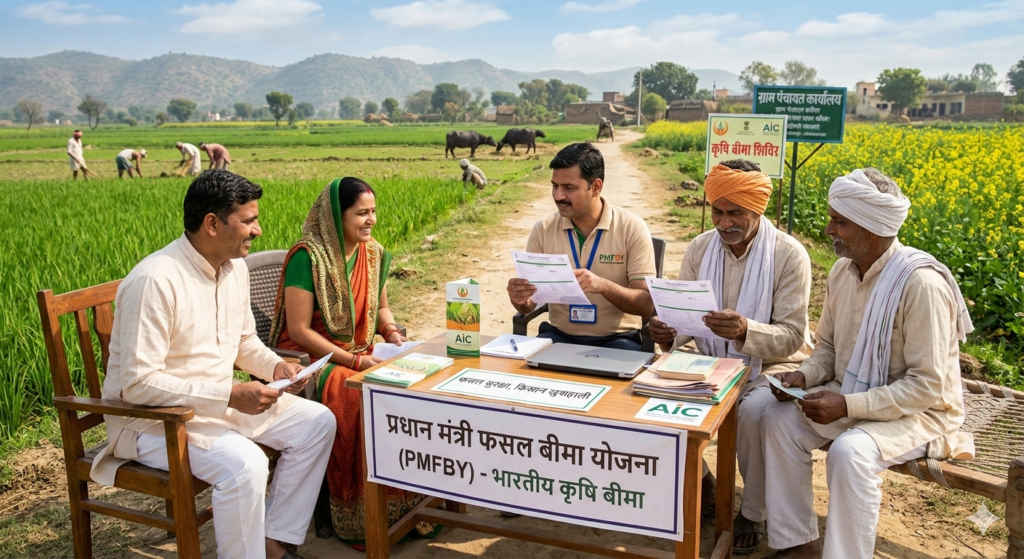
PMFBY

Key innovations reshaping agricultural insurance in India

  • Satellite-based crop monitoring & remote sensing: The integration of satellite imagery, drone mapping, and geo-tagged field data is transforming crop loss assessment. Several states now deploy technology-enabled yield estimation models, reducing dependence on manual crop-cutting experiments.

This improves:

    • Transparency
    • Faster claim settlements
    • Reduced disputes
    • Lower operational costs
  • Weather & parametric insurance models: Weather-index and parametric insurance products are gaining traction, particularly in rainfall-deficient and drought-prone regions. Instead of waiting for field inspection, payouts are triggered automatically when rainfall or temperature thresholds are breached.

These models are especially relevant as India witnesses:

    • Increased frequency of unseasonal rainfall
    • Heatwave-linked crop stress
    • Erratic monsoon distribution
  • AI-driven risk underwriting: AI-led underwriting enables more scientific premium pricing and customised risk coverage, particularly beneficial for high-value crops and horticulture.

Insurers are increasingly using:

    • Historical yield datasets
    • Soil health information
    • Weather trend analytics
    • Crop pattern intelligence
  • Digital claim processing & mobile access: States implementing end-to-end digital workflows have reported faster claim settlement cycles compared to legacy systems.

Mobile apps and digital platforms now allow:

    • Farmer self-enrolment
    • Real-time policy tracking
    • Online claim submission
    • Direct benefit transfer (DBT) into bank accounts
  • Climate risk integration & sustainability focus: With climate change emerging as a structural risk, insurers are integrating:
    • Climate vulnerability scoring
    • Region-wise drought and flood mapping
    • Long-term yield volatility analysis

agricultural insurance

Emerging trends in 2025–26

  • Greater private sector participation: While PMFBY dominates, private insurers are expanding customised crop insurance and allied risk products.
  • Bundled risk & credit-linked insurance: Insurance products are increasingly bundled with agricultural loans, input financing, and warehouse receipt finance, ensuring integrated financial risk protection.
  • Data-backed credit risk assessment: Insurance data is now being used by NBFCs and agri-financiers to evaluate borrower resilience and repayment capacity.
  • Increasing focus on small farmers: Digital KYC and Aadhaar-linked enrolment are helping bring marginal farmers into formal risk coverage systems.

Agriwise Finserv: Where insurance meets agricultural finance

While traditional crop insurance provides yield protection, farmers and agri-entrepreneurs also require financial resilience across the crop lifecycle. This is where Agriwise complements the ecosystem.

Agriwise is a specialised agri-finance platform offering structured credit solutions designed to reduce financial stress arising from production and market risks.

What does Agriwise offer?

  • Farmer Finance: Timely working capital support for cultivation needs.
  • Warehouse Receipt Finance: Enables farmers and traders to store produce and avoid distress sales while accessing liquidity.
  • Invoice Bill Discounting: Improves cash flow cycles for agri-traders and businesses.
  • Loans Against Property (LAP): Structured funding for expansion and operational stability.
  • Solar Finance: Supports the adoption of renewable energy solutions for irrigation and farm mechanisation.
  • Agricultural insurance: Through partnerships with leading, reputable insurance companies, Agriwise facilitates access to crop, property, and health insurance solutions, helping farmers safeguard their income against weather-related risks and crop losses.

Conclusion

Agricultural insurance in India is transitioning from a subsidy-driven safety net to a technology-enabled risk intelligence system. Innovations in satellite analytics, AI-based underwriting, parametric triggers, and digital claim infrastructure are redefining how risk is measured and mitigated.

However, insurance alone cannot solve agricultural vulnerability. The future lies in integrated risk and finance ecosystems, where insurance, credit, storage, and market access function in a cohesive manner. As India advances toward climate-smart agriculture, the synergy between crop insurance and structured agri-finance solutions will determine the sector’s long-term stability and growth.

FAQs

  • Why is agricultural insurance important for farmers in India?
    Agricultural insurance helps farmers protect their income against risks such as drought, floods, pests, and other natural disasters. Since farming depends heavily on weather conditions, insurance provides financial support when crops are lost, allowing farmers to recover and continue their agricultural activities without severe financial stress.
  • What are the major agricultural insurance schemes available in India?
    The most prominent scheme is Pradhan Mantri Fasal Bima Yojana (PMFBY), which offers subsidised crop insurance to farmers across India. Another important program is the Weather-Based Crop Insurance Scheme (WBCIS), which provides payouts based on weather parameters such as rainfall and temperature.
  • How is technology transforming agricultural insurance in India?
    Technology is making agricultural insurance faster and more transparent. Innovations such as satellite imagery, remote sensing, artificial intelligence, and digital claim processing are helping insurers assess crop damage more accurately, reduce manual inspections, and settle claims more efficiently.
  • What is parametric or weather-index agricultural insurance?
    Parametric insurance provides payouts based on predefined weather triggers, such as rainfall levels or temperature changes, rather than on actual crop-loss verification. If the trigger condition is met, farmers receive compensation automatically, making the claims process quicker and more efficient.
  • How does Agriwise support farmers beyond agricultural insurance?
    Agriwise supports farmers and agri-businesses through a range of financial solutions, including farmer finance, warehouse receipt finance, invoice bill discounting, loans against property, and solar finance. In addition, through partnerships with leading insurance providers, Agriwise facilitates access to agricultural insurance solutions that strengthen farmers’ financial resilience.

Disclaimer

The content published on this blog is provided solely for informational and educational purposes and is not intended as professional or legal advice. While we strive to ensure the accuracy and reliability of the information presented, Agriwise make no representations or warranties of any kind, express or implied, about the completeness, accuracy, suitability, or availability with respect to the blog content or the information, products, services, or related graphics contained in the blog for any purpose. Any reliance you place on such information is therefore strictly at your own risk. Readers are encouraged to consult qualified agricultural experts, agronomists, or relevant professionals before making any decisions based on the information provided herein. Agriwise, its authors, contributors, and affiliates shall not be held liable for any loss or damage, including without limitation, indirect or consequential loss or damage, or any loss or damage whatsoever arising from reliance on information contained in this blog. Through this blog, you may be able to link to other websites that are not under the control of Agriwise. We have no control over the nature, content, and availability of those sites and inclusion of any links does not necessarily imply a recommendation or endorsement of the views expressed within them. We reserve the right to modify, update, or remove blog content at any time without prior notice.

Top 7 Agri Business Loans to Grow Your Farm or FPO

February 26, 2026

What does it really take to scale an agri venture today? Better seeds? Smarter technology? Stronger market access?
Yes, but behind all of that sits something equally powerful: structured finance.

India’s agricultural credit flow is expected to cross ₹32.5 lakh crore in FY 2025–26, reflecting the government’s continued push to formalise and expand agri financing. Today, agri businesses are no longer restricted to crop loans alone. It includes working capital, value-chain solutions, technology-linked credit, and collateral-free options that help farms and FPOs grow with confidence.

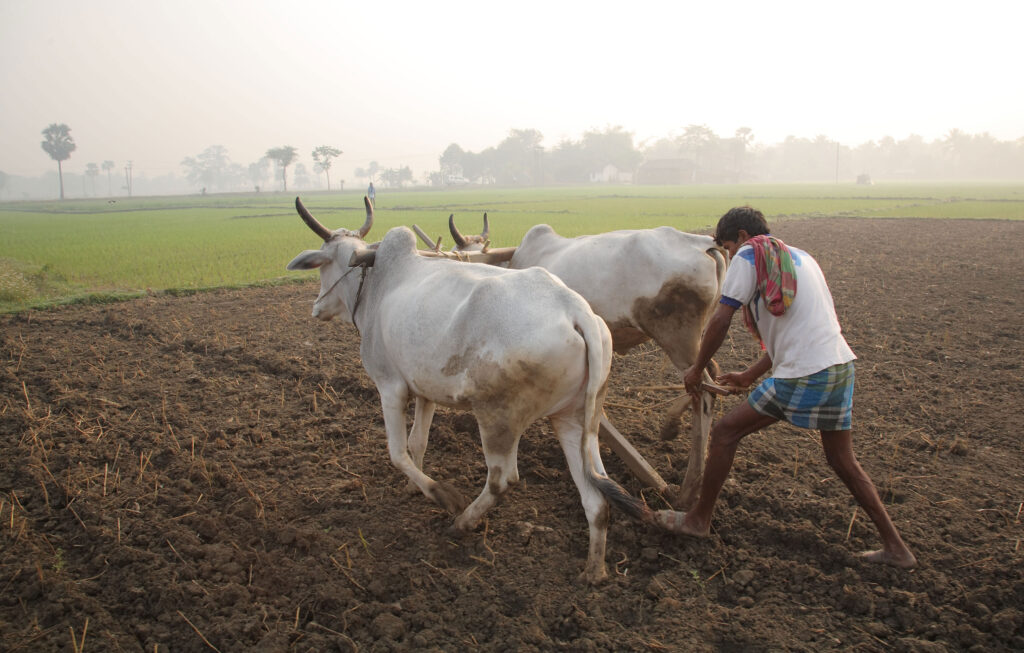
Ploughing with cattle in West Bengal

If you’re building an agri business, whether as a progressive farmer or an FPO leader, here are the top 7 loan options that can help you grow smarter and faster.

  • Kisan Credit Card (KCC): The Kisan Credit Card (KCC) is one of the oldest and most widely used credit products in Indian agriculture. It offers farmers and agri businesses a revolving credit limit for crop inputs, allied activities, and working capital needs.
    As of 2025, operative KCC loans exceeded ₹10 lakh crore (~₹10.05 lakh crore), benefiting ~77.2 million (7.72 crore) farmers in India (Business Standard) After the 2025 Union Budget, the loan limit under KCC was increased from ₹3 lakh to ₹5 lakh, making it more useful for medium and larger cropping cycles. (Business Today)
  • Warehouse Receipt Finance: Stored crops shouldn’t mean idle capital. With warehouse receipt finance, farmers and FPOs can use stored commodities as collateral to secure loans. This not only improves liquidity but also allows them to hold stock for better market prices.
  • Term loans for infrastructure & expansion: For long-term growth, many agri businesses require funding for physical infrastructure, such as cold storage, drying units, and grading and processing facilities.
    Term loans from commercial banks and cooperative lenders support these investments. They are especially critical for scaling up FPO operations and shifting from commodity trading to value addition.

  • Invoice Discounting: Agri businesses often face delayed payments from buyers, which ties up working capital. Invoice discounting lets businesses unlock funds tied in receivables by using pending invoices as loan collateral.
    This financing option is increasingly offered by digital lenders and fintech platforms, cutting down processing times and reducing cash flow bottlenecks.
  • Collateral-free fintech loans: Fintech lenders are playing a growing role in India’s rural credit landscape. By using alternative credit scoring and digital underwriting, many fintechs are expanding access to agri loans for small farmers, traders, and FPOs.
    National data shows fintech players disbursed over 10.9 crore loans totaling ₹1,06,548 crore in FY 2024–25 — a strong indicator of their role in deepening credit access. (The Economic Times) Additionally, the RBI has raised the limit for collateral-free agricultural loans to ₹2 lakh, reducing barriers for marginal borrowers. (adda247)
  • Loans Against Property (LAP): When farms or FPOs look to scale into processing, export, or value addition, larger structured loans may be needed. Loans Against Property (LAP) allow borrowers to use commercial or residential property as collateral to unlock funds at competitive rates.
  • Technology & innovation loans: The Reserve Bank of India is now pushing to include technology-linked expenses, such as soil-testing tools, weather analytics, and organic certification, within loan eligibility norms. (Business Standard)
    These emerging credit products aim to support tech adoption in agriculture, a vital need as data-driven inputs and precision farming become mainstream.

Agriwise offerings: Tailored financing for your agri business

At Agriwise, we believe financing should match the operational realities and goals of an agri business, not the other way around. That’s why our suite of loan solutions is designed for flexibility, seasonality, and real value creation.

Here’s what Agriwise offers:

  • Warehouse Receipt Finance – Unlock capital from stored stock at competitive rates
  • Invoice Bill Discounting – Improve trade cash flows with faster receivables funding
  • Loans Against Property (LAP) – Structured expansion capital
  • Farmer Finance – Working capital assistance tailored for crop cycles
  • Solar & Sustainable Energy Loans – Support for renewable and cost-saving investments

Agriwise acts as a growth partner, not just a lender, helping you leverage the right finance product at the right time to unlock opportunities across your agri value chain.

Conclusion

For any modern agri business, whether a family farm, a medium-scale trader, or an ambitious FPO, access to the right loan at the right time can change the growth trajectory. With the evolving landscape of government support, bank products, and fintech innovation, there are more avenues than ever before to finance working capital, manage risks, and invest in future capacity.

The question now isn’t just “Can I get credit?
It’s “Which loan will help my agri business grow the fastest?

And with tailored solutions from partners like Agriwise, finding answers is easier 🙂

FAQs

  • What are the best loan options for starting or expanding an agri business in India?
    Some of the most popular options include Kisan Credit Card (KCC), warehouse receipt finance, infrastructure term loans, invoice discounting, collateral-free fintech loans, and loans against property for large-scale expansion.
  • Can FPOs apply for agri business loans?
    Yes, Farmer Producer Organisations (FPOs) are eligible for multiple financing options, including working capital loans, warehouse receipt finance, infrastructure loans under government schemes, and fintech-led collateral-free lending.
  • Are there collateral-free loan options available for agri businesses?
    Yes. As per recent RBI guidelines, collateral-free agricultural loans are available up to ₹2 lakh. Additionally, several fintech lenders offer unsecured or partially secured loans based on digital underwriting models.
  • How does warehouse receipt finance help an agri business?
    It allows farmers or FPOs to borrow against stored produce rather than sell immediately after harvest. This improves liquidity and enables better price realisation in volatile markets.
  • How can Agriwise support my agri business growth?
    Agriwise offers customised financing solutions such as warehouse receipt finance, invoice bill discounting, loans against property, farmer finance, and solar finance, all aligned with seasonal cycles and real agri trade requirements.

Disclaimer

The content published on this blog is provided solely for informational and educational purposes and is not intended as professional or legal advice. While we strive to ensure the accuracy and reliability of the information presented, Agriwise make no representations or warranties of any kind, express or implied, about the completeness, accuracy, suitability, or availability with respect to the blog content or the information, products, services, or related graphics contained in the blog for any purpose. Any reliance you place on such information is therefore strictly at your own risk. Readers are encouraged to consult qualified agricultural experts, agronomists, or relevant professionals before making any decisions based on the information provided herein. Agriwise, its authors, contributors, and affiliates shall not be held liable for any loss or damage, including without limitation, indirect or consequential loss or damage, or any loss or damage whatsoever arising from reliance on information contained in this blog. Through this blog, you may be able to link to other websites that are not under the control of Agriwise. We have no control over the nature, content, and availability of those sites and inclusion of any links does not necessarily imply a recommendation or endorsement of the views expressed within them. We reserve the right to modify, update, or remove blog content at any time without prior notice.

financial planning

How farmers can do successful financial planning before cost spikes hit

January 28, 2026

In agriculture, uncertainty is the only certainty.

From unpredictable weather patterns to fluctuating input costs and volatile commodity prices, farmers worldwide face financial pressures every season. In India, particularly, farmers are witnessing input costs rising faster than their income, a trend that puts profit margins under significant strain. Effective financial planning can make the difference between thriving and merely surviving when costs spike.

Let’s understand why and what farmers can do to plan their finances better!

Why financial planning matters in modern agriculture

Rising input costs, including seeds, fertilisers, pesticides, labour, and fuel, are among the top concerns for farmers globally. In a 2024 McKinsey farmer survey, about 48% of farmers cited increased input prices as the leading risk to profitability over the next two years, with volatility in commodity prices also gaining prominence. Overall perceived increases in costs averaged around 13%.
In India, agricultural income growth has lagged behind rural inflation, leaving farmers facing the double challenge of higher costs without commensurate income growth. Data from the Commission for Agricultural Costs and Prices (CACP) shows that while profits have risen in nominal terms, profit margins as a percentage of costs have fallen. This economic squeeze makes financial planning indispensable, not optional.

wealth management

Step‑by‑step guide to financial planning for farmers

  • Start with a detailed budget: The foundation of any sound financial planning is a comprehensive budget. Break your farm’s expenses into categories: fixed costs (lease, insurance, loan EMIs), variable costs (inputs like seeds and fertilisers), and seasonal expenses (labour during peak sowing or harvesting). Tools like Excel or simple farm management apps can help track and compare planned versus actual expenses regularly. Mapping out your costs allows you to identify areas where spending can be tightened and prepares you for seasonal price spikes.
  • Build cash flow forecasts: A cash flow forecast estimates your expected income and expenses throughout the farming cycle. Seasonal cash flow patterns help anticipate months when funds might be tight. Use past mandi rates, contracts, and crop yield data to realistically estimate revenues. Having this roadmap lets you identify shortfalls early and arrange financing, such as formal credit or dealer financing.
  • Diversify revenue sources: Don’t depend on a single crop or income stream. Diversification can be a powerful tool in your financial planning strategy. Many farmers are exploring allied activities such as livestock, high‑value horticulture, agritourism, or value‑added products to spread risk and improve resilience against volatile crop prices.
  • Leverage insurance and credit products: Insurance products, such as crop insurance, help mitigate losses from weather shocks, while structured credit instruments, such as Kisan Credit Cards (KCC), provide short‑term working capital. A well‑planned credit strategy ensures liquidity during peak expenses without compromising profitability. Prioritise locking in favourable terms early and maintain good credit practices to lower interest burdens.

financial advisors

  • Plan for emergencies: Agriculture is vulnerable to risks beyond your control, such as cyclones, unseasonal rainfall, pest outbreaks, or labour shortages. It’s prudent to set aside an emergency fund equal to 5–10% of your annual budget. Including this buffer in your financial planning not only protects you during crises but also reduces the need for high‑cost borrowing.
  • Review and adjust regularly: Markets change, and so should your financial plans. Review your financial plan at least quarterly, or more frequently if input prices swing dramatically, and adjust your strategies accordingly. Timely monitoring helps you refine your projections and implement corrective actions before small issues become big problems.

The role of data and technology

Forward‑looking farmers are increasingly using technology to inform financial planning decisions. Real‑time data on weather, soil health, input prices, and market demand helps reduce guesswork and refine cost estimates. Digital tools can also automate budget tracking and alerts when expenditures exceed planned thresholds. Investment in tech might seem costly initially, but the long‑term benefits in cost control and productivity can be substantial.

Agriwise: Supporting farmers with smarter financial solutions

At Agriwise, we understand that robust financial planning is substantial for a sustainable farming business. To help farmers prepare for cost spikes and manage cash flows efficiently, Agriwise offers specialised financial solutions:

  • Loans Against Property (LAP): Unlock funds by leveraging owned assets to meet financial needs.
  • Warehouse Receipt Finance: Use stored agri produce as collateral to access working capital.
  • Farmer Finance: Flexible credit tailored to crop cycles and seasonal requirements.
  • Solar Finance: Support investments in renewable energy for farms to reduce operational costs.

financial planning and analysis

Conclusion

Cost volatility is an inevitable part of agriculture, but financial hardship doesn’t have to be. Successful financial planning empowers farmers to anticipate challenges, optimise spending, diversify income streams, and build resilience against market and environmental risks. With clear budgets, smart use of credit and insurance, and regular plan reviews, farmers can not only survive cost spikes but also thrive amidst them.
By partnering with Agriwise and embracing proactive financial management, farmers unlock greater control over their economic destinies, turning risk into measured opportunity.

FAQs

  • What is financial planning for farmers, and why is it important?
    Financial planning for farmers involves budgeting, forecasting cash flows, and managing credit and expenses to ensure profitability despite cost fluctuations. It helps farmers anticipate cost spikes, optimise spending, and maintain sustainable operations.
  • How can farmers prepare for rising input costs, such as seeds, fertilisers, and labour?
    Farmers can prepare by creating a detailed budget, maintaining an emergency fund, diversifying income sources, and leveraging credit or financing options to manage peak costs effectively.
  • What role does technology play in financial planning for farmers?
    Technology provides real-time data on weather, soil health, input prices, and market trends, helping farmers make informed decisions, track expenses, and proactively adjust financial plans.
  • How can Agriwise services help farmers with financial planning?
    Agriwise offers financial solutions, including Loans Against Property (LAP), Warehouse Receipt Finance, Farmer Finance, and Solar Finance, helping farmers access funds, manage cash flow, and plan for seasonal cost spikes efficiently.
  • How often should farmers review and update their financial plan?
    Farmers should review their financial plan at least quarterly, or whenever there are significant changes in input costs, market prices, or crop conditions, to ensure timely adjustments and avoid financial stress.

Disclaimer

The content published on this blog is provided solely for informational and educational purposes and is not intended as professional or legal advice. While we strive to ensure the accuracy and reliability of the information presented, Agriwise make no representations or warranties of any kind, express or implied, about the completeness, accuracy, suitability, or availability with respect to the blog content or the information, products, services, or related graphics contained in the blog for any purpose. Any reliance you place on such information is therefore strictly at your own risk. Readers are encouraged to consult qualified agricultural experts, agronomists, or relevant professionals before making any decisions based on the information provided herein. Agriwise, its authors, contributors, and affiliates shall not be held liable for any loss or damage, including without limitation, indirect or consequential loss or damage, or any loss or damage whatsoever arising from reliance on information contained in this blog. Through this blog, you may be able to link to other websites that are not under the control of Agriwise. We have no control over the nature, content, and availability of those sites and inclusion of any links does not necessarily imply a recommendation or endorsement of the views expressed within them. We reserve the right to modify, update, or remove blog content at any time without prior notice.
types of financial options

Top 5 types of financial options Indian farmers should explore in 2026

January 08, 2026

What if the key to transforming your farm’s profits this year isn’t just better seeds or machinery, but the types of financial options? According to NABARD projections, agricultural credit extended by commercial and regional rural banks is expected to exceed ₹32.5 lakh crore in FY26, a new record for institutional credit flow in the sector.

In 2026, Indian farmers have access to types of financial options that can do more than fund day-to-day operations. They can unlock growth, protect against risks, and even turn stored crops into ready cash.

From traditional crop loans to innovative trade-linked financing, the choices are expanding, but knowing which option fits your farm’s needs is the real game-changer. Among the various financial options, below are the top 5 that every farmer should explore this year to strengthen cash flow, manage risks, and future-proof their agricultural business.

types of financial options

1. Short‑Term Crop Loans and Kisan Credit Cards (KCC)

Short-term crop loans, particularly through the Kisan Credit Card (KCC) scheme, remain among the most accessible financial options. KCCs provide working capital for essential seasonal inputs like seeds, fertilisers, pesticides, labour, and irrigation. According to NABARD data, around 77.1 million KCCs are active, spanning crop, fisheries, and animal husbandry activities.

It matters in 2026 because:

    • Timely access to working capital reduces dependency on high-cost informal lenders.
    • Interest subvention under the Modified Interest Subvention Scheme (MISS) can bring effective rates down to around 4% for prompt repayment.

2. Crop insurance: Reducing financial risk

Crop insurance schemes help farmers manage financial losses from natural calamities, erratic weather, and pest infestations, critical risks in Indian farming. Under the Pradhan Mantri Fasal Bima Yojana (PMFBY), India’s flagship crop insurance programme, cumulative farmer applications insured crossed 1510 lakh (151 million) since inception through 2024‑25.

Why does this matter in 2026?

    • Broad coverage helps stabilise farm incomes after crop loss.
    • Timely claim payouts can protect farmers’ repayment ability and working capital.

3. Warehouse receipt financing & post‑harvest loans

Warehouse receipt financing is a critical post-harvest financial option that enables farmers to store produce in accredited warehouses and use the receipts as collateral to access working capital. Under this model, farmers avoid distress selling immediately after harvest, often when prices are lowest, and can unlock liquidity while waiting for better market conditions. Warehouses accredited under systems such as the Warehousing Development and Regulatory Authority (WDRA) issue legal documentation through negotiable warehouse receipts.

It’s essential in 2026 because: 

    • Turns stored produce into liquid assets without forcing low-price sales.
    • Integrates farmers into formal credit channels and larger market systems.

4. Long‑term investment loans for farm modernisation

Investment loans (multi-year credit) are an often underutilised financial option supporting capital expenditure, such as farm machinery, drip irrigation, greenhouses, and allied agri-activities, such as dairy or poultry units. Long-term loans provide the runway needed for efficiency-boosting investments that increase crop yields and operational scale.

Why this matters in 2026:

    • Supports the adoption of modern agricultural technology.
    • Enables diversification into allied sectors for additional income.

5. Value chain & allied sector financing

Beyond cultivation, diversified income streams are increasingly important. Value chain and allied sector financing, including supply chain finance, invoice discounting, and renewable energy loans (e.g., solar pumps and cold chains), is gaining traction as innovative financing options. These solutions support farmers and agripreneurs participating in organised buyer networks, processing units, and export channels, thereby directly supporting income continuity and working capital management.

Why does this matter in 2026?

    • Helps break dependency on crop cycles alone.
    • Unlocks financing linked to commercial activity rather than only land or crop collateral.

Macro financial trends: Importance of these types of financial options

While agricultural credit is rising overall, recent data shows bank credit growth to agriculture slowed to 10.4% year-on-year by March 2025, compared with higher growth rates in preceding years. This suggests that simply increasing credit flow may not be sufficient. Strategic, diversified financing mechanisms are needed so farmers can optimise working capital and investment decisions. As institutional credit targets expand (e.g., projected ₹32.5 lakh crore in FY26), combining different types of financial options, crop loans, insurance, warehouse financing, and investment credit enables a more resilient and growth-oriented financial structure for farm enterprises.

Agriwise: Financial solutions for modern Indian farmers

To help farmers leverage these opportunities, Agriwise offers a suite of specialised financial services tailored to Indian agriculture:

  • Secured Business Loans: Long-term finance for working capital purposes such as farm expansion, machinery purchase, and allied business growth.
  • Warehouse Receipt Finance: Short-term working capital against the post-harvested commodity, and get the better price realisation. 
  • Invoice Bill Discounting Finance: Convert receivables into immediate cash to manage working capital efficiently.
  • Solar Financing: Loans for renewable energy solutions, such as solar pumps and solar-powered cold storage, to help reduce operational costs and promote sustainability.

Conclusion

In 2026, Indian farmers have access to a broader range of financial options than ever before. From timely crop loans and risk-mitigating crop insurance to warehouse receipt financing, long-term investment loans, and allied-sector credit, each option addresses different needs throughout the farming lifecycle.

By leveraging these options and platforms like Agriwise, farmers can secure stable incomes, invest in modernisation, and strengthen long-term financial resilience.

FAQs

  • What are the main types of financial options available to Indian farmers in 2026?
    The key types of financial options include short-term crop loans like Agri Term Loan (Agri LAP),  Kisan Credit Cards (KCC), crop insurance, warehouse receipt financing, long-term investment loans for farm modernisation, and value chain or allied sector financing, such as invoice discounting and solar financing.
  • How can warehouse receipt financing help farmers?
    Warehouse receipt financing allows farmers to use stored produce as collateral to access loans. This helps them avoid distress selling immediately after harvest and provides liquidity while waiting for better market prices.
  • Why is crop insurance considered a critical financial option for farmers?
    Crop insurance protects farmers against losses due to unpredictable weather, pest attacks, or natural disasters. It stabilises income and ensures farmers can repay loans and maintain cash flow even in adverse conditions.
  • What types of loans can farmers use to modernise their farms?
    Farmers can access long-term investment loans for machinery, irrigation systems, greenhouses, and allied activities like dairy or poultry. These loans enable higher productivity, diversification, and sustainable growth.
  • What financial services does Agriwise offer to farmers?
    Agriwise provides Agri Term Loan (Agri LAP), Warehouse Receipt Finance, Invoice Bill Discounting Finance, and Solar Financing to help farmers and agri-entrepreneurs manage working capital, invest in growth, and adopt sustainable practices.

Disclaimer

The content published on this blog is provided solely for informational and educational purposes and is not intended as professional or legal advice. While we strive to ensure the accuracy and reliability of the information presented, Agriwise make no representations or warranties of any kind, express or implied, about the completeness, accuracy, suitability, or availability with respect to the blog content or the information, products, services, or related graphics contained in the blog for any purpose. Any reliance you place on such information is therefore strictly at your own risk. Readers are encouraged to consult qualified agricultural experts, agronomists, or relevant professionals before making any decisions based on the information provided herein. Agriwise, its authors, contributors, and affiliates shall not be held liable for any loss or damage, including without limitation, indirect or consequential loss or damage, or any loss or damage whatsoever arising from reliance on information contained in this blog. Through this blog, you may be able to link to other websites that are not under the control of Agriwise. We have no control over the nature, content, and availability of those sites and inclusion of any links does not necessarily imply a recommendation or endorsement of the views expressed within them. We reserve the right to modify, update, or remove blog content at any time without prior notice.

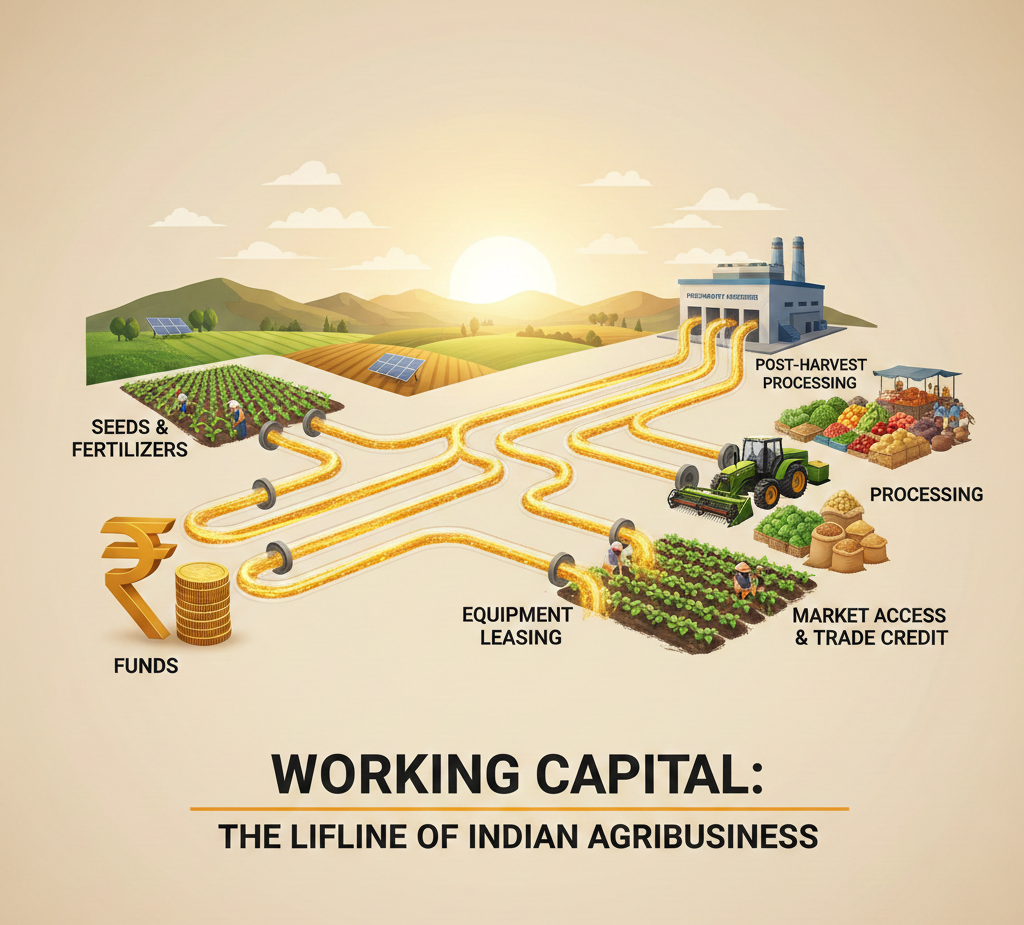
working capital

How Better Working Capital Can Change Your Agribusiness in 2026

January 02, 2026

Indian agribusiness is entering a pivotal phase of financial transformation. With agricultural credit forecasted to hit a record ₹32.5 lakh crore in FY26, up from ₹28.7 lakh crore in FY25, access to credit, especially working capital, is becoming more abundant and more critical than ever before. This surge in financing is helping farmers and agri-enterprises modernise operations, invest in advanced technologies, and withstand market volatility, laying the foundation for a resilient agribusiness sector in 2026.

In this context, working capital isn’t just a financial metric but the lifeline that enables growth, innovation, and stability across agricultural value chains. From input procurement and labour costs to logistics and inventory, effective working-capital management determines how swiftly an agribusiness can respond to opportunities and challenges.

working capital loan

Importance of working capital

These are the funds available for everyday operations, which drive the engine of agribusiness. Unlike industrial sectors with predictable cash cycles, agriculture is highly seasonal. Expenses such as seeds, fertilisers, equipment hire, and workforce wages occur long before revenues from crop sales are realised. Without a smooth working capital flow, even high-potential enterprises can face delayed cash flows, squeezed profit margins, and limited growth.
For example, the Government of India’s Modified Interest Subvention Scheme (MISS) continues to support short-term loans through Kisan Credit Cards (KCCs), offering concessions explicitly aimed at working capital needs. Around 77 million KCCs are active, offering farmers access to subsidised credit at effective interest rates as low as 4 %, thereby enhancing short-term liquidity.

Despite these positive trends, credit distribution remains uneven across regions, and many agribusinesses still struggle to bridge cash flow gaps, underscoring the importance of strategic capital management.

Better working capital can transform agribusinesses in 2026

Here’s how improved access and management will reshape the sector in the year ahead:

  • Ensuring operational continuity and growth: This ensures that routine expenses, from seed purchases to harvesting logistics, are met without borrowing at high rates or disrupting production schedules. With sufficient capital, agribusinesses can plan ahead, participate in competitive markets, and negotiate bulk discounts with suppliers.
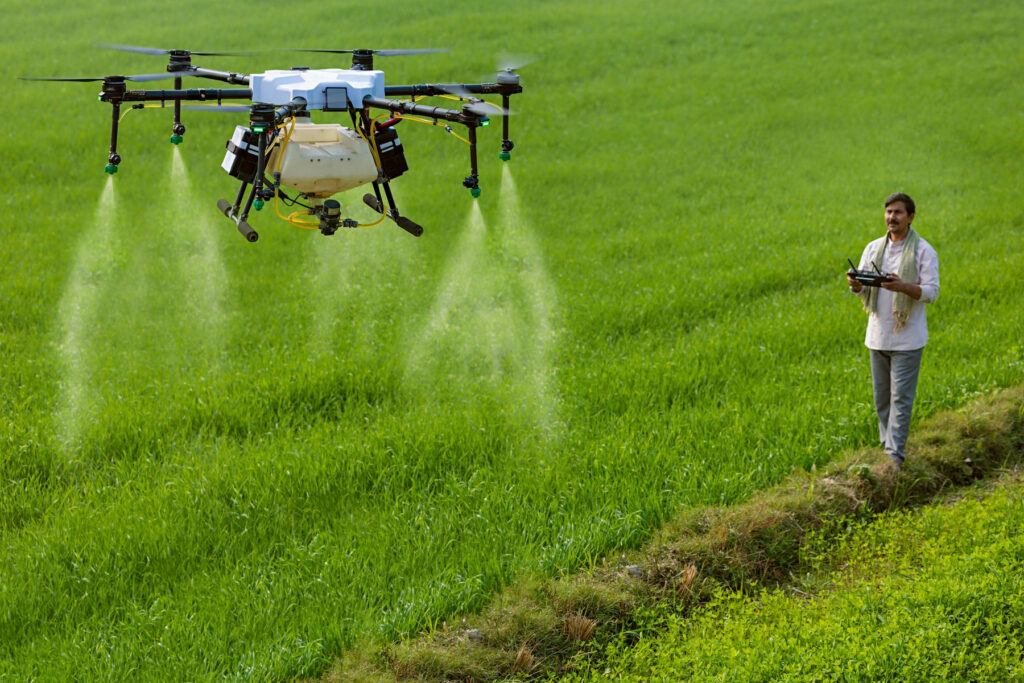
  • Fueling technology adoption and efficiency: In 2026, digital and precision farming tools are increasingly central to competitiveness. Technologies like soil sensors, drone monitoring, and automated irrigation improve yields and reduce costs. However, deploying these innovations often requires upfront investment. Adequate capital enables agribusinesses to adopt such technologies without compromising liquidity.
  • Supporting value-added and SME segments: Value-added players, from cold storage operators to food processors, face longer cash-conversion cycles due to inventory storage, grading, and quality clearance procedures. Tailored working capital solutions help these agribusiness SMEs cover operating costs and maintain production quality while navigating fluctuations in market demand.

cold storage

  • Enhancing market access and exports: India’s agri-exports are poised for expansion in 2026, backed by government initiatives and infrastructure support. Enterprises with strong working capital positions can better navigate export cycles, secure international contracts, and manage seasonal price fluctuations. Flexible capital also enables participation in futures markets, enhancing price discovery and risk management.
  • Building resilience to market and climate risks: Agriculture remains vulnerable to climatic unpredictability and price swings. Better capital provides a buffer against adverse weather events and crop failures, enabling agribusinesses to withstand shocks without compromising future productivity.

Agriwise supports working capital needs

At this juncture, Agriwise is reshaping how agribusinesses access finance. Agriwise specialises in tailored agricultural financing solutions that go beyond traditional credit products. They offer short-term working capital loans, term loans, and commodity-linked financing designed explicitly for agri-enterprises, enabling smoother cash flows and better financial planning.

Unlike generic lending options, Agriwise understands the unique cash flow cycles of the farm and allied sectors. By combining deep agricultural insights with flexible financing products, Agriwise empowers businesses to optimise working-capital utilisation, bridge seasonal gaps, and invest in growth opportunities. This kind of nuanced financing support is especially critical in 2026, as agribusinesses scale, innovate, and compete both domestically and globally.

Practical strategies for managing capital

To harness the full potential of working capital, agribusinesses should embrace a mix of financial discipline and smart tools:

  • Accurate cash-flow forecasting: Predict peaks and troughs in expenses and revenues to avoid liquidity crunches.
  • Digital lending platforms: Use fintech and agri-finance solutions that offer fast approval and tailored working-capital loans.
  • Optimised inventory management: Reduce excess stock and align purchases with market cycles.
  • Government credit programmes: Use initiatives like KCCs and interest subvention schemes to reduce borrowing costs.
  • Strong banking relationships: Maintain robust interactions with lenders to facilitate better credit access when needed.

The future of agribusiness in 2026

As India cements its position as a global agrarian powerhouse, effective working-capital management will differentiate successful agribusinesses from the rest. As financial inclusion increases and credit products become more tailored and accessible, the focus should shift from merely accessing funds to strategically managing them.

Working capital will not just support daily operations; it will fuel innovation, strengthen resilience, and unlock new markets. Agribusinesses that prioritise efficient capital practices in 2026 will be well-placed to lead India’s agricultural growth story, sustainably and profitably.

FAQs:

  • What is working capital in agribusiness, and why is it important?
    Working capital in agribusiness refers to the funds used for day-to-day operations such as buying inputs, paying labour, managing logistics, and storing produce. It is important because agriculture involves seasonal cash flows, and timely access to cash ensures uninterrupted operations and higher productivity.
  • How does better working capital improve agribusiness profitability?
    Better capital enables agribusinesses to procure quality inputs on time, reduce reliance on high-interest informal loans, and manage inventory more efficiently. This leads to improved yields, lower operational costs, and stronger margins over the production cycle.
  • What are the typical working capital challenges faced by agribusinesses?
    Agribusinesses often face delayed payments, long cash-conversion cycles, rising input costs, and seasonal income gaps. Limited access can restrict growth, delay technology adoption, and increase financial stress during critical periods.
  • How can agribusinesses improve working capital management in 2026?
    In 2026, agribusinesses can improve capital management by accurately forecasting cash flows, using digital and agri-focused financing platforms, optimising inventory levels, and leveraging government credit schemes for short-term agricultural finance.
  • How does Agriwise help agribusinesses meet their working capital needs?
    Agriwise provides customised financial solutions tailored to the agricultural sector, including short-term loans and commodity-linked financing. By understanding seasonal cycles and operational needs, Agriwise helps agribusinesses maintain liquidity, manage cash flows efficiently, and scale sustainably.

Disclaimer

The content published on this blog is provided solely for informational and educational purposes and is not intended as professional or legal advice. While we strive to ensure the accuracy and reliability of the information presented, Agriwise make no representations or warranties of any kind, express or implied, about the completeness, accuracy, suitability, or availability with respect to the blog content or the information, products, services, or related graphics contained in the blog for any purpose. Any reliance you place on such information is therefore strictly at your own risk. Readers are encouraged to consult qualified agricultural experts, agronomists, or relevant professionals before making any decisions based on the information provided herein. Agriwise, its authors, contributors, and affiliates shall not be held liable for any loss or damage, including without limitation, indirect or consequential loss or damage, or any loss or damage whatsoever arising from reliance on information contained in this blog. Through this blog, you may be able to link to other websites that are not under the control of Agriwise. We have no control over the nature, content, and availability of those sites and inclusion of any links does not necessarily imply a recommendation or endorsement of the views expressed within them. We reserve the right to modify, update, or remove blog content at any time without prior notice.