

Tag Archives: agri finance in india

Innovations and Emerging Trends in Agricultural Insurance in India (2025–26)

March 05, 2026

India’s agriculture sector, contributing nearly 18% to the national GDP and supporting over 45% of the country’s workforce, is increasingly navigating a landscape shaped by climate uncertainty, fluctuating prices, and rising input costs. As erratic monsoons, heatwaves, and extreme weather events become more frequent, the question is no longer whether farmers need protection, but how that protection is evolving.

Today, agricultural insurance in India is moving beyond traditional coverage models, embracing innovations such as digital platforms, satellite-based crop monitoring, AI-led risk assessment, and progressive policy reforms. In 2025–26, the sector is steadily transforming into a data-driven risk management ecosystem, designed to make agricultural protection faster, smarter, and more responsive to the realities of modern farming.

The current landscape of agricultural insurance in India

India remains one of the largest crop insurance markets globally, primarily under the Pradhan Mantri Fasal Bima Yojana (PMFBY).

  • Since its launch in 2016, the scheme has insured over 78 crore farmer applications, with more than 19.61 crore farmers receiving claims.
  • Total claims paid to farmers under the scheme have crossed ₹1.72 lakh crore, while farmer premium contributions amount to around ₹34,507 crore.
  • In 2024–25 alone, about 4.19 crore farmers were enrolled, representing the highest participation since the scheme’s launch.
  • The number of farmer applications insured has increased significantly, from 371 lakh in 2014–15 to over 1,510 lakh in 2024–25.
  • Government subsidies play a major role in the program, with the Centre and states sharing most of the premium cost, while farmers pay only a small portion.

The scheme currently covers more than 70 notified crops and protects farmers against risks such as drought, floods, hailstorms, cyclones, landslides, and post-harvest losses. Despite strong government backing, penetration remains uneven across states, creating room for innovation and complementary private-sector solutions.
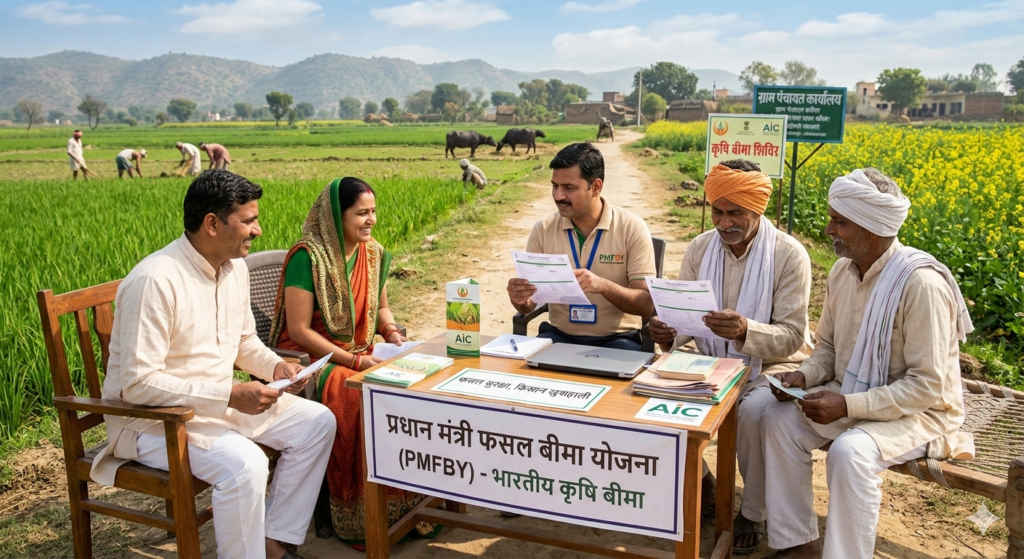
PMFBY

Key innovations reshaping agricultural insurance in India

  • Satellite-based crop monitoring & remote sensing: The integration of satellite imagery, drone mapping, and geo-tagged field data is transforming crop loss assessment. Several states now deploy technology-enabled yield estimation models, reducing dependence on manual crop-cutting experiments.

This improves:

    • Transparency
    • Faster claim settlements
    • Reduced disputes
    • Lower operational costs
  • Weather & parametric insurance models: Weather-index and parametric insurance products are gaining traction, particularly in rainfall-deficient and drought-prone regions. Instead of waiting for field inspection, payouts are triggered automatically when rainfall or temperature thresholds are breached.

These models are especially relevant as India witnesses:

    • Increased frequency of unseasonal rainfall
    • Heatwave-linked crop stress
    • Erratic monsoon distribution
  • AI-driven risk underwriting: AI-led underwriting enables more scientific premium pricing and customised risk coverage, particularly beneficial for high-value crops and horticulture.

Insurers are increasingly using:

    • Historical yield datasets
    • Soil health information
    • Weather trend analytics
    • Crop pattern intelligence
  • Digital claim processing & mobile access: States implementing end-to-end digital workflows have reported faster claim settlement cycles compared to legacy systems.

Mobile apps and digital platforms now allow:

    • Farmer self-enrolment
    • Real-time policy tracking
    • Online claim submission
    • Direct benefit transfer (DBT) into bank accounts
  • Climate risk integration & sustainability focus: With climate change emerging as a structural risk, insurers are integrating:
    • Climate vulnerability scoring
    • Region-wise drought and flood mapping
    • Long-term yield volatility analysis

agricultural insurance

Emerging trends in 2025–26

  • Greater private sector participation: While PMFBY dominates, private insurers are expanding customised crop insurance and allied risk products.
  • Bundled risk & credit-linked insurance: Insurance products are increasingly bundled with agricultural loans, input financing, and warehouse receipt finance, ensuring integrated financial risk protection.
  • Data-backed credit risk assessment: Insurance data is now being used by NBFCs and agri-financiers to evaluate borrower resilience and repayment capacity.
  • Increasing focus on small farmers: Digital KYC and Aadhaar-linked enrolment are helping bring marginal farmers into formal risk coverage systems.

Agriwise Finserv: Where insurance meets agricultural finance

While traditional crop insurance provides yield protection, farmers and agri-entrepreneurs also require financial resilience across the crop lifecycle. This is where Agriwise complements the ecosystem.

Agriwise is a specialised agri-finance platform offering structured credit solutions designed to reduce financial stress arising from production and market risks.

What does Agriwise offer?

  • Farmer Finance: Timely working capital support for cultivation needs.
  • Warehouse Receipt Finance: Enables farmers and traders to store produce and avoid distress sales while accessing liquidity.
  • Invoice Bill Discounting: Improves cash flow cycles for agri-traders and businesses.
  • Loans Against Property (LAP): Structured funding for expansion and operational stability.
  • Solar Finance: Supports the adoption of renewable energy solutions for irrigation and farm mechanisation.
  • Agricultural insurance: Through partnerships with leading, reputable insurance companies, Agriwise facilitates access to crop, property, and health insurance solutions, helping farmers safeguard their income against weather-related risks and crop losses.

Conclusion

Agricultural insurance in India is transitioning from a subsidy-driven safety net to a technology-enabled risk intelligence system. Innovations in satellite analytics, AI-based underwriting, parametric triggers, and digital claim infrastructure are redefining how risk is measured and mitigated.

However, insurance alone cannot solve agricultural vulnerability. The future lies in integrated risk and finance ecosystems, where insurance, credit, storage, and market access function in a cohesive manner. As India advances toward climate-smart agriculture, the synergy between crop insurance and structured agri-finance solutions will determine the sector’s long-term stability and growth.

FAQs

  • Why is agricultural insurance important for farmers in India?
    Agricultural insurance helps farmers protect their income against risks such as drought, floods, pests, and other natural disasters. Since farming depends heavily on weather conditions, insurance provides financial support when crops are lost, allowing farmers to recover and continue their agricultural activities without severe financial stress.
  • What are the major agricultural insurance schemes available in India?
    The most prominent scheme is Pradhan Mantri Fasal Bima Yojana (PMFBY), which offers subsidised crop insurance to farmers across India. Another important program is the Weather-Based Crop Insurance Scheme (WBCIS), which provides payouts based on weather parameters such as rainfall and temperature.
  • How is technology transforming agricultural insurance in India?
    Technology is making agricultural insurance faster and more transparent. Innovations such as satellite imagery, remote sensing, artificial intelligence, and digital claim processing are helping insurers assess crop damage more accurately, reduce manual inspections, and settle claims more efficiently.
  • What is parametric or weather-index agricultural insurance?
    Parametric insurance provides payouts based on predefined weather triggers, such as rainfall levels or temperature changes, rather than on actual crop-loss verification. If the trigger condition is met, farmers receive compensation automatically, making the claims process quicker and more efficient.
  • How does Agriwise support farmers beyond agricultural insurance?
    Agriwise supports farmers and agri-businesses through a range of financial solutions, including farmer finance, warehouse receipt finance, invoice bill discounting, loans against property, and solar finance. In addition, through partnerships with leading insurance providers, Agriwise facilitates access to agricultural insurance solutions that strengthen farmers’ financial resilience.

Disclaimer

The content published on this blog is provided solely for informational and educational purposes and is not intended as professional or legal advice. While we strive to ensure the accuracy and reliability of the information presented, Agriwise make no representations or warranties of any kind, express or implied, about the completeness, accuracy, suitability, or availability with respect to the blog content or the information, products, services, or related graphics contained in the blog for any purpose. Any reliance you place on such information is therefore strictly at your own risk. Readers are encouraged to consult qualified agricultural experts, agronomists, or relevant professionals before making any decisions based on the information provided herein. Agriwise, its authors, contributors, and affiliates shall not be held liable for any loss or damage, including without limitation, indirect or consequential loss or damage, or any loss or damage whatsoever arising from reliance on information contained in this blog. Through this blog, you may be able to link to other websites that are not under the control of Agriwise. We have no control over the nature, content, and availability of those sites and inclusion of any links does not necessarily imply a recommendation or endorsement of the views expressed within them. We reserve the right to modify, update, or remove blog content at any time without prior notice.


The role of NBFCs in shaping rural credit access

October 16, 2025

Access to reliable rural credit is vital for India’s agricultural productivity, rural livelihoods, and inclusive growth. In areas where commercial banks are scarce, Non-Bank Financial Companies (NBFCs) are rapidly emerging as critical providers of credit, adapting their models to meet the unique challenges of remote and small-scale borrowers.

Why NBFCs matter for rural credit?

NBFCs offer flexibility, speed, and product innovation tailored to the needs of farmers and rural micro-entrepreneurs. Because of their lighter infrastructure and ability to work through field agents, partner organisations (such as Farmer Producer Organisations or Self Help Groups), and use alternate data, NBFCs reduce transaction costs and delays — two major obstacles for many seeking rural credit from traditional banks. For instance, in FY 2024–25, fintech NBFCs sanctioned approximately 10.9 crore personal loans amounting to ₹1,06,548 crore, a scale that has brought formal financial access to many who previously depended on informal sources.

rural credit

NBFCs + Microfinance: A credit accelerator

Microfinance NBFCs (NBFC-MFIs) are a fundamental source for supplying credit to small borrowers. As of 30 June 2025, the microfinance industry’s outstanding portfolio stood at about ₹3.07 lakh crore, supporting some 10 crore active loans with around 6 crore unique borrowers — many in rural areas with limited formal credit options. Moreover, in FY 2024–25, nearly 80% of microfinance loan books of NBFCs were from rural India, indicating a strong shift toward serving underserved borrowers.

Product innovation & improved quality of rural credit

NBFCs are not just increasing reach — they are improving the type of rural credit on offer. Examples of innovations include small-ticket credit for crop inputs, loans against warehouse receipts, pump-set financing, seasonal working capital aligned with harvest cycles, and two-wheeler financing for last-mile connectivity. NBFCs are also shortening approval times through remote onboarding and leveraging mobile or digital payments.

Partnership models are also key: NBFCs are co-lending with banks, entering into ATL (Agri Term Loan), WHR , FPO Financing, Cattle Financing with agri-firms, and working with FPOs/SHGs to build trust and reduce risk. These models help tailor credit products in rural areas that reflect local crop cycles, rainfall variability, and seasonal incomes.

rural farm credit

The broader context: Institutional credit & NBFC opportunity

Institutional credit to agriculture has more than doubled since 2014-15. For 2024-25, the official target for agri-credit was set in the range of ₹25-28 lakh crore, showing that government policy recognises the need for scale. NBFCs and MFIs are well-positioned to complement this push by reaching borrowers in areas with limited bank presence.

In regions where banks are sparse, NBFCs drive credit access; for example, the fintech NBFCs’ disbursals of over ₹1,06,548 crore via 10.9 crore personal loans in FY 2024-25 have helped many rural households move into the formal financial system.

Challenges & regulatory considerations

Scaling rural credit via NBFCs is not without challenges. Rural lending is exposed to climatic risks, commodity price fluctuations, and uncertainty in repayment cycles. NBFCs often face higher funding costs than banks, which may raise interest rates for borrowers. Ensuring consumer protection and transparent terms is essential, particularly for new borrowers with limited financial literacy.

Regulators have begun addressing these through co-lending guidelines, district-level credit plans (PLPs), and efforts to extend grievance redressal channels in rural areas. The goal is to ensure that rural credit remains accessible, affordable, and does not lead to overindebtedness.

The way forward: Scaling responsible rural credit

To build on the gains so far, NBFCs should:

  • Deepen partnerships with NABARD, banks, FPOs, and SHGs for last-mile delivery.
  • Use data-driven underwriting (e.g., using satellite imagery, payment histories, supply chain flows) to better assess risk in rural settings.
  • Offer bundled services — insurance, crop advisory, and digital payment/income smoothing tools — to improve borrower resilience.
  • Align loan tenors and repayment schedules with seasonal rural income flows so that credit is not burdensome during lean periods.

With rural areas contributing about 80% of NBFC microfinance loan books in FY 2024-25, and with the microfinance portfolio outstanding at ₹3.07 lakh crore supporting 10 crore loans, NBFCs are clearly playing an expanding role in formalising rural credit delivery. If these efforts are guided by responsible lending, NBFCs like Agriwise Finserv can help transform how rural India accesses finance — enabling innovation, investment, and sustainable growth.

Disclaimer

The content published on this blog is provided solely for informational and educational purposes and is not intended as professional or legal advice. While we strive to ensure the accuracy and reliability of the information presented, Agriwise make no representations or warranties of any kind, express or implied, about the completeness, accuracy, suitability, or availability with respect to the blog content or the information, products, services, or related graphics contained in the blog for any purpose. Any reliance you place on such information is therefore strictly at your own risk. Readers are encouraged to consult qualified agricultural experts, agronomists, or relevant professionals before making any decisions based on the information provided herein. Agriwise, its authors, contributors, and affiliates shall not be held liable for any loss or damage, including without limitation, indirect or consequential loss or damage, or any loss or damage whatsoever arising from reliance on information contained in this blog. Through this blog, you may be able to link to other websites that are not under the control of Agriwise. We have no control over the nature, content, and availability of those sites and inclusion of any links does not necessarily imply a recommendation or endorsement of the views expressed within them. We reserve the right to modify, update, or remove blog content at any time without prior notice.

How does warehouse receipt finance help farmers unlock working capital?

September 24, 2025

In India’s agricultural economy, cash flow challenges are one of the biggest barriers for farmers, especially smallholders, in accessing inputs, waiting for good market prices, and avoiding distress sales. Warehouse receipt finance (WHR finance) has emerged as a powerful tool to enable farmers to convert stored produce into working capital, improve bargaining power, and reduce risk.
But how does warehouse receipt finance work? Let’s explore the current status in India, benefits and challenges, and how Agriwise is helping farmers access commodity finance via warehouse receipt systems.

What is warehouse receipt finance?

Warehouse receipt finance refers to a financial arrangement where farmers deposit their agricultural produce in approved warehouses and receive a warehouse receipt (physical or electronic) that acts as collateral to obtain a loan or loan‐equivalent financing. Because the produce is stored under regulated conditions, the receipt assures both the lender and borrower about quality, quantity, and storage integrity.

In India, with the advent of e-NWR (electronic Negotiable Warehouse Receipts), warehouse receipt finance India has become more formalised, efficient, traceable, and scalable.

According to data published on the WDRA portal, the country’s active regulated warehousing capacity as of the end of March 2025 is approximately 44.8 million tonnes. In 2023-24, India produced ~330 million tonnes of food grains, but only about 1.24 million tonnes have been financed using warehousing / e-NWR instruments.

warehouse receipt finance

How does warehouse receipt finance help farmers?

Here are the ways in which WHR finance (often a subset of wider commodity finance for farmers) can make a difference:

  • Avoiding distress sales & price timing: Farmers often have to sell produce immediately after harvest when supply is high and prices are low. By using WHR finance, they can store produce under good conditions, obtain liquidity via the receipt, and sell when market conditions improve.
  • Higher bargaining power: With the ability to hold produce, farmers aren’t forced sellers. They can wait for better demand, possibly export markets, better MSP, or private buyers who pay premiums for quality. The formal system of such finance in India (primarily through e-NWR) improves trust in the quality and condition.
  • Reduced post-harvest losses: Warehouses registered under WDRA and collateral managers ensure quality, pest control, good storage practices. When produce is stored properly, spoilage reduces, so less loss, better quality, which fetches higher price. WHR finance makes storing financially viable.
  • Improved access to formal finance: Receipt acts as collateral; banks, NBFCs more willing to lend against regulated receipts. This is especially critical for small/marginal farmers who often lack land or other strong collateral. Commodity finance for farmers can be more inclusive via WHR finance.
  • Better cash flow & working capital: Input purchases (seeds, fertilisers, labour), paying workers, transportation—all need working capital. By converting stored produce into cash via credit, farmers can plan, invest in inputs, improve yield, rather than relying on informal (often more expensive) borrowing.
  • Risk mitigation (price, weather, market): Storage plus delayed selling helps farmers mitigate risk of price drop. Also, some financial schemes are linked with insurance or regulated storage, so the risk of spoilage or theft is lower.

loan against warehouse receipts

What needs to improve?

While warehouse receipt finance has strong potential, several challenges hinder its full deployment:

  • Low awareness and adoption among small farmers about e-NWR and WHR finance mechanism.
  • Insufficient number of registered/regulatable warehouses, especially close to production centres. Logistics cost is high; many warehouses do not meet regulatory or quality standards.
  • Operational costs, documentation, and collateral valuation complexities; lenders may perceive risk due to storage, quality, warehousing fraud.
  • Price volatility and shelf life constraints of some commodities: some perish quickly, so storage + loan tenure may not match.
  • Regulatory & policy barriers: though WDRA is pushing regulation, more clarity, standardised processes, better infrastructure, and stronger guarantee schemes are required.

Agriwise & its role in facilitating warehouse receipt finance

Agriwise, as part of StarAgri’s platform ecosystem, plays a pivotal role in bridging the gap between farmers, warehouses, and financiers. Here’s how Agriwise helps:

  • Offering warehouse receipt financing services: Agriwise Finserv provides financing to farmers by accepting electronic warehouse receipts (e-NWRs) or other approved warehouse receipts as collateral, enabling access to working capital without forcing immediate sale.
  • Linking with registered warehouses & collateral managers: Agriwise ensures that warehouses used meet regulatory requirements (e.g. WDRA registration), which raises lender confidence and assures quality of stored commodities.
  • Leveraging commodity finance for farmers: Through its network and partnerships, Agriwise facilitates commodity finance for farmers, not just via loans but also via advisory and market linkages, helping farmers decide when to sell for best returns.
  • Technology & transparency: Use of digital platforms, real-time tracking, and valuation tools helps in credible issuance of warehouse receipts. Transparency in storage conditions, quality checks, and valuations improves lender and farmer trust.
  • Education & capacity building: Agriwise provides training, information & awareness to farmers about the benefits of warehouse receipt finance, documentation required, storage quality, and risk mitigation. These reduce friction in adoption.

warehouse receipt financing process

Policy & institutional support in India

To support and scale up warehouse receipt finance, the following institutional & policy supports are important (some already underway):

  • WDRA is regulating warehouses to make them eligible for e-NWR and building a framework for negotiable receipts.
  • Government guarantee schemes provides over 50% loan‐to‐value and applies credit guarantee for e-NWR based pledge financing.
  • Efforts to expand warehousing network: India aims to reduce post-harvest losses via scientific storage. Over 100,000 warehouses identified or being brought into regulatory fold.
  • MSP increases and stable procurement policies allow farmers to be more confident of selling if they wait; storage plus finance is more effective under such stable procurement frameworks.

What’s the best farmers can do?

Farmers looking to use warehouse receipt finance should consider:

  • WDRA warehouses: Using warehouses registered with WDRA or recognised collateral managers, so receipts are valid and lenders accept them.
  • Understanding loan terms: loan-to-value ratio, tenure (often limited by the shelf life of the commodity), interest rates, repayment schedule.
  • Ensuring proper quality: moisture, grading, packaging; as quality defects reduce value.
  • Monitoring storage costs and fees: warehousing and handling costs can eat into profits.
  • Timing the market: balancing storage costs vs price rise; sometimes selling earlier may be better, in other cases waiting yields more.
  • Using Agriwise or similar service providers: for advice, tech platforms, and connections to financiers.

warehouse receipt financing

Conclusion

Warehouse receipt finance is a key instrument in unlocking working capital for farmers in India, enabling them to store produce, access formal credit, and sell under favourable conditions. While uptake remains modest relative to the scale of India’s agricultural production, policy momentum, regulatory frameworks like WDRA, and service providers such as Agriwise are helping overcome obstacles. For commodity finance for farmers to truly reach its potential, awareness, infrastructure, transparency, and trust are critical.

As Agriwise continues to invest in building capacities, integrating technology, and facilitating credible warehousing and finance linkages, more farmers will benefit from warehouse receipt finance, unlocking capital, improving incomes, and building resilience in India’s agricultural sector.

Disclaimer

The content published on this blog is provided solely for informational and educational purposes and is not intended as professional or legal advice. While we strive to ensure the accuracy and reliability of the information presented, Agriwise make no representations or warranties of any kind, express or implied, about the completeness, accuracy, suitability, or availability with respect to the blog content or the information, products, services, or related graphics contained in the blog for any purpose. Any reliance you place on such information is therefore strictly at your own risk. Readers are encouraged to consult qualified agricultural experts, agronomists, or relevant professionals before making any decisions based on the information provided herein. Agriwise, its authors, contributors, and affiliates shall not be held liable for any loss or damage, including without limitation, indirect or consequential loss or damage, or any loss or damage whatsoever arising from reliance on information contained in this blog. Through this blog, you may be able to link to other websites that are not under the control of Agriwise. We have no control over the nature, content, and availability of those sites and inclusion of any links does not necessarily imply a recommendation or endorsement of the views expressed within them. We reserve the right to modify, update, or remove blog content at any time without prior notice.

How agri MSMEs loans can accelerate growth & how Agriwise can help?

June 19, 2025

Indian agriculture is undergoing a technological transformation, powered by agripreneurs and small rural enterprises. An agri MSME loan, specifically for farming-related services such as processing, logistics, warehousing, and input distribution, is central to this evolution.

As of FY 2024–25, credit outstanding to MSMEs reached ₹31.3 lakh crore across 2.45 crore accounts, while agricultural and allied sector credit grew 17% YoY to ₹35,547 crore. Collateral-free loan limits under the Kisan Credit Card scheme were also increased to ₹2 lakh, and co-lending for agri and MSMEs surged sevenfold to ₹11,497 crore. These figures indicate not just rising demand, but a growing ecosystem of financial solutions that agri businesses can leverage. Among them, a term loan for an agriculture business stands out as a powerful tool to scale operations. With partners like Agriwise, accessing the right funding at the right time has never been more attainable.

Unlocking Growth Through MSME Loans

A well-structured MSME loan for agribusiness can do more than just cover expenses. It can unlock growth opportunities, create jobs, and increase rural incomes. Unlike short-term working capital loans, term loans provide longer repayment periods and are ideal for funding capital-intensive projects.
Agri MSMEs can use these funds to modernize their operations, invest in post-harvest technologies, build cold storage facilities, or adopt digital tools that improve traceability and supply chain efficiency. For businesses engaged in export or contract farming, such funding helps meet compliance standards, packaging upgrades, and quality certifications.

The real value, however, lies in how efficiently the loan is structured and delivered—something that traditional banking systems often fall short on, especially in rural areas. That’s where Agriwise steps in.


Agriwise: Empowering Agripreneurs with MSME Loans

As a focused agri-fintech company, Agriwise is building a smarter, faster, and more accessible ecosystem for credit delivery. It offers tailored financing options to agri MSMEs by understanding the seasonality, risks, and unique cash flow patterns of agriculture-linked businesses.

From agriculture business loans to customized term loans for machinery, input finance, and supply chain enhancement, Agriwise has developed products that directly address the needs of rural enterprises. Their tech-driven underwriting process ensures faster turnaround times, reduced paperwork, and greater transparency.
Moreover, agripreneurs can tap into government schemes for agri MSME loans, such as the Agriculture Infrastructure Fund or the MUDRA Yojana, for advisory support, eligibility guidance, and application facilitation. This is especially valuable in areas where awareness of such schemes remains low.

Driving Rural MSME Development

India’s rural economy is rich with entrepreneurial potential. By expanding access to formal credit through term loans, companies like Agriwise are playing a significant role in rural MSME development. These loans are not only financing business growth but also improving livelihoods, enhancing food value chains, and promoting rural employment.
The availability of a loan for agri entrepreneurs at the right time enables businesses to prepare for harvest seasons, invest in warehousing, or hedge against price volatility. For instance, small rice mills or groundnut processors can scale up with minimal delays when empowered with timely funding.

The key to success lies in matching the right loan product to the specific stage and scale of the business. Agriwise’s data-led approach and deep sector understanding help ensure that the loan fits the business model, repayment capacity, and growth outlook.


Understanding Agri Loan Eligibility Criteria

If you’re exploring how to fund your agribusiness expansion, it’s essential to first understand the agri loan eligibility criteria. Typically, a business must be registered and engaged in agriculture or allied services, have a verifiable income stream, basic KYC documents, and a clean credit history. For secured loans, collateral like property or agricultural assets may be required.

Agriwise has streamlined this process to make it entrepreneur-friendly, even for first-time borrowers or small-scale operators. Whether you’re a dairy unit in Maharashtra, a cold storage facility in Punjab, or a millet processor in Karnataka, the right financial product is just a few steps away.

msme loan

Strategic MSME Loan Usage: How to Grow Agri MSME with Credit

Knowing how to grow an agri MSME with a loan starts with smart planning. Map out your business goals—whether it’s expanding your processing line, entering a new market, or investing in sustainable practices. Choose a loan amount and tenure that aligns with your cash flow, and always factor in interest obligations and repayment timelines.
Used wisely, a term loan for agriculture business not only bridges financial gaps but also builds long-term resilience. It helps shift agri MSMEs from informal to formal systems, making them eligible for future credit, partnerships, and public-private initiatives.

Best Term MSME Loan Options for Farmers

While banks and NBFCs do offer generic business loans, what sets Agriwise apart is its sharp focus on agriculture. If you’re seeking the best term loan options for farmers, processors, or agri-distributors, Agriwise offers products that match ground realities. This includes seasonal repayment schedules, interest subvention guidance, and integration with agri-tech platforms.

With India pushing towards formalization of rural credit, digital inclusion, and food security, now is the time for an agri MSME loan for growth. Agriwise is leading this charge with purpose-driven finance for India’s agricultural entrepreneurs.

Conclusion

A loan for agri entrepreneurs is not just capital—it’s a catalyst for change. With Agriwise as a partner, agri MSMEs can access the resources they need to expand, innovate, and contribute meaningfully to India’s rural economy. Whether you’re planning your first investment or scaling your existing business, term loans offer a dependable path forward.

How to apply for a Warehouse Receipt loan at Agriwise: A step-by-step guide

June 05, 2025

A warehouse receipt loan can be a lifeline for farmers, traders, and processors who need liquidity without having to sell their produce at suboptimal prices. Agriwise Finserv, a trusted name in agri-focused lending, offers this facility as part of its commodity finance portfolio, providing short-term working capital against the value of agricultural stock stored in approved warehouses.

India’s agricultural credit target has been set at ₹20 lakh crore for FY 2024–25, and the emphasis on inclusive rural finance is growing; understanding how to apply for a loan against warehouse receipt is more relevant than ever.
But how to apply for one? Here’s a step-by-step guide to navigating the process of applying for a warehouse receipt loan at Agriwise.

warehouse receipt loan

Step 1: Customer Walk-in or Lead Generation

The journey begins with the customer—whether a farmer, commodity trader, or processor—approaching Agriwise through its branch office, field location, or sales team. During this initial interaction, the Agriwise team shares key details about the agri loan product, including loan tenure, interest rates, eligibility, and repayment options. This conversation helps establish clarity and sets expectations, ensuring the applicant is well-informed before moving forward.

Step 2: Lead Creation in Loan Origination System (LOS)

Once the customer agrees to proceed, their details are digitally entered into Agriwise’s Loan Origination System (LOS). This step includes capturing:

  • KYC documents
  • Financial and business background
  • Details of the agricultural commodities to be pledged

Using LOS ensures a systematic and efficient onboarding process, reducing delays and paperwork.

WHR finance

Step 3: Credit Appraisal

Agriwise then conducts a thorough credit appraisal. A credit bureau check is performed to assess the borrower’s credit history, followed by an internal evaluation against Agriwise’s credit policy. Parameters like repayment behaviour, past borrowing records, and current eligibility are taken into account.

This step ensures that credit is extended responsibly, ensuring the security of both the borrower’s and lender’s interests.

Step 4: Case Sanction and Documentation

Once the application passes the credit check, the case is sanctioned. The borrower is then required to complete the documentation process, which includes signing the loan agreement and other pledge-related papers. Agriwise ensures that all documentation is transparent, giving the borrower complete visibility into the terms and conditions.

Step 5: Commodity Pledge and Warehouse Receipt Generation

The borrower deposits the agricultural commodities at an Agriwise-approved warehouse. A designated Collateral Manager (CM) checks the quality and quantity of the stock. Once satisfied, the CM issues a warehouse receipt in favour of Agriwise and forwards it to the credit operations team.

This warehouse receipt is the basis for the loan and reflects the value of the pledged commodity, making it the cornerstone of the loan against warehouse receipt process.

Step 6: Disbursement of Funds

Agriwise disburses funds to the borrower based on the value of the warehouse receipt. Generally, loans are offered up to 75% of the WR value, which is known as the Loan-to-Value (LTV) ratio.

This quick access to funds allows borrowers to manage their short-term working capital needs efficiently, be it to finance the next crop cycle, pay labour, or meet operational expenses—without the pressure to sell produce immediately.

agri finance

Step 7: Repayment and Collection

Repayment terms are flexible:

  • For farmers: Both interest and principal are repaid at the end of the loan term.
  • For traders and processors: Interest is payable monthly, and the principal is repaid at maturity.

Importantly, Agriwise does not levy foreclosure or part release charges. This flexibility gives borrowers the freedom to repay as per their cash flow, especially in times of market volatility.

Why Warehouse Receipt Loans Matter?

With only about 30% of India’s small and marginal farmers having access to formal credit, innovative solutions like warehouse receipt loans are crucial. They allow borrowers to realise better value for their produce by avoiding distress sales, while also ensuring that the agricultural supply chain continues to function smoothly.

These loans are particularly powerful because they are asset-backed, low-risk for the lender, and timely for the borrower—fitting perfectly into the broader ecosystem of commodity finance.

Conclusion

Agriwise’s approach to warehouse receipt loans combines the assurance of physical collateral with a fast, transparent lending process. Whether you’re a farmer waiting for better prices or a trader looking for liquidity, a loan against warehouse receipt can offer the breathing space you need—without compromising the value of your produce.

By turning stored crops into working capital, Agriwise continues to play a key role in strengthening India’s rural economy, one loan at a time.