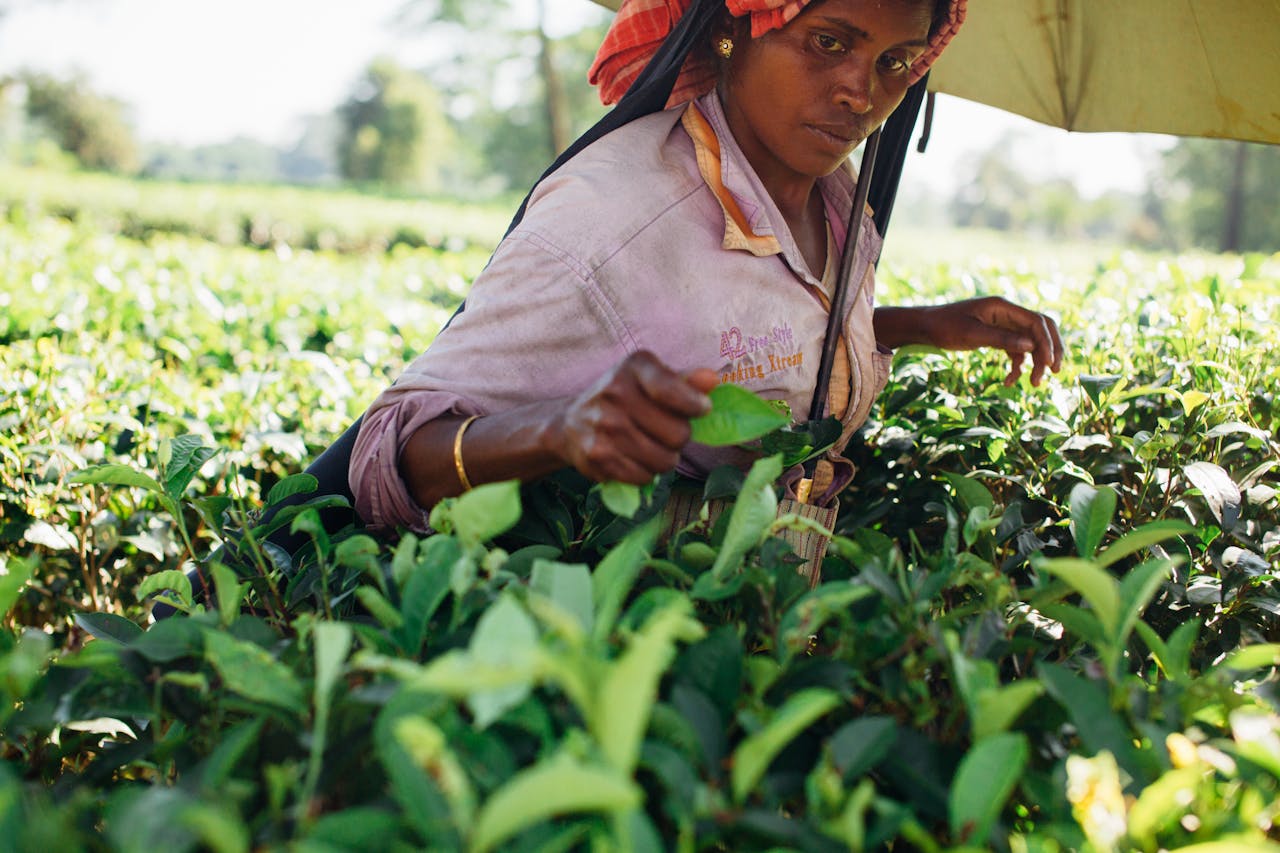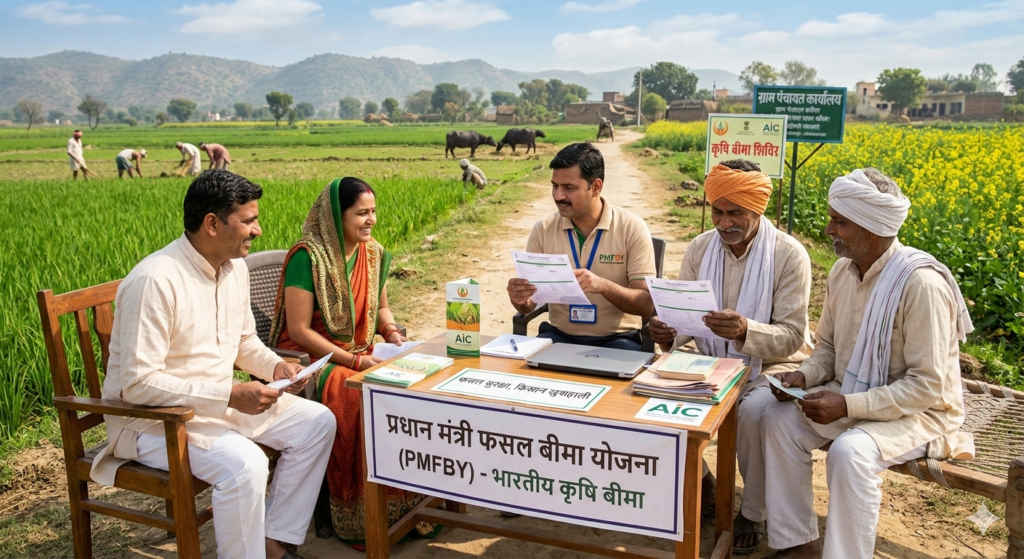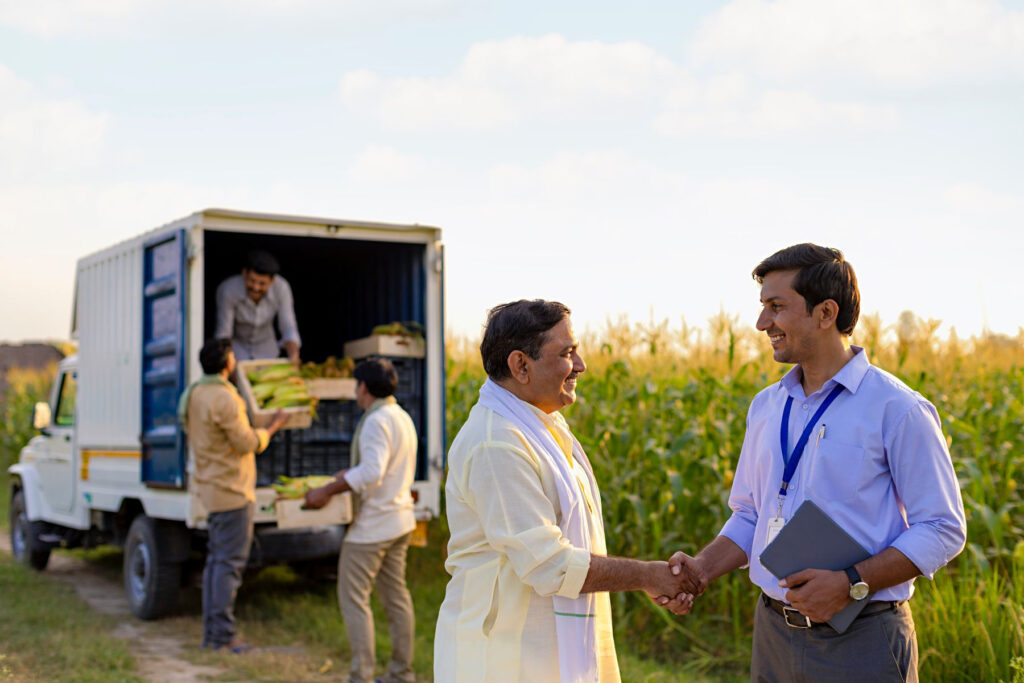

For decades, agricultural credit in India was largely associated with seasonal crop & traditional loans. Farmers borrowed before sowing, repaid after harvest, and repeated the cycle every year. While that system still plays an important role, India’s agricultural economy has changed dramatically over the last few years.
Agriculture today is no longer limited to cultivation alone. It now includes processors, traders, FPOs, agri MSMEs, exporters, warehouse operators, input dealers, and rural entrepreneurs, all operating within a much larger and more connected ecosystem.
And naturally, their financing needs are changing too.
The conversation around agricultural credit is slowly moving beyond traditional loans lending toward more structured, flexible, and business-oriented financial solutions. From warehouse receipt finance and invoice discounting to LAP and solar finance, rural credit is becoming more diversified than ever before.
Agriculture needs more than seasonal credit now
India’s agricultural supply chain has become significantly more organised over the last decade. Businesses are handling larger inventories, longer supply chains, and faster trade cycles. That means liquidity requirements are no longer seasonal. They are continuous.
Take a trader, for example. Inventory may remain stored for weeks before being sold. A processor may need immediate working capital to procure commodities during peak arrival seasons. An agri MSME may require funds to manage supplier payments while waiting for receivables from buyers.
Traditional loans structures often struggle to address these operational realities.
This is one of the reasons why alternative agricultural financing models are gaining traction across India.
According to industry reports, MSME credit exposure in India crossed ₹43 trillion in 2025, reflecting strong demand for structured business financing across sectors, including agriculture-linked enterprises. The growing formalisation of rural supply chains is also increasing the need for faster and more flexible credit systems.

The rise of warehouse receipt finance
One of the biggest changes in agricultural finance has been the growing adoption of warehouse receipt finance.
Earlier, farmers and traders often had no choice but to sell produce immediately after harvest due to urgent liquidity requirements. But organised warehousing is gradually changing that.
With warehouse receipt finance, commodities stored in verified warehouses can be used to access funds without immediately selling the stock. This gives businesses and farmers more flexibility in managing market timing and cash flow.
As India’s warehousing ecosystem continues expanding, this financing model is becoming increasingly relevant across commodities like:
- grains,
- pulses,
- cotton,
- oilseeds,
- and spices.
The rapid growth of organised warehousing and logistics infrastructure is also supporting this transition. India’s logistics and warehousing sector has seen record leasing activity in recent years, driven heavily by 3PL, manufacturing, and supply chain expansion.
Agricultural credit is becoming more business-oriented
Another major shift is that agricultural finance is no longer limited to farming alone. Rural businesses today need funding for:
- procurement,
- infrastructure,
- working capital,
- equipment,
- inventory,
- and business expansion.
This is where products like Loan Against Property (LAP), supply chain finance, and invoice discounting are becoming increasingly important.
For many agri businesses, access to faster liquidity directly impacts their ability to scale operations. Delayed payments, seasonal procurement cycles, and fluctuating commodity markets make working capital management extremely important.
Invoice discounting and supply chain finance solutions help businesses unlock funds against receivables instead of waiting for payment cycles to conclude. Similarly, LAP solutions are helping rural entrepreneurs and agri businesses access larger-ticket funding for long-term growth.
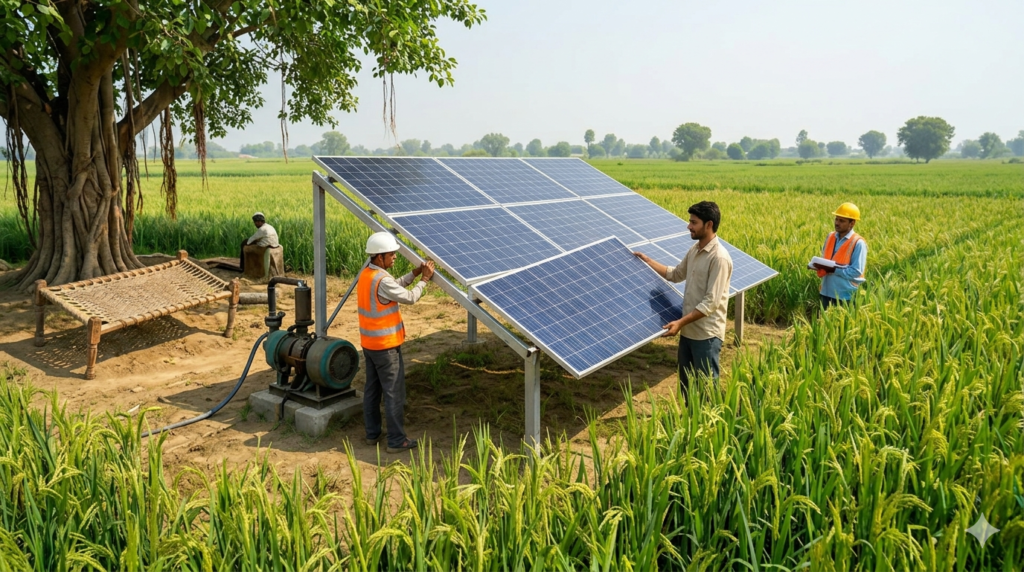
Solar finance is reshaping rural investment
One of the more interesting trends emerging in rural finance is the growing demand for solar financing. As energy costs rise and sustainability becomes more important, many rural businesses are exploring solar-powered infrastructure for:
- irrigation,
- warehousing,
- processing units,
- and commercial operations.
But the shift is not just about sustainability. It’s also about operational savings and long-term business efficiency. Solar finance is helping businesses adopt cleaner and more cost-efficient infrastructure without bearing the entire upfront investment burden.
The need for faster and more flexible lending
One major challenge in traditional loans lending has traditionally been turnaround time. Agricultural businesses often cannot wait weeks for credit approvals during active trade cycles. This is why digitisation and process efficiency are becoming increasingly important in rural lending.
Financial institutions are now focusing more on:
- quicker approvals,
- simplified documentation,
- structured risk assessment,
- and technology-enabled lending systems.
This evolving ecosystem is creating opportunities for specialised NBFCs that understand agricultural trade dynamics more closely.
Companies like Agriwise Finserv are operating within this changing landscape by offering multiple financing solutions tailored to the agricultural ecosystem. Along with Loan Against Property and Warehouse Receipt Finance, Agriwise also provides invoice bill discounting, farmer finance, and solar finance solutions.
The company has disbursed over ₹2,500 crore across 5,000+ customers and works with 25+ banking partners, while focusing on faster processing cycles and simplified access to credit.
Agricultural finance is becoming more integrated
The future of agricultural credit in India will likely depend on how well financing adapts to modern supply chain realities. Agriculture today is increasingly interconnected with:
- logistics,
- warehousing,
- trade,
- technology,
- and rural entrepreneurship.
As these ecosystems continue evolving, financing models are also becoming more integrated and business-focused.
The larger shift is clear: agricultural credit is no longer just about supporting cultivation. It is gradually becoming a broader financial ecosystem designed to support the entire agricultural value chain. And in a rapidly modernising agri-economy, that evolution may become one of the biggest drivers of rural growth over the next decade.
FAQs
- What is changing in India’s agricultural credit ecosystem?
Agricultural credit is expanding beyond traditional loans into solutions like warehouse receipt finance, invoice discounting, LAP, and solar finance. - What is warehouse receipt finance?
Warehouse receipt finance allows businesses or farmers to access funds against commodities stored in organised warehouses. - Why is invoice discounting becoming important in agriculture?
Invoice discounting helps businesses improve cash flow by unlocking funds against pending receivables instead of waiting for payment cycles. - How is solar finance helping rural businesses?
Solar finance enables businesses to adopt solar-powered infrastructure with lower upfront investment, improving long-term operational efficiency. - Why are specialised agri NBFCs becoming important?
Specialised agri-focused NBFCs better understand agricultural trade cycles, inventory patterns, and rural business requirements, enabling more tailored financing solutions.
Disclaimer
The content published on this blog is provided solely for informational and educational purposes and is not intended as professional or legal advice. While we strive to ensure the accuracy and reliability of the information presented, Agriwise make no representations or warranties of any kind, express or implied, about the completeness, accuracy, suitability, or availability with respect to the blog content or the information, products, services, or related graphics contained in the blog for any purpose. Any reliance you place on such information is therefore strictly at your own risk. Readers are encouraged to consult qualified agricultural experts, agronomists, or relevant professionals before making any decisions based on the information provided herein. Agriwise, its authors, contributors, and affiliates shall not be held liable for any loss or damage, including without limitation, indirect or consequential loss or damage, or any loss or damage whatsoever arising from reliance on information contained in this blog. Through this blog, you may be able to link to other websites that are not under the control of Agriwise. We have no control over the nature, content, and availability of those sites and inclusion of any links does not necessarily imply a recommendation or endorsement of the views expressed within them. We reserve the right to modify, update, or remove blog content at any time without prior notice.