Tag Archives: agricultural loans

ag loans

Types of Agricultural Loans in India: A Complete Guide for Farmers and Agri-Businesses

July 08, 2026

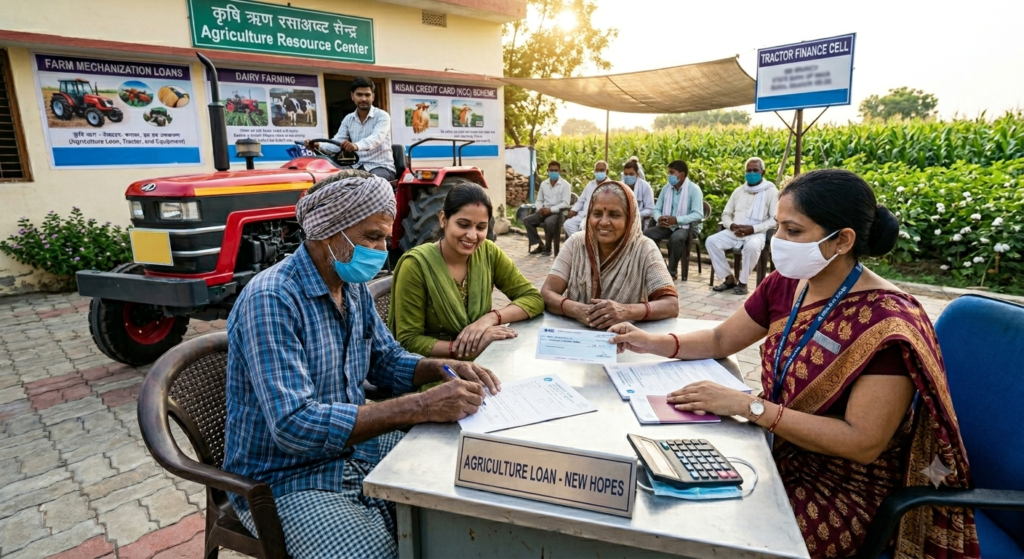
Access to timely finance has become one of the most important drivers of growth in Indian agriculture. Whether it’s purchasing quality seeds, investing in farm machinery, expanding storage infrastructure, or managing working capital after harvest, access to the right agricultural loan can significantly improve productivity and profitability.

This growing need for agricultural finance is reflected in India’s expanding credit ecosystem. For the financial year 2025–26, the Government of India has increased the agricultural credit target to ₹27.5 lakh crore, reinforcing its commitment to improving credit access across the agricultural value chain. However, as agriculture becomes more diversified and technology-driven, financing needs are also evolving.

Today’s borrowers require solutions that extend beyond seasonal crop loans to support post-harvest management, agri-business expansion, and long-term infrastructure development.

What are agricultural loans?

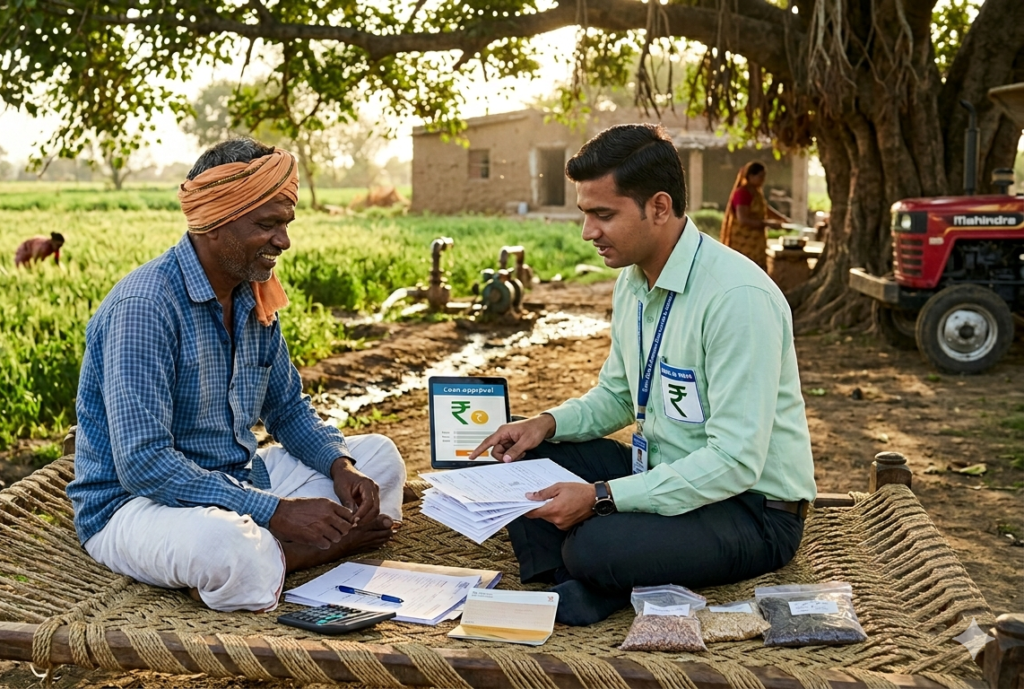
Agricultural loans are financial products designed to meet the funding needs of farmers, agri-businesses, traders, and other stakeholders in agriculture. Depending on the purpose, these loans may be used for cultivation, equipment purchases, warehouse financing, business expansion, renewable energy adoption, or managing short-term cash flow.

Choosing the right loan depends on the borrower’s specific financial needs, repayment capacity, and stage within the agricultural value chain.
Agricultural Loans

Types of agricultural loans in India

  • Crop Loans: Crop loans are among the most widely used agricultural loans in India. They help farmers finance seasonal cultivation expenses such as seeds, fertilisers, pesticides, irrigation, labour, and harvesting. These loans are typically repaid after the crop is harvested and sold, making them suitable for meeting short-term production expenses.
  • Farm Equipment Loans: Mechanisation has become essential for improving productivity and reducing labour dependency. Farm equipment loans help finance tractors, harvesters, irrigation systems, power tillers, drones, and other agricultural machinery. These loans enable farmers to modernise operations without making large upfront investments.
  • Warehouse Receipt Finance: Farmers and commodity owners often face pressure to sell immediately after harvest when market prices are relatively low. Warehouse Receipt Finance allows them to pledge their stored commodities as collateral and access working capital without selling their produce. This helps improve liquidity while allowing borrowers to wait for more favourable market prices before selling.
  • Invoice Bill Discounting: Delayed payments can disrupt the working capital cycle for agri-businesses, traders, processors, and suppliers. Invoice Bill Discounting enables businesses to receive immediate funds against outstanding invoices instead of waiting for customer payments. This improves cash flow and supports uninterrupted business operations.
  • Loan Against Property (LAP): For businesses planning expansion or requiring larger amounts of capital, Loan Against Property provides financing by leveraging owned residential, commercial, or industrial property as collateral. The funds can be used for business growth, infrastructure development, equipment purchases, or other long-term financial requirements.
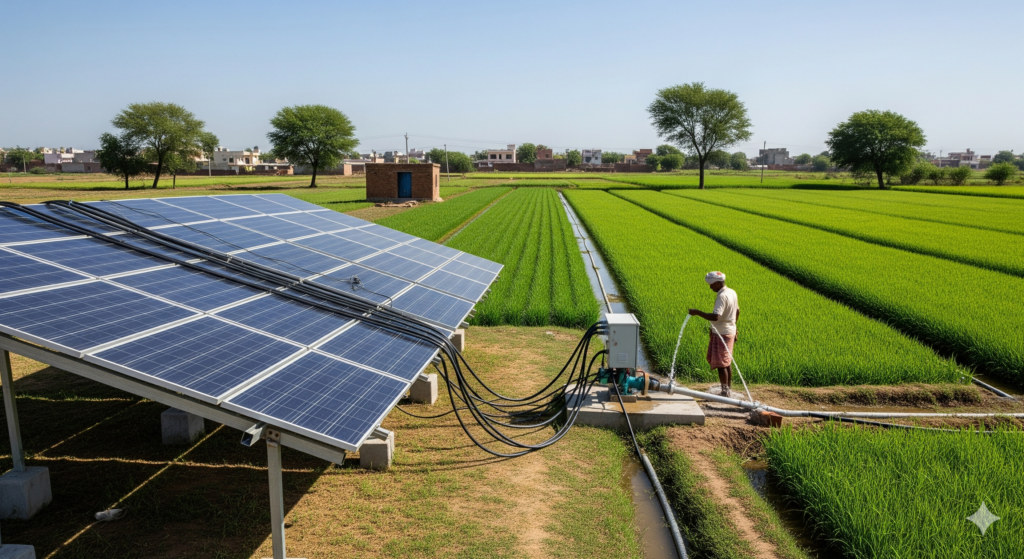
  • Solar Finance: Renewable energy is becoming an increasingly important part of modern agriculture. Solar Finance helps farmers and businesses invest in solar pumps, rooftop solar systems, and other clean energy solutions that reduce electricity costs and improve long-term sustainability.
solar loan

Why agricultural finance is evolving

Agriculture today extends far beyond cultivation. Farmers are adopting precision farming technologies, traders require faster working capital, processors need reliable supply chains, and businesses are investing in modern storage and logistics infrastructure.

As a result, financial institutions are increasingly offering specialised lending products tailored to different stages of the agricultural value chain rather than relying solely on conventional crop loans.

Digital documentation, faster credit assessments, alternative data sources, and technology-driven underwriting are also making agricultural finance more accessible and efficient.

Choosing the right agricultural loan

Before applying for an agricultural loan, borrowers should evaluate several factors:

  • Clearly define the purpose of the loan.
  • Estimate repayment capacity based on expected income.
  • Compare interest rates and repayment tenures.
  • Understand collateral requirements.
  • Choose lenders that offer specialised agricultural financing.
  • Ensure the loan aligns with long-term business or farming goals.

Selecting the right financial product not only improves access to capital but also supports sustainable financial planning.

How Agriwise supports agricultural financing

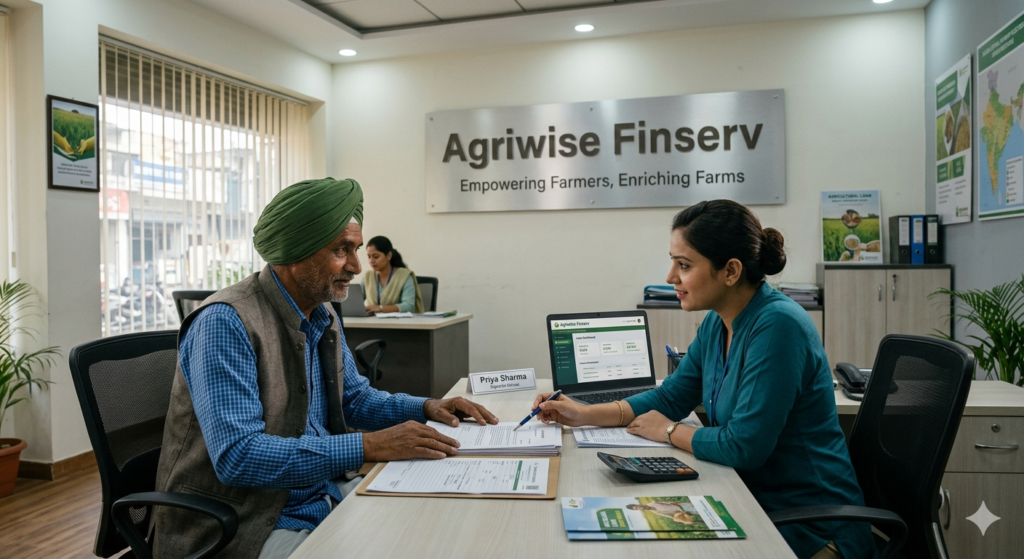
As agriculture becomes more integrated and technology-driven, financing needs vary across different participants in the value chain. Agriwise addresses these diverse requirements through specialised financial solutions designed for farmers, agri-businesses, traders, and commodity owners.

Its portfolio includes Farmer Finance for cultivation and farm-related needs, Warehouse Receipt Finance that enables borrowers to unlock working capital against stored agricultural commodities, and Invoice Bill Discounting, which helps businesses improve cash flow by converting receivables into immediate liquidity.

For long-term growth, Agriwise also offers Loan Against Property (LAP) to support business expansion and Solar Finance for investments in clean energy infrastructure. By combining sector expertise with technology-enabled credit assessment, Agriwise delivers financing solutions that are aligned with the evolving needs of India’s agricultural ecosystem.
agriwise finance

Conclusion

Agricultural finance has evolved into a comprehensive ecosystem that supports every stage of the agricultural value chain, from cultivation and mechanisation to storage, trading, processing, and business expansion. As farming becomes increasingly commercial and technology-driven, choosing the right financing solution has become just as important as choosing the right crop or market.

Whether it’s managing seasonal expenses, improving cash flow, or investing in long-term growth, specialised agricultural loans empower farmers and agri-businesses to make informed financial decisions. With flexible financing options tailored to different requirements, institutions like Agriwise are helping strengthen the financial foundation of India’s rapidly evolving agricultural sector.

FAQs

  • What are the different types of agricultural loans available in India?
    Agricultural loans include crop loans, farm equipment loans, warehouse receipt finance, invoice discounting, loans against property (LAP), livestock loans, horticultural loans, and solar finance. Each is designed to meet different financial needs across the agricultural value chain.
  • Who can apply for agricultural loans?
    Agricultural loans are available to farmers, Farmer Producer Organisations (FPOs), agri-businesses, commodity traders, processors, warehouse operators, and other stakeholders involved in agriculture, subject to the lender’s eligibility criteria.
  • What is Warehouse Receipt Finance?
    Warehouse Receipt Finance allows farmers and commodity owners to obtain loans against agricultural produce stored in accredited warehouses. This enables them to access working capital while waiting for favourable market prices.
  • How does Invoice Bill Discounting benefit agri-businesses?
    Invoice Bill Discounting helps businesses improve cash flow by providing immediate funds against unpaid invoices, reducing the waiting period for customer payments and supporting uninterrupted operations.
  • How does Agriwise support agricultural financing?
    Agriwise offers specialised financial solutions including Farmer Finance, Warehouse Receipt Finance, Invoice Bill Discounting, Loan Against Property (LAP), and Solar Finance, helping farmers and agri-businesses access timely capital for growth, operations, and long-term investments.
Agriculture Loan Interest Rate

What is the Average Agriculture Loan Interest Rate in India?

June 25, 2026

Farming is a business that requires constant investment. Whether it’s purchasing seeds, fertilisers, farm equipment, irrigation systems, or meeting day-to-day operational expenses, access to timely credit plays a crucial role in agricultural success.

“Agriculture loan interest rates in India typically range from 7.00% to 16.00% per annum, depending on the lender, loan amount, and the specific scheme. Rates can go up to 24% for unsecured NBFC loans.”

But before applying for a loan, one question often comes to mind: What is the average agriculture loan interest rate in India?

The answer isn’t always straightforward. Agriculture loan interest rates can vary depending on the type of loan, the lender, the borrower’s profile, and the purpose of financing. Understanding how these rates work can help farmers, agri-entrepreneurs, and rural businesses make informed borrowing decisions.

Let’s break it down.

Why agriculture loans matter

Agriculture is highly seasonal, but expenses occur throughout the year. Farmers often need funds before harvest, while income typically arrives only after crops are sold. Agriculture loans help bridge this gap by providing access to capital for:

  • Crop cultivation
  • Farm equipment purchases
  • Irrigation infrastructure
  • Post-harvest expenses
  • Livestock farming
  • Warehouse receipt financing
  • Agri-business expansion

With access to affordable credit, farmers can invest in productivity-enhancing practices rather than relying solely on personal savings.

farm loan interest rates

What is the average agriculture loan interest rate in India?

The agriculture loan interest rate in India generally ranges between 7% and 16% per annum, depending on the lender and loan category. For example:

  • Crop loans under government-supported schemes may start from around 7%.
  • Loans for farm equipment or infrastructure may range between 8% and 12%.
  • Loans from NBFCs and private financial institutions may vary based on borrower profiles and risk assessment.
  • Interest subvention schemes offered by the government can further reduce the effective borrowing cost for eligible farmers.

It’s important to note that the final interest rate offered to a borrower depends on several factors beyond the headline rate.

What factors affect agriculture loan interest rates?

Not every borrower receives the same rate. Financial institutions evaluate multiple factors before determining loan pricing. Some key considerations include:

  • Type of Loan

Different agricultural financing products carry different risk profiles. For example:

  • Crop loans often attract lower interest rates.
  • Equipment loans may have different pricing structures.
  • Loans against property or warehouse receipts may be assessed differently based on collateral value.


  • Loan Amount

The size of the loan can influence interest rates. Larger loans with strong collateral backing may sometimes qualify for more competitive terms compared to unsecured borrowing.

  • Repayment Capacity

Lenders assess a borrower’s ability to repay based on income sources, farming history, business operations, and existing financial obligations. A stronger repayment profile may improve financing terms.

  • Collateral Availability

Loans backed by assets such as land, property, or stored commodities often carry lower risk for lenders. As a result, secured loans may attract more favourable interest rates than unsecured facilities.

  • Credit History

A good repayment record demonstrates financial discipline and may positively influence loan eligibility and pricing. Borrowers with a strong credit profile are often viewed more favourably by financial institutions.

ag loan interest rates

Beyond interest rates, what else should borrowers consider?

While the agriculture loan interest rate is important, it should not be the only factor when choosing a financing solution. Before applying for a loan, consider:

  • Processing fees
  • Loan tenure
  • Repayment flexibility
  • Documentation requirements
  • Speed of approval
  • Customer support
  • Prepayment conditions

Sometimes, a loan with a slightly higher interest rate but faster approval and flexible repayment terms may be more beneficial than a lower-rate option with lengthy processing timelines.

Different types of agriculture loans available in India

Today’s agricultural financing ecosystem offers solutions for a wide range of needs. Common financing options include:

  • Crop Loans: Designed to support seasonal cultivation expenses such as seeds, fertilizers, pesticides, and labour.
  • Farm Equipment Loans: Used for purchasing tractors, harvesters, irrigation systems, and other agricultural machinery.
  • Warehouse Receipt Finance: Allows borrowers to obtain funding against commodities stored in warehouses.
  • Agri Loans Against Property (Agri LAP): Enables borrowers to leverage property assets for larger financing requirements.
  • Livestock and Allied Activity Loans: Supports dairy farming, poultry, fisheries, and other allied agricultural activities.
  • Agri-Business Loans: Designed for traders, processors, distributors, and agricultural enterprises seeking working capital or expansion funding.

How Agriwise supports agricultural financing

Access to credit should be simple, transparent, and aligned with the needs of agricultural stakeholders. Agriwise provides a range of financing solutions designed to support farmers, agri-businesses, and rural entrepreneurs across different stages of growth. Its offerings include:

  • Farmer Finance
  • Warehouse Receipt Finance
  • Agri Loans Against Property (Agri LAP)
  • Invoice Bill Discounting
  • Solar Finance

By understanding the unique requirements of the agricultural sector, Agriwise helps borrowers access financing solutions that support productivity, growth, and long-term financial stability.

agriculture land loan interest rate

How to secure better loan terms

While interest rates are determined by lenders, borrowers can take several steps to improve their financing prospects. These include:

  • Maintaining a good repayment history
  • Keeping financial records updated
  • Choosing the right loan product
  • Providing accurate documentation
  • Building a strong relationship with financial institutions

Preparation and financial discipline can go a long way in securing competitive financing terms.

Conclusion

The average agriculture loan interest rate in India typically ranges between 7% and 12%, but the actual rate depends on multiple factors, including the type of loan, collateral, repayment capacity, and lender policies.

More importantly, borrowers should evaluate the complete financing package rather than focusing solely on the interest rate. With the right financing solution, Indian farmers and agri-businesses can invest confidently, improve productivity, manage cash flow effectively, and build a stronger foundation for growth.

FAQs

  • What is the average agriculture loan interest rate in India?
    The agriculture loan interest rate in India generally ranges from 7% to 12% per annum, depending on the lender, loan type, and borrower profile.
  • What factors affect agriculture loan interest rates?
    Interest rates are influenced by factors such as loan type, collateral, repayment capacity, credit history, and loan amount.
  • Are agriculture loans available for farm equipment purchases?
    Yes. Many financial institutions offer dedicated loans for tractors, irrigation systems, harvesters, and other agricultural equipment.
  • Can farmers get loans against stored commodities?
    Yes. Through Warehouse Receipt Finance, farmers and traders can obtain funding against commodities stored in approved warehouses.
  • What financing solutions does Agriwise offer?
    Agriwise offers Farmer Finance, Warehouse Receipt Finance, Loans Against Property, Invoice Bill Discounting, and Solar Finance solutions.

Disclaimer

The content published on this blog is provided solely for informational and educational purposes and is not intended as professional or legal advice. While we strive to ensure the accuracy and reliability of the information presented, Agriwise make no representations or warranties of any kind, express or implied, about the completeness, accuracy, suitability, or availability with respect to the blog content or the information, products, services, or related graphics contained in the blog for any purpose. Any reliance you place on such information is therefore strictly at your own risk. Readers are encouraged to consult qualified agricultural experts, agronomists, or relevant professionals before making any decisions based on the information provided herein. Agriwise, its authors, contributors, and affiliates shall not be held liable for any loss or damage, including without limitation, indirect or consequential loss or damage, or any loss or damage whatsoever arising from reliance on information contained in this blog. Through this blog, you may be able to link to other websites that are not under the control of Agriwise. We have no control over the nature, content, and availability of those sites and inclusion of any links does not necessarily imply a recommendation or endorsement of the views expressed within them. We reserve the right to modify, update, or remove blog content at any time without prior notice.

Agri term loan vs. Short-term working capital: Make the right choice

August 28, 2025

Choosing between an agri term loan and short-tenor working capital can decide how smoothly your season runs—and how quickly you scale. India’s agricultural finance landscape is deepening.
According to PIB, as of March 2024, there were 7.75 crore operational Kisan Credit Card (KCC) accounts with ₹9.81 lakh crore outstanding, underscoring the centrality of short-term credit for input purchases and in-season cash flow. At the same time, medium-to-long-term investment credit remains critical; in FY2025, NABARD disbursed ₹1.9 lakh crore in short-term refinance and ₹1 lakh crore in long-term refinance to support banks’ farm lending.

agri term loan

What is an Agri Term Loan—and when does it fit best?

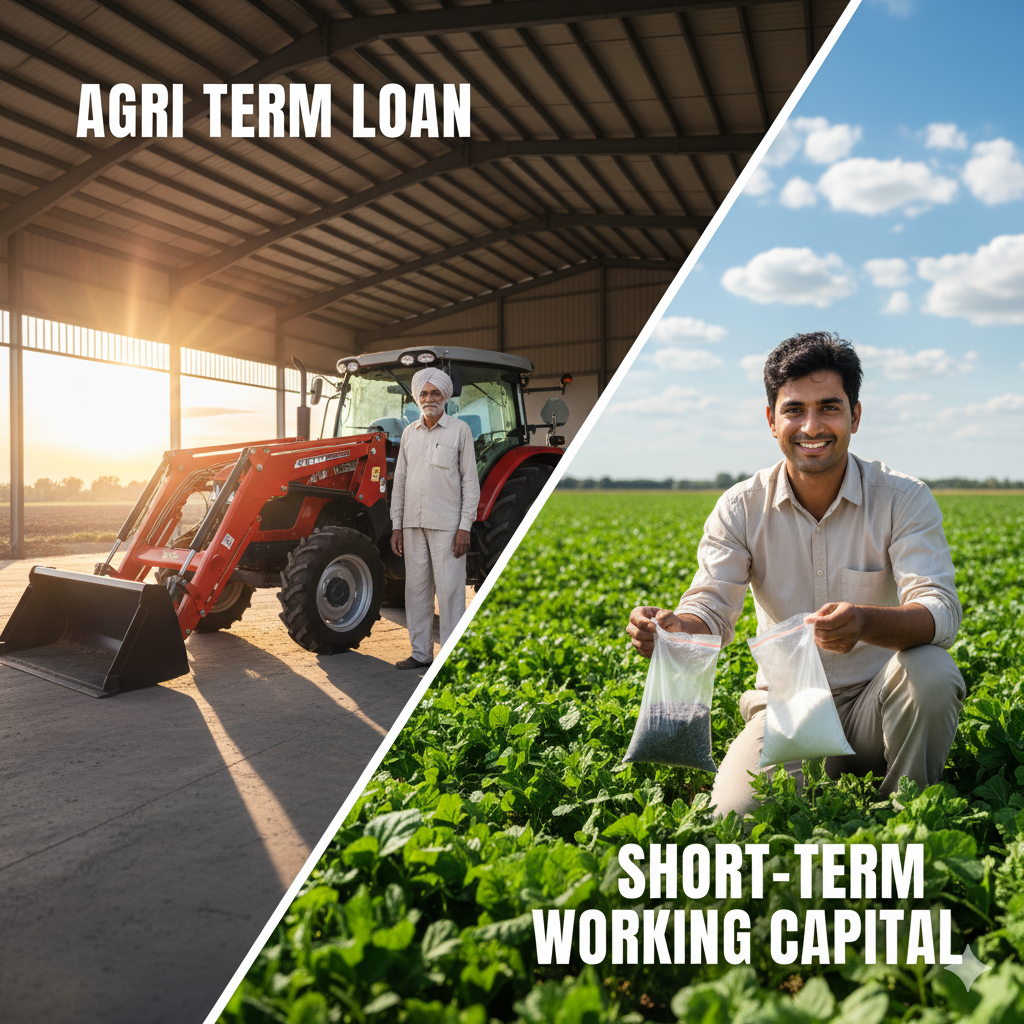
An agri term loan is designed for asset creation and long-horizon payback. Think agriculture equipment financing (tractors, harvesters), pack-house or dairy unit set-ups, micro-irrigation, solar pumps, or land development. Tenors usually run 3–7 years (sometimes longer), with structured repayment aligned to your farm’s cash generation. For many borrowers, evaluating a farm loan in India, an agri term loan is ideal when:

  • You’re creating or upgrading productive capacity that yields benefits over multiple seasons.
  • Cash flows are predictable but lumpy (e.g., perennial crops or a new greenhouse).
  • You want interest rates and repayment schedules tailored under priority sector agriculture loan norms.

Critically, India continues to push agricultural credit: by December 31, 2024, ₹19.28 lakh crore of ground-level agri credit had already been disbursed against an annual target of ₹27.5 lakh crore—evidence that banks have liquidity and appetite for both investment and in-season credit.

Short-term working capital financing: The right tool for the season

Short-term working capital financing keeps operations moving between sowing and sale. Popular instruments include:

  • Kisan Credit Card and crop loan (including seasonal crop loan): revolving limits for seeds, fertilizer, diesel, labour, and plant protection.
  • Invoice financing and accounts receivable financing: unlock cash tied up in trade credit when buyers take 30–60 days to pay.
  • Warehouse receipt financing: borrow against stored produce to avoid distress sale and capture better post-harvest prices.

For many MSMEs in the agri value chain—aggregators, FPOs, food processors—an MSME agriculture loan structured as a working capital loan can smooth procurement cycles, bridge receivables, and fund short production runs. Policy continues to encourage access: the RBI’s Priority Sector Lending (PSL) Master Directions, March 24, 2025 added incentives—125% weight to incremental PSL in low-credit districts—to push banks deeper into underserved agri geographies.

agriculture term loan

Agri term loan vs. Short-term working capital: How to choose?

Use this quick lens to decide which instrument fits your immediate need:

  • Purpose
    • Agri term loan: asset creation—tractor, combine, drip irrigation, dairy shed, primary processing.
    • Short-term working capital: input purchases, wages, logistics, short cash-flow gaps.
  • Tenor & repayment
    • Agri term loan: multi-year tenor; repayment aligned to harvest cycles and asset life.
    • Short-term working capital: 6–12 months (often revolving); interest on utilized amount.
  • Security & pricing
    • Agri term loan: often secured against the asset/land; eligible under agriculture loan India PSL norms.
    • Short-term working capital: may be cash-flow backed (KCC), commodity-backed (warehouse receipt financing), or invoice-backed.
  • Cash-flow impact
    • Agri term loan: spreads cost of expansion; improves productivity/quality over time.
    • Short-term working capital: protects margins by preventing stock-outs, distress sales, or production stoppages.

Eligibility and application: getting prepared

Most lenders evaluate agriculture loan eligibility on the basis of land ownership/lease documentation (or FPO MSME credentials), cropping pattern, historical yields, credit history, and projected cash flows. Digital rails mean you can now complete a farm loan application online with e-KYC, e-sign, and document uploads. Borrowers should keep soil-health cards, Khasra/Khatauni or lease agreements, past sales invoices, and bank statements ready. For value-chain MSMEs, maintain GST returns, audited statements, and buyer contracts to strengthen accounts receivable financing or invoice financing proposals.

Note that regulatory parameters evolve: in June 2025, the RBI reduced small finance banks’ overall priority sector lending requirement from 75% to 60%, offering them more portfolio flexibility while continuing to support priority sectors, including agriculture—useful context if you bank with an SFB.

crop capital

Smart combinations that often work

Many successful farms and agri-MSMEs blend both instruments:

  • Pair an agri term loan for a new cold room with warehouse receipt financing to hold inventory until prices improve.
  • Finance a harvester via an agri term loan, while running input purchases through KCC/crop loan to keep operations liquid.
  • Use invoice financing post-dispatch to shorten your cash cycle, while long-term expansion (additional pack-line or a solar pump) rides on a separate agri term loan.

With 7.75 crore KCCs already active and substantial refinance lines from NABARD in FY2025, borrowers have both breadth (short-term liquidity) and depth (long-term investment credit) to choose from—provided proposals are well-documented and cash-flows are realistic.

How Agriwise can help you choose?

At Agriwise, we understand that no two borrowers have the same agricultural finance needs. That’s why we offer both short-term working capital financing and long-term solutions like agri term loans—including structured options such as Loan Against Property. Our expertise lies in helping farmers, agri-MSMEs, and value-chain players evaluate their farm loan options, determine agriculture loan eligibility, and align repayment schedules with seasonal cash flows. Whether it’s an agriculture equipment financing, seasonal crop loan, invoice financing, or warehouse receipt financing to keep your operations liquid, or a customized agri term loan for asset creation, Agriwise ensures that financing works as a growth enabler. With a seamless farm loan application online process and deep knowledge of priority sector agriculture loan norms, we help you access the right credit at the right time—fueling productivity and profitability.

agriwise loan

Conclusion

If you’re investing for multi-season productivity, an agri term loan is the right backbone. If you’re protecting margins this season, prioritize short-term working capital. Many agri enterprises need both—sequenced and sized to their cash-flow. Agriwise can help you choose the mix, get the agriculture loan eligibility right, and execute your farm loan application online—so credit fuels growth, not stress.

Disclaimer

The content published on this blog is provided solely for informational and educational purposes and is not intended as professional or legal advice. While we strive to ensure the accuracy and reliability of the information presented, Agriwise make no representations or warranties of any kind, express or implied, about the completeness, accuracy, suitability, or availability with respect to the blog content or the information, products, services, or related graphics contained in the blog for any purpose. Any reliance you place on such information is therefore strictly at your own risk. Readers are encouraged to consult qualified agricultural experts, agronomists, or relevant professionals before making any decisions based on the information provided herein. Agriwise, its authors, contributors, and affiliates shall not be held liable for any loss or damage, including without limitation, indirect or consequential loss or damage, or any loss or damage whatsoever arising from reliance on information contained in this blog. Through this blog, you may be able to link to other websites that are not under the control of Agriwise. We have no control over the nature, content, and availability of those sites and inclusion of any links does not necessarily imply a recommendation or endorsement of the views expressed within them. We reserve the right to modify, update, or remove blog content at any time without prior notice.

Agri‑infra loans: Building rural assets through finance

July 24, 2025

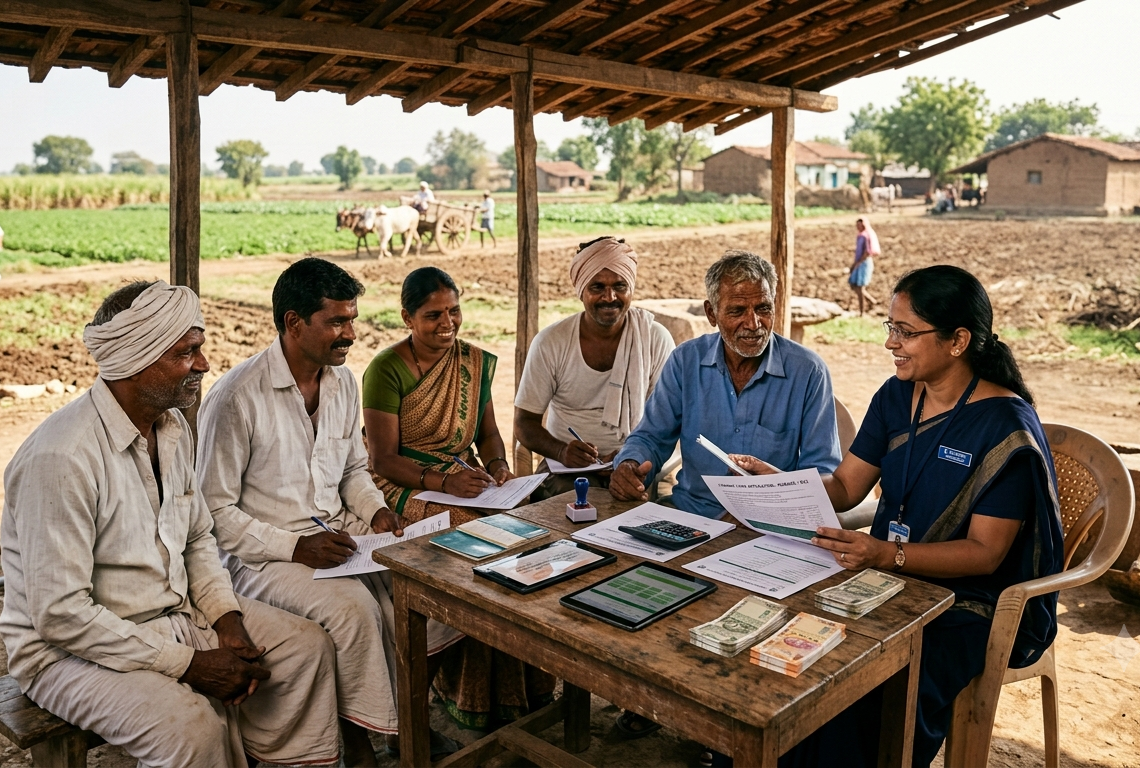
Rural finance has emerged as a key driver in transforming India’s agrarian landscape in recent years. Among these, agri-infra loans, also known as agriculture infrastructure loans, have catalysed the creation of vital rural assets—warehouses, cold chains, and processing facilities—that empower farmers to enhance their incomes, reduce post-harvest losses, and modernise their businesses. These funds complement existing agricultural finance tools, such as agri-business loans, farm infrastructure finance, and traditional agri loans in India.

Why agri‑infra loans?

Traditional farmer credit often supports input costs—seeds, fertilisers or irrigation—through short‑term products like the Kisan Credit Card, which held ₹9.81 lakh crore outstanding across 7.75 crore accounts as of March 2024, as per the Press Information Bureau. But what about long‑term assets? Enter agri loans for warehouse financing, cold storage loans, and farm asset creation schemes that underpin supply-chain resilience and income optimisation.

Agricultural Infrastructure Fund (AIF): A game‑changer agri loans!

Launched in August 2020, the AIF is a ₹1 lakh crore initiative offering medium- to long-term debt with:

  • 3% interest subvention on loans up to ₹2 crore for 7 years,
  • Credit guarantee via CGTMSE for up to ₹2 crore,
  • Tenure up to 7 years, with moratoriums ranging from 6 months to 2 years.

By January 2025, AIF had sanctioned ₹51,364 crore across 84,159 projects—including warehouses, cold storages, processing & grading units. These interventions align tightly with rural infrastructure finance and rural development funding, boosting livelihoods beyond raw production.

“On an average, this Agriculture infrastructure fund initiative has enabled farmers to get 11- 14% higher prices for their produce.” – Shivraj Singh Chouhan, Union Minister of Agriculture and Farmer’s Welfare

NABARD’s role in farm asset creation

The National Bank for Agriculture and Rural Development (NABARD) acts as a key conduit, providing refinance support via its Rural Infrastructure Development Fund (RIDF) and new AMI sub-schemes. In FY 2024–25, NABARD extended a record ₹5,830 crore to Jharkhand alone, financing irrigation, bridges, rural godowns, and cold storage—benefiting over 2 lakh farmers, according to The Economic Times. NABARD also 2024–25 channelled ₹24,500 crore through RIDF, with ₹19,500 crore disbursed.

Additionally, it supports schemes like Gramin Bhandaran Yojana, offering subsidies for rural godown construction up to 30,000 tonnes. These are critical to rural asset creation, enabling cold chain loans and warehouse financing to reach marginal farmers and FPOs.

State-level initiatives: Cold storage & e-Marketing

State governments are also stepping up. In Uttar Pradesh, the state is deploying ₹5,000 crore in agri-infra loans with a 3% interest subsidy to promote cold storage, pack-houses, warehouses, and e-marketing under the Agri Infrastructure Fund and the Self-Reliant Integrated Development Scheme (The Times of India).

Agriwise for agri loans

Agriwise Finserv, a leading NBFC company, is delivering customised agri finance solutions that support rural infrastructure development. Through its seamless digital lending platform, Agriwise provides quick and collateral-backed agri business loans, warehouse financing, and farm infrastructure finance tailored to the evolving needs of farmers, FPOs, and agri-entrepreneurs.

By simplifying access to formal credit loans and partnering with banks, NBFCs, and government schemes, Agriwise bridges the rural credit gap, fostering long-term asset creation. With a focus on transparency, speed, and financial literacy, Agriwise is driving sustainable growth and unlocking the true potential of India’s agricultural sector.

Opportunities: Farmers, FPOs & Agri Entrepreneurs

Agri‑Infra Loans are designed for:

  • Individual farmers seeking cold storage or warehousing,
  • FPOs/FPCs building processing and marketing units,
  • Agri‑startups, SHGs, cooperatives, and rural MSMEs.

Such entities can tap into NABARD AIF, state bank schemes (e.g., SBI’s cold storage loan of up to ₹50 crore, with 10–11% interest over 10 years), CGTMSE guarantees, and central subsidies. Moreover, new initiatives like NABARD’s e-Kisan Credit Card portal streamline the application and disbursement process.

agri loans

Challenges & the road ahead

Awareness remains a hurdle; many farmers still lack clarity on government schemes for farmers. Under‑financing is also a concern—banks are urged to offer adequate credit for rehabilitation and plans. With agri‐credit projected to surpass ₹32 lakh crore by FY 2025‑26, a 14% increase from FY 2024‑25, accessible infrastructure loans will be key to sustainable rural transformation, as per The Times of India.

Conclusion

Agri loans—underpinned by AIF, NABARD, CGTMSE, agritech, and state-level pushes—are opening new frontiers in rural development funding and asset-based agri finance. Whether you’re a small farmer building a cold storage unit, an FPO creating a grading centre, or an agri-entrepreneur setting up a warehouse, these tools offer affordable, backed credit to scale up, de-risk your operations, and get the most from the land. For those ready to embrace agriculture infrastructure loans, now is a fertile moment.