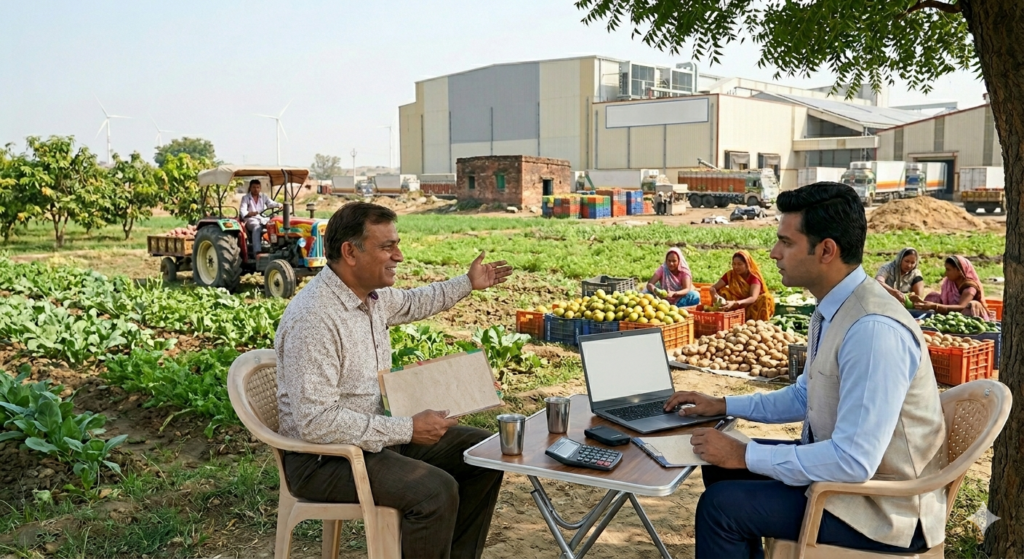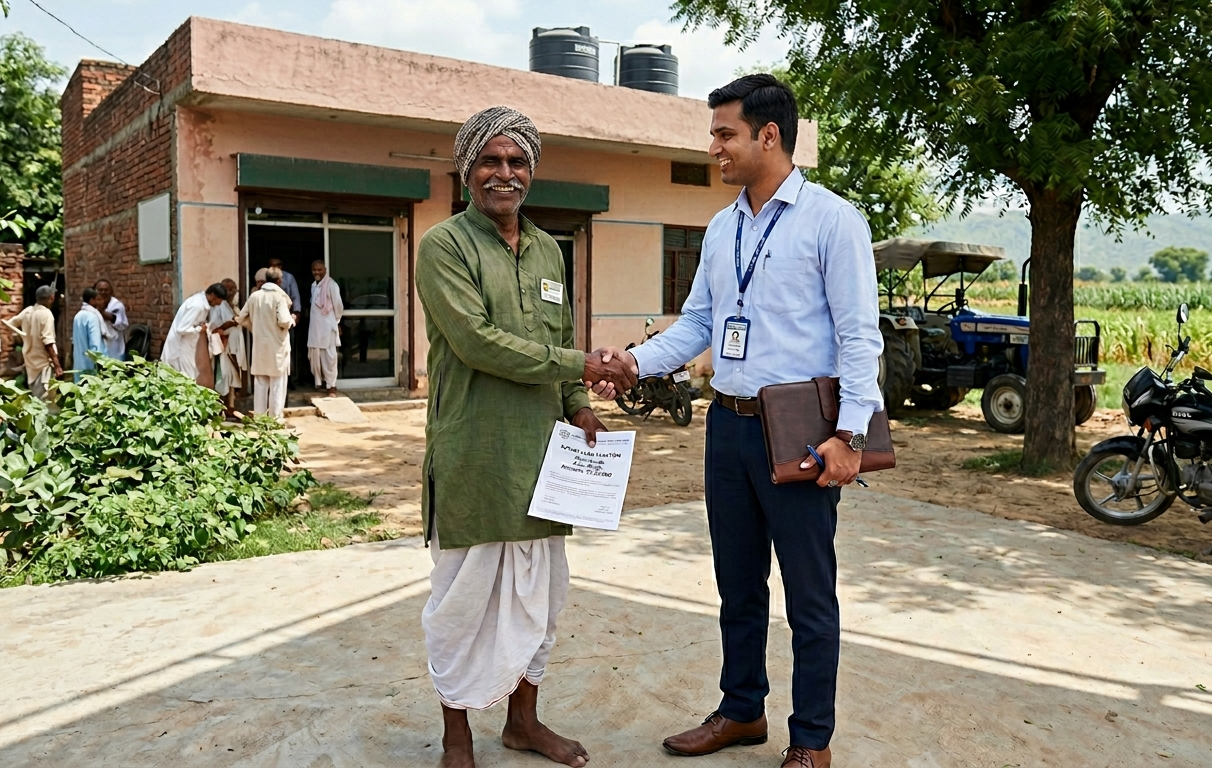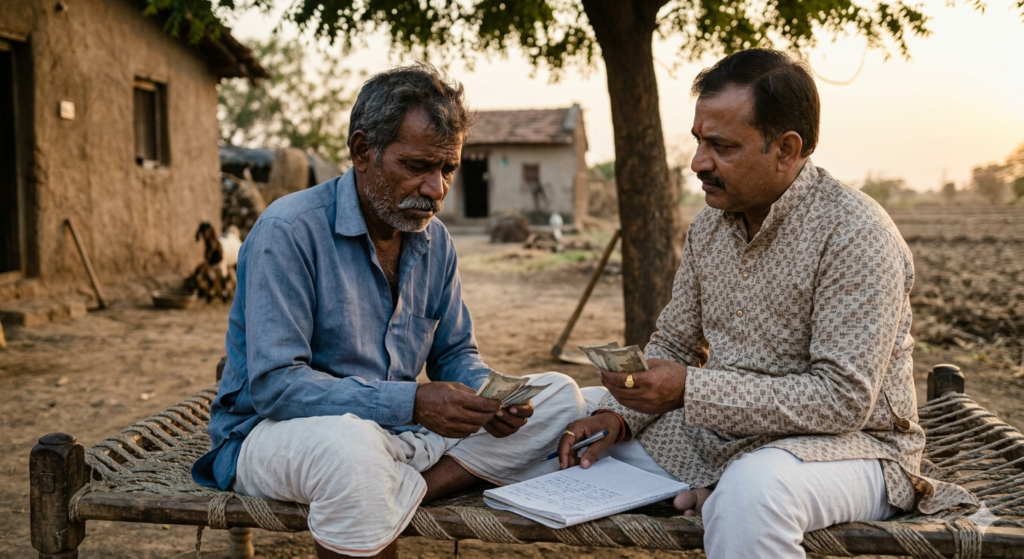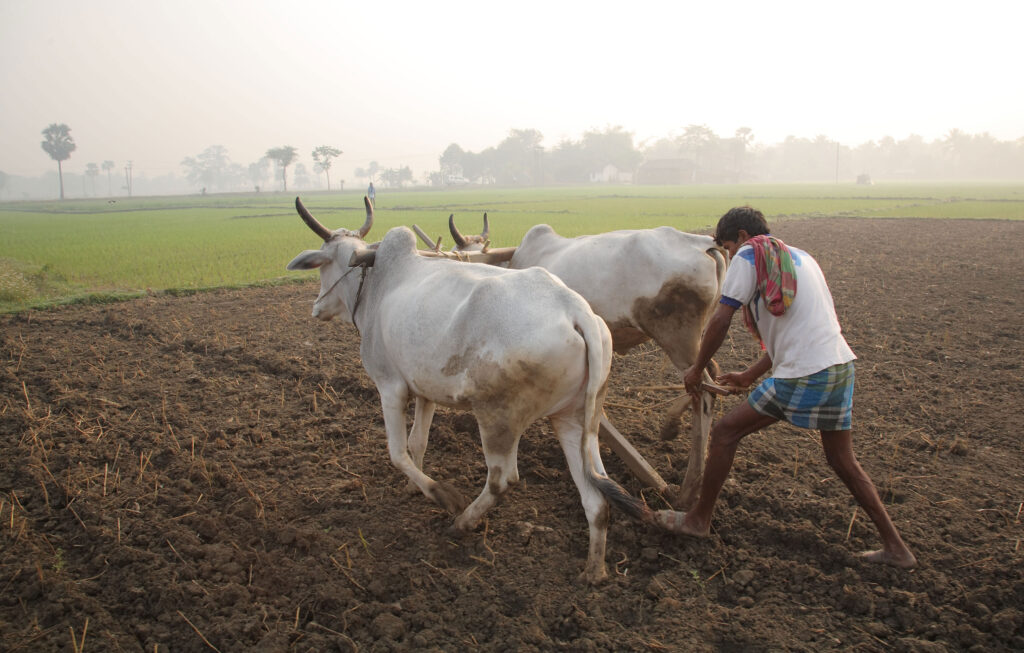

For decades, agricultural lending has followed a familiar pattern.
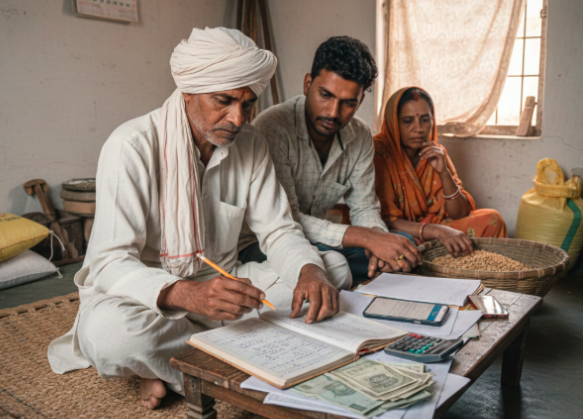
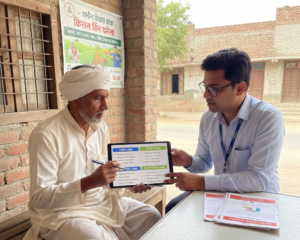
A farmer applies for credit. Documents are checked. Land records are reviewed. Repayment history is assessed. Local verification happens. Then comes the lending decision. But agriculture has always been difficult to evaluate through traditional banking systems.
Why?
Because farming does not behave like a predictable monthly-income business. Crop cycles fluctuate. Weather changes unexpectedly. Commodity prices move rapidly. Regional risks vary constantly.
And yet, most agricultural credit systems still rely heavily on static paperwork and conventional assessment methods.
That raises an important question: What if agricultural credit decisions could eventually be based not just on documents, but on intelligence?
Because with AI, satellite data, transaction patterns, and digital agriculture ecosystems expanding rapidly, the way agricultural creditworthiness is assessed may be on the verge of a major transformation.
Agriculture has always had a visibility problem
One of the biggest challenges in agricultural finance is information asymmetry. Lenders often struggle to accurately assess:
- actual cultivation activity,
- crop conditions,
- regional production risks,
- cash-flow cycles,
- and future repayment capacity.
This becomes even more complex in fragmented rural ecosystems where farm sizes are smaller and formal financial records may be limited.
As a result, many deserving borrowers continue facing restricted access to timely credit, while lenders operate with limited visibility around agricultural risks. But agriculture is becoming increasingly measurable.

Farms are starting to generate digital intelligence
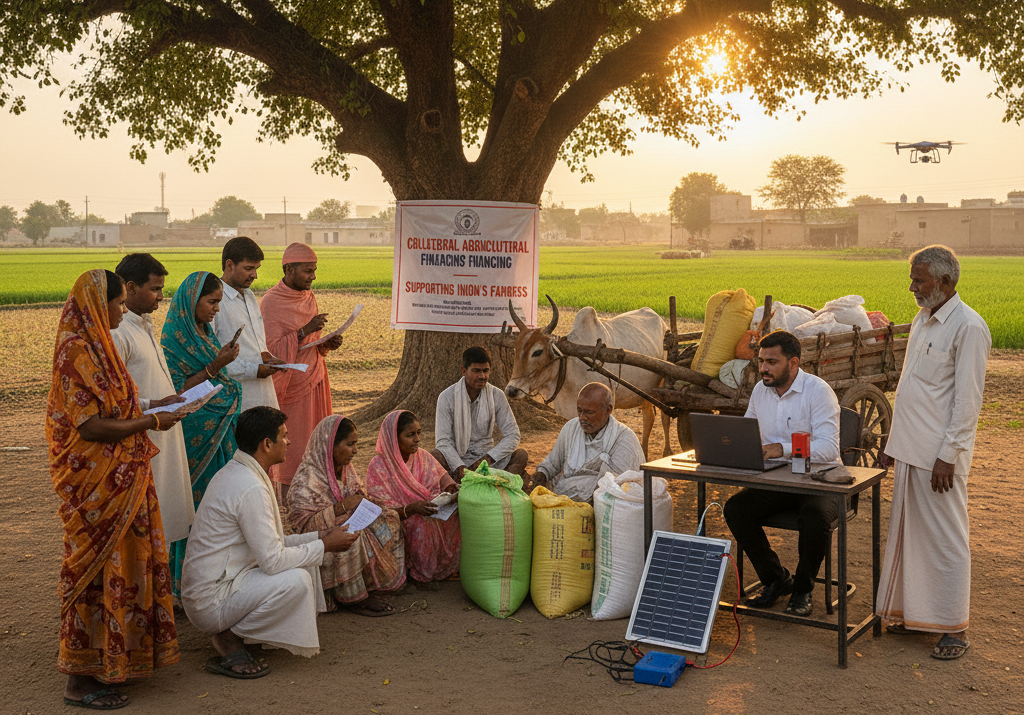
A modern farm today creates far more data than most people realise.
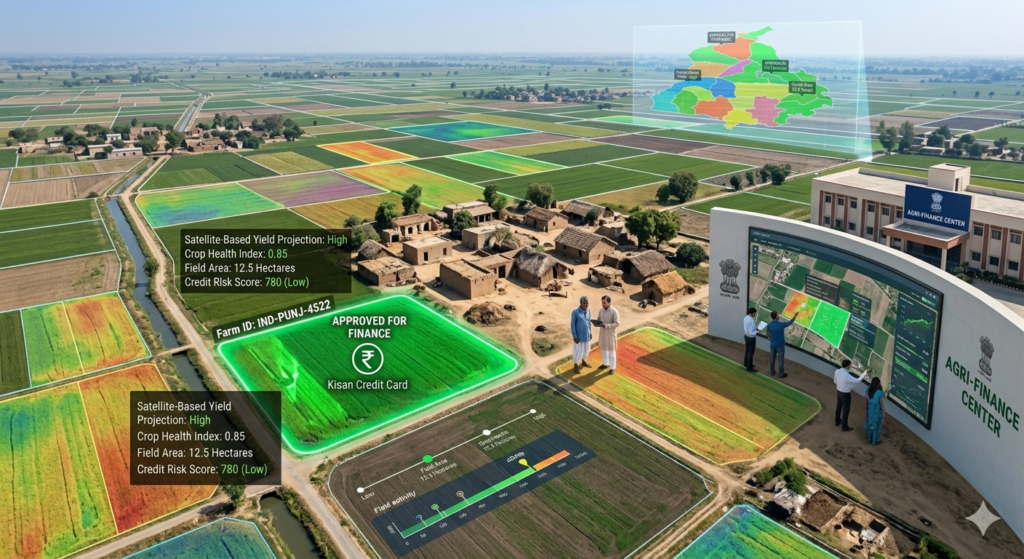
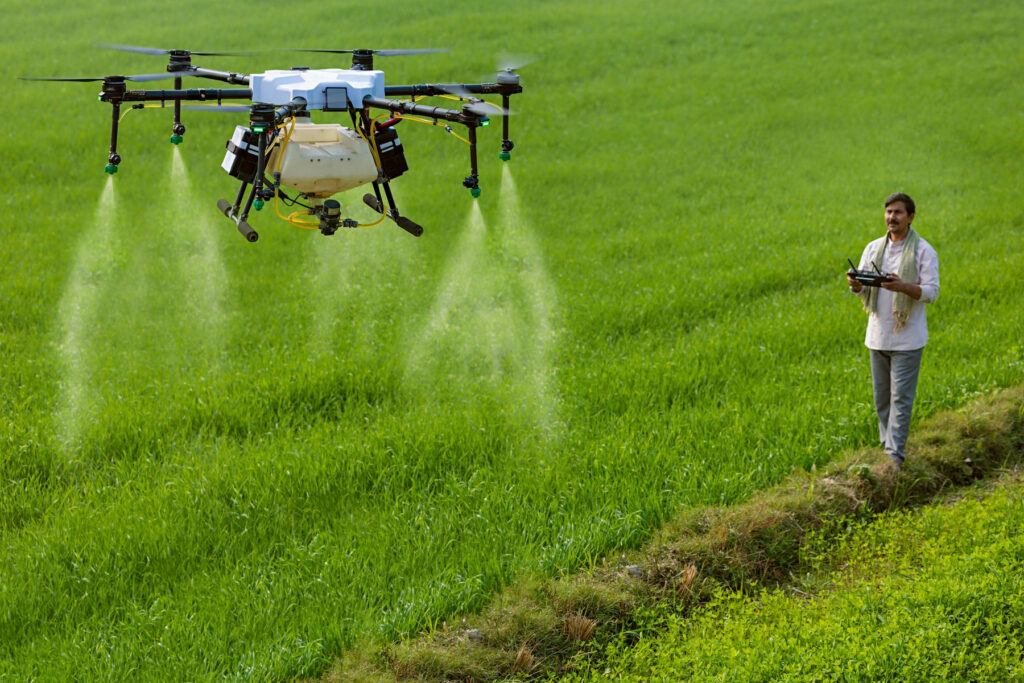
Satellite imagery can track crop health. Weather systems can monitor rainfall patterns. Geo-tagged farms can improve land verification. Digital trading platforms generate transaction histories. Warehousing systems create inventory visibility. Supply-chain movement leaves operational footprints.
Individually, these may seem like disconnected data points. But together, they begin creating behavioural intelligence around agricultural activity. AI systems can analyse large volumes of agricultural data far faster than conventional assessment models. For example, AI can potentially help evaluate:
- historical crop performance,
- cultivation consistency,
- regional weather risks,
- commodity movement patterns,
- repayment behaviour,
- and operational trends.
Hence, agriculture is slowly moving toward dynamic credit assessment instead of static credit evaluation.
Why traditional banking models face limitations in agriculture
Traditional banking systems were designed for structured financial environments. Agriculture rarely operates that way.
A farmer may have healthy crops but limited formal income records. A trader may have strong inventory movement but seasonal cash flows. A rural borrower may have operational credibility that is difficult to capture through conventional financial documentation alone.
This creates a mismatch between traditional underwriting systems and real agricultural behaviour. And that is exactly why alternative data is becoming increasingly important in agri-finance.
Globally, AI-led lending models are gaining traction across sectors where traditional financial visibility is limited. In agriculture specifically, satellite intelligence, predictive analytics, and alternative risk assessment systems are becoming major focus areas.
India is also rapidly expanding its digital agriculture ecosystem through AgriStack initiatives, satellite-backed agricultural intelligence, and digital farm infrastructure. This creates the foundation for more intelligent agricultural lending ecosystems in the future.

AI in agri-finance is not about replacing humans
One common misconception is that AI will replace traditional credit assessment entirely. That’s unlikely. Agriculture is deeply local, behavioural, and relationship-driven. Human understanding of farming ecosystems will continue to remain important. But AI can significantly strengthen decision-making.
Instead of depending only on historical paperwork, lenders can potentially use AI to improve:
- risk visibility,
- fraud detection,
- farm verification,
- crop monitoring,
- portfolio assessment,
- and lending speed.
This becomes especially valuable in agriculture because risks change dynamically throughout the crop cycle.
A weather event, pest outbreak, or regional disruption can alter financial outcomes quickly. AI systems can help track these changes more proactively than static assessment models. The future of agricultural lending may become a combination of:
- human judgement,
- digital infrastructure,
- and intelligent data systems.
How Agriwise is participating in this shift
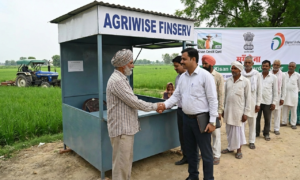
As agriculture becomes more connected and data-driven, companies like Agriwise Finserv are operating within increasingly integrated agricultural ecosystems. Agriwise provides financing solutions across:
- Warehouse Receipt Finance,
- Invoice Discounting,
- Farmer Finance,
- LAP,
- and supply-chain-linked agricultural lending.
What makes this ecosystem particularly relevant is its integration within the broader StarAgri network that combines:
- warehousing,
- collateral management,
- digital agri trade,
- and AI-led agricultural intelligence platforms like agribazaar and Agribhumi.
This interconnected structure becomes increasingly important because the future of agri-finance may depend less on isolated lending and more on connected visibility across the agricultural value chain.
Today, Agriwise has facilitated disbursements exceeding ₹2,500 crore and works with 25+ banking and financial institution partners.
The future of agricultural credit could be intelligence-led
For years, agricultural traditional banking focused heavily on collateral and historical records. But the next phase of agri-finance may focus more on intelligence.
Not just: “What assets does the borrower own?”
But also:
- How is the farm performing?
- What does the crop behaviour indicate?
- How stable are operational patterns?
- What does the supply-chain data suggest?
AI may not completely replace traditional banking systems in agriculture. But it could significantly improve how agricultural risk is understood, monitored, and financed. And as integrated agritech ecosystems continue evolving, the future of agricultural creditworthiness may increasingly be shaped not just by paperwork but by real-time agricultural intelligence.
FAQs
- How is AI used in agricultural finance?
AI helps analyse crop intelligence, repayment patterns, satellite data, and operational trends to improve lending decisions. - Why is agricultural credit assessment difficult?
Agricultural income depends on weather, crop cycles, commodity prices, and regional risks, making traditional assessment models less predictable. - What is alternative agricultural credit scoring?
Alternative credit scoring uses non-traditional data like farm activity, transaction history, satellite intelligence, and operational behaviour to assess creditworthiness. - Can AI replace traditional agricultural lending systems?
AI is more likely to support and improve lending decisions rather than completely replace human judgment in agriculture. - How is Agriwise participating in AI-led agri-finance?
Agriwise operates within an integrated agricultural ecosystem combining finance, warehousing, collateral management, and digital agri intelligence.
Disclaimer
The content published on this blog is provided solely for informational and educational purposes and is not intended as professional or legal advice. While we strive to ensure the accuracy and reliability of the information presented, Agriwise make no representations or warranties of any kind, express or implied, about the completeness, accuracy, suitability, or availability with respect to the blog content or the information, products, services, or related graphics contained in the blog for any purpose. Any reliance you place on such information is therefore strictly at your own risk. Readers are encouraged to consult qualified agricultural experts, agronomists, or relevant professionals before making any decisions based on the information provided herein. Agriwise, its authors, contributors, and affiliates shall not be held liable for any loss or damage, including without limitation, indirect or consequential loss or damage, or any loss or damage whatsoever arising from reliance on information contained in this blog. Through this blog, you may be able to link to other websites that are not under the control of Agriwise. We have no control over the nature, content, and availability of those sites and inclusion of any links does not necessarily imply a recommendation or endorsement of the views expressed within them. We reserve the right to modify, update, or remove blog content at any time without prior notice.