Tag Archives: agriwise finserv

agri finance

10 Things Every Farmer Should Know About Agri Finance

July 22, 2026

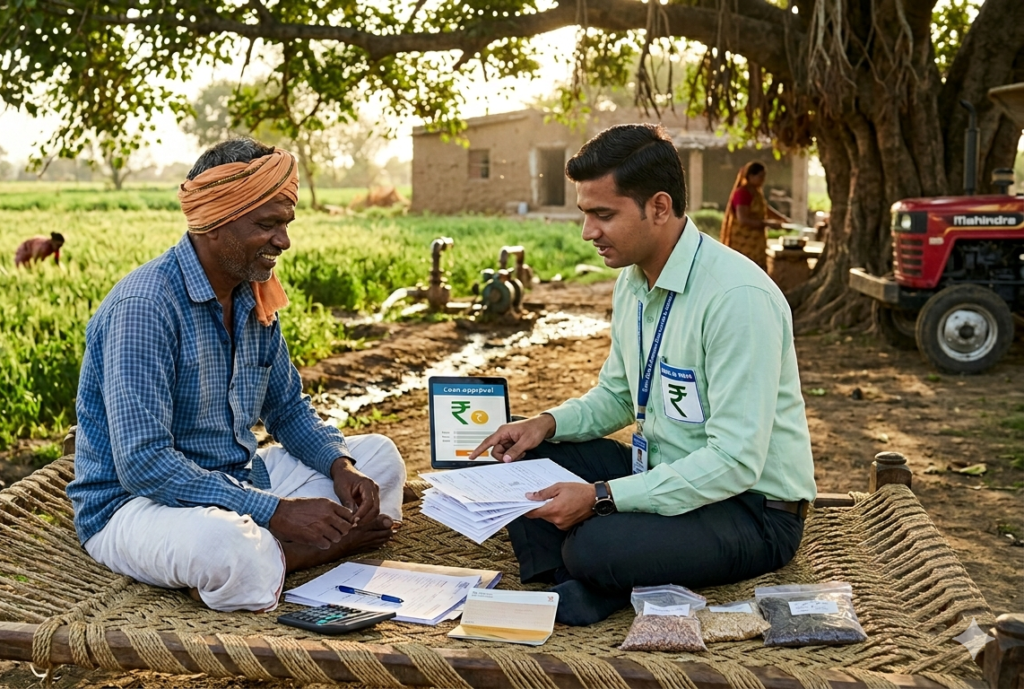
Money worries and farming go hand in hand more often than they should. Whether it’s buying seeds before sowing season or holding onto produce until prices improve, timely access to credit can be the difference between a good season and a stressful one. Yet agri finance remains one of the most misunderstood parts of a farmer’s journey. Here are ten things worth knowing before you take your next loan.

  • Agri finance is bigger than just crop loans
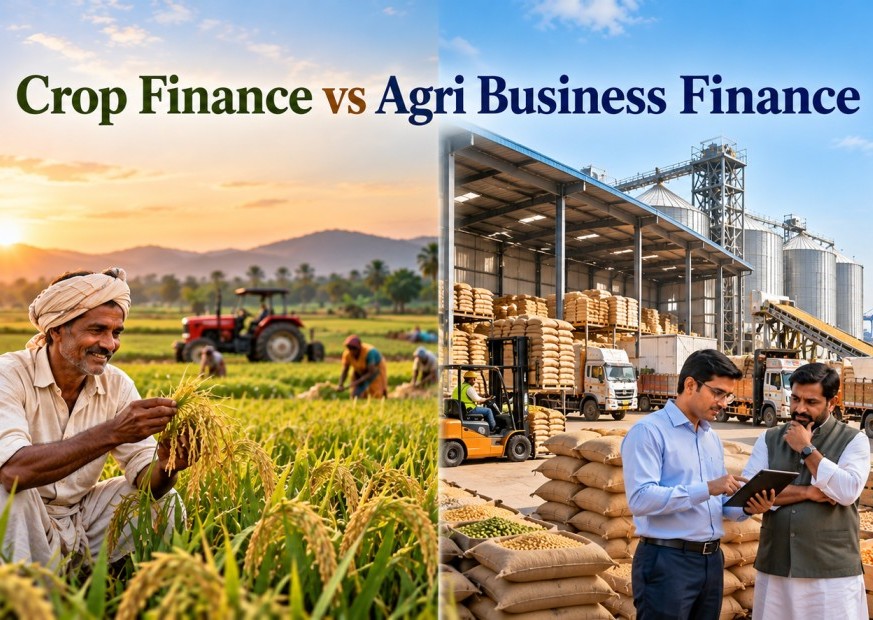
    Most farmers think of agri finance as the seasonal crop loan from a bank. In reality, it covers a much wider range. Warehouse receipt financing, loans against property, equipment and solar financing, and even working capital support for agri-businesses and FPOs. Knowing the full menu helps you pick what actually fits your need.
  • India’s agri credit flow has grown massively
    This isn’t a small, stagnant sector. Ground-level credit disbursed to Indian agriculture is set to touch Rs 32.50 lakh crore in FY 2025-26, more than four times the Rs 8 lakh crore disbursed in FY 2014-15, according to the IANS. That’s over a decade of consistent, roughly 13% annual growth in the rural credit ecosystem.
  • Rural banking infrastructure is expanding too
    Access is improving alongside the credit itself. Rural bank branches grew over 35% to reach 56,193 by July 2025, and regional rural banks now operate more than 22,000 branches across 700 districts, meaning formal credit is reaching further into the Indian geographies.
  • Formal credit is cheaper than informal lending
    This one matters more than farmers often realise. Informal moneylenders typically charge anywhere from 24% to 60% interest, compared to the 12-18% range charged by agri-focused NBFCs. Over a full season, that gap can mean the difference between profit and debt.

rural financing

  • Warehouse Receipt Finance can save you from distress sales
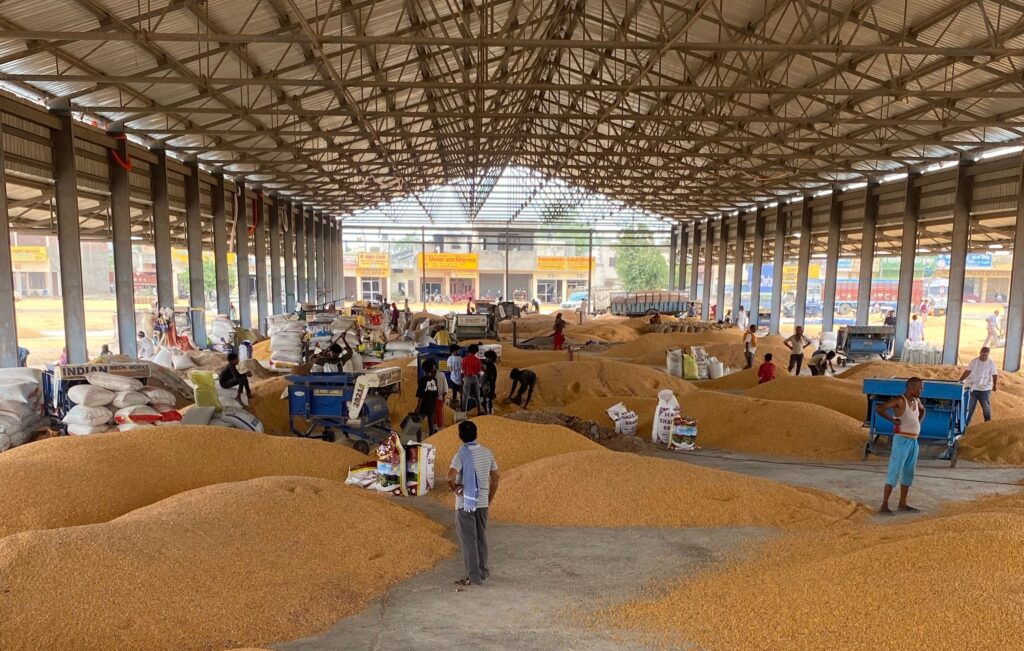
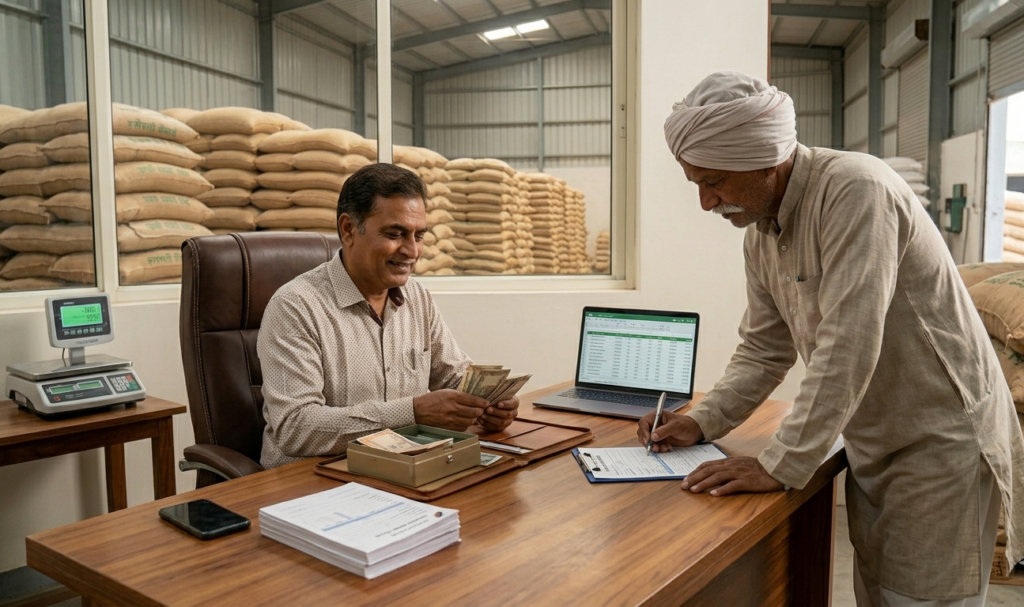
    If you’ve ever sold your harvest early just because you needed cash, warehouse receipt finance is worth understanding. It lets you store your produce in an approved warehouse and borrow against it, so you’re not forced to sell the moment prices dip right after harvest.
  • Loan Against Property isn’t just for big expansion
    While Agri LAP is often used for larger infrastructure or diversification projects, it’s also a practical option for funding equipment upgrades, land development, or allied ventures like dairy or poultry.
  • Solar and Equipment financing are growing fast
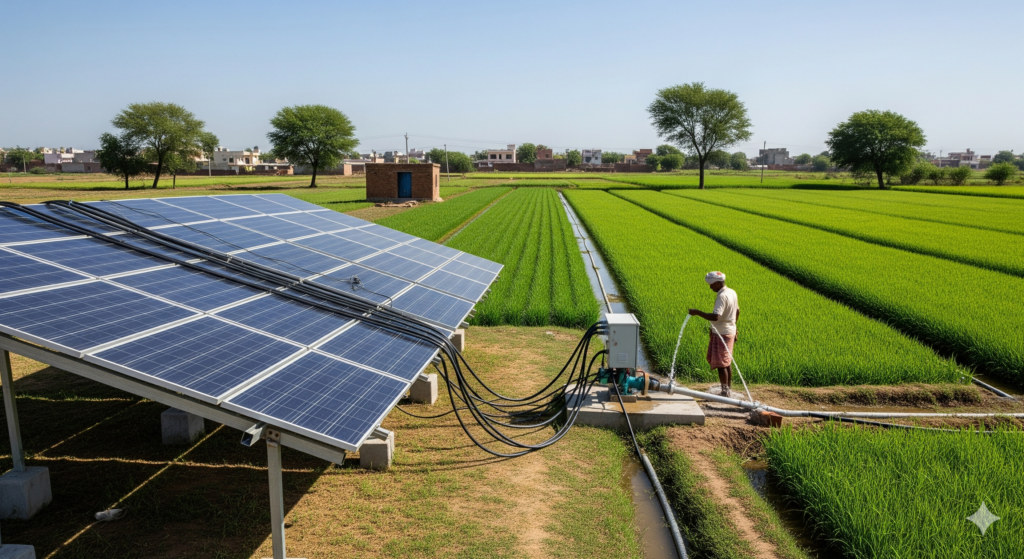
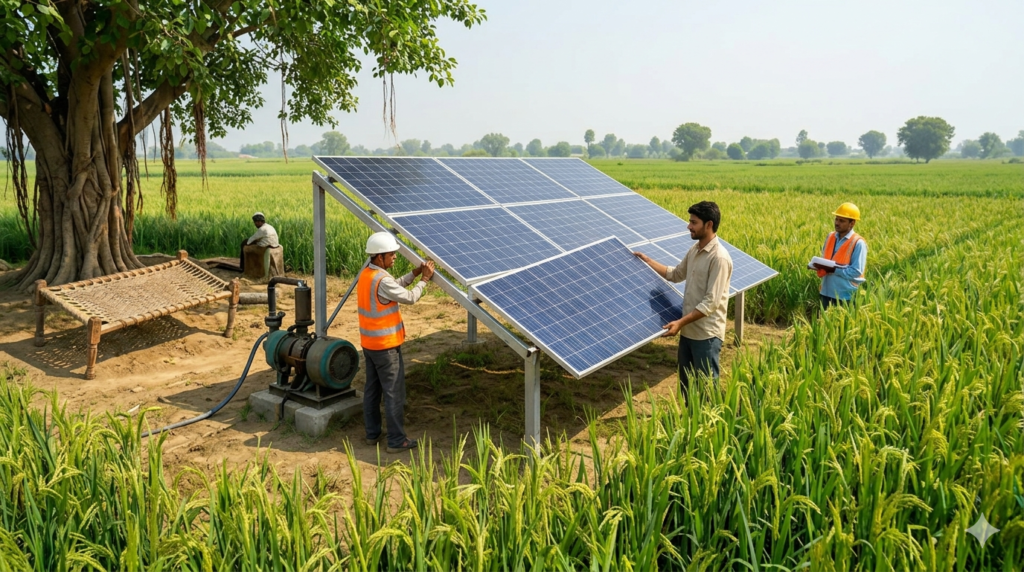
    With input and power costs rising, more farmers are turning to solar finance to cut long-term operational expenses. It is a sign that agri finance today goes beyond survival lending into genuinely productive investment.
  • Your land & farming data can work in your favour
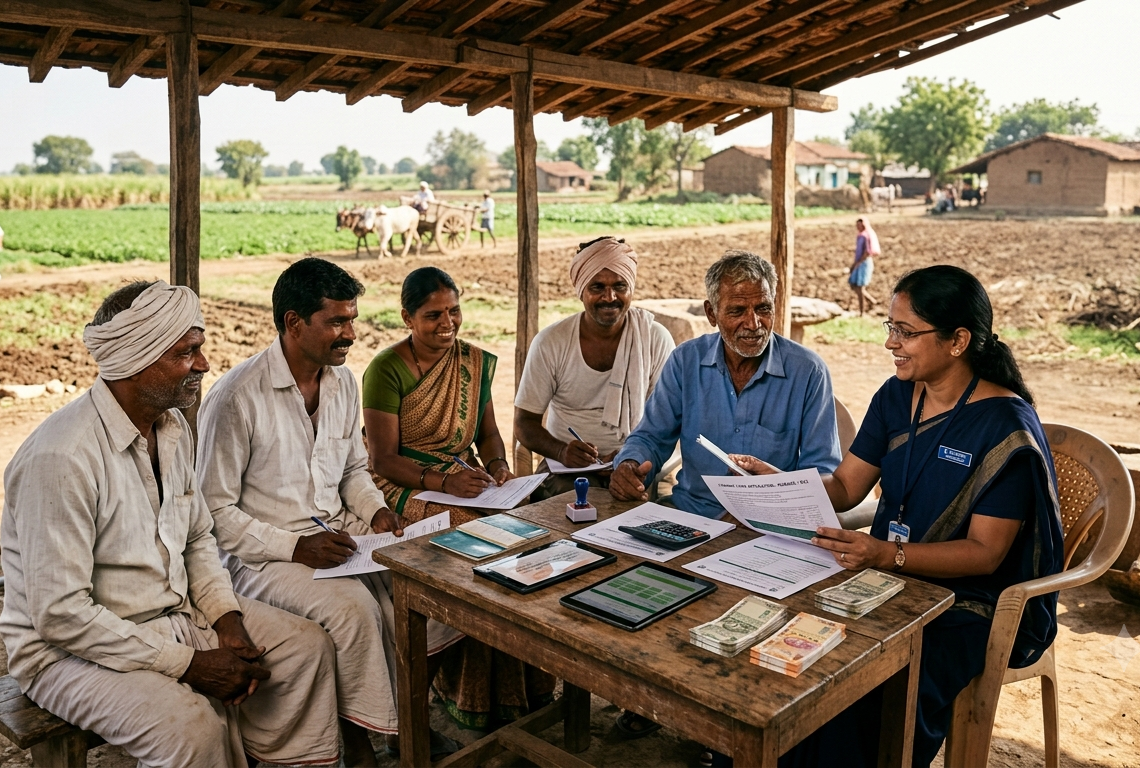
    Digital credit assessment is changing how lenders evaluate farmers. Satellite-verified land intelligence and data-backed credit scoring mean even smallholder farmers with limited paperwork can now build a credible profile for faster loan approvals, rather than relying purely on collateral or lengthy documentation.
  • Rural consumption confidence is rising
    According to NABARD’s Rural Economic Conditions and Sentiments Survey (May 2026), about 77.2% of rural households reported higher consumption levels, reflecting a rise in purchasing power that shows deepening reach of formal rural finance.
  • Choosing the right partner matters as much as the loan itself
    A finance partner who understands farming cycles, commodity price swings, and post-harvest realities will structure your loan very differently than a generic lender. That contextual understanding often determines whether the loan actually helps you or adds pressure at the wrong time.

agricultural loans

How Agriwise fits into this picture

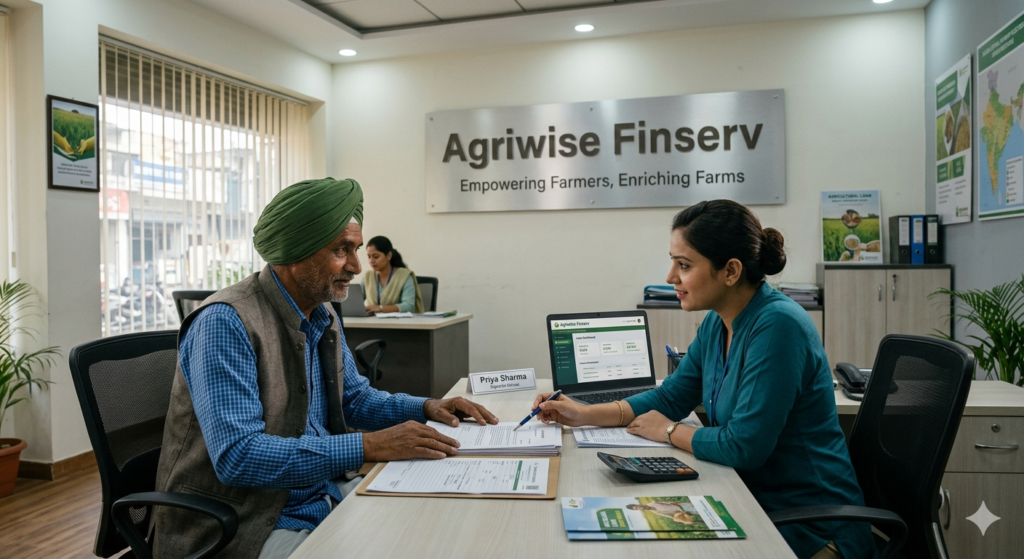
Agriwise Finserv, the RBI-registered NBFC arm of the StarAgri Group, is built specifically around these realities. It offers a full suite of agri-focused lending products: Warehouse Receipt Finance, Agri Loan Against Property, Solar Finance, and Invoice Discounting/Supply Chain Finance for agri-MSMEs, designed to match how farming income actually flows through the year.

Agriwise has partnered with leading banks and financial institutions to widen access to capital, and draws on data from StarAgri’s broader ecosystem, including satellite-backed land intelligence through AgriBhumi, to assess creditworthiness fairly, even for smallholder farmers without extensive paperwork.

And because Agriwise operates within StarAgri’s warehousing and collateral management network, it also brings practical, on-ground understanding of storage, commodity value, and market timing, not just numbers on a loan application.

The Bottom Line

Agri finance is about borrowing the right kind of money, at the right time, from someone who understands your farming cycle as well as your balance sheet. With India’s formal credit ecosystem expanding rapidly, there’s never been a better time for farmers to move away from informal lenders and explore structured, transparent options like those offered by Agriwise, built for agriculture’s real needs. 

FAQs

  • What is warehouse receipt finance and how does it help farmers?
    It lets farmers store their produce in an approved warehouse and borrow money against it, so they aren’t forced to sell right after harvest when prices are typically lowest.
  • How is agri finance different from a regular personal loan?
    Agri finance is structured around farming cycles, harvest timelines, and commodity price patterns, rather than fixed monthly repayment schedules that don’t account for seasonal income.
  • Can smallholder farmers with limited documentation get agri loans?
    Increasingly, yes. Digital credit assessment tools, including satellite-verified land data, are helping lenders evaluate smallholder farmers fairly, even without extensive paperwork.
  • Why is formal agri finance better than borrowing from informal lenders?
    Informal lenders often charge 24-60% interest, compared to 10-18% from agri-focused NBFCs. That is a difference that can significantly affect a farmer’s profitability over a season.
  • What kind of agri finance products does Agriwise offer?
    Agriwise offers Warehouse Receipt Finance, Agri Loan Against Property, and Invoice Discounting/Supply Chain Finance for agri-MSMEs, among other structured lending solutions.
ag loans

Types of Agricultural Loans in India: A Complete Guide for Farmers and Agri-Businesses

July 08, 2026

Access to timely finance has become one of the most important drivers of growth in Indian agriculture. Whether it’s purchasing quality seeds, investing in farm machinery, expanding storage infrastructure, or managing working capital after harvest, access to the right agricultural loan can significantly improve productivity and profitability.

This growing need for agricultural finance is reflected in India’s expanding credit ecosystem. For the financial year 2025–26, the Government of India has increased the agricultural credit target to ₹27.5 lakh crore, reinforcing its commitment to improving credit access across the agricultural value chain. However, as agriculture becomes more diversified and technology-driven, financing needs are also evolving.

Today’s borrowers require solutions that extend beyond seasonal crop loans to support post-harvest management, agri-business expansion, and long-term infrastructure development.

What are agricultural loans?

Agricultural loans are financial products designed to meet the funding needs of farmers, agri-businesses, traders, and other stakeholders in agriculture. Depending on the purpose, these loans may be used for cultivation, equipment purchases, warehouse financing, business expansion, renewable energy adoption, or managing short-term cash flow.

Choosing the right loan depends on the borrower’s specific financial needs, repayment capacity, and stage within the agricultural value chain.

Agricultural Loans

Types of agricultural loans in India

  • Crop Loans: Crop loans are among the most widely used agricultural loans in India. They help farmers finance seasonal cultivation expenses such as seeds, fertilisers, pesticides, irrigation, labour, and harvesting. These loans are typically repaid after the crop is harvested and sold, making them suitable for meeting short-term production expenses.
  • Farm Equipment Loans: Mechanisation has become essential for improving productivity and reducing labour dependency. Farm equipment loans help finance tractors, harvesters, irrigation systems, power tillers, drones, and other agricultural machinery. These loans enable farmers to modernise operations without making large upfront investments.
  • Warehouse Receipt Finance: Farmers and commodity owners often face pressure to sell immediately after harvest when market prices are relatively low. Warehouse Receipt Finance allows them to pledge their stored commodities as collateral and access working capital without selling their produce. This helps improve liquidity while allowing borrowers to wait for more favourable market prices before selling.
  • Invoice Bill Discounting: Delayed payments can disrupt the working capital cycle for agri-businesses, traders, processors, and suppliers. Invoice Bill Discounting enables businesses to receive immediate funds against outstanding invoices instead of waiting for customer payments. This improves cash flow and supports uninterrupted business operations.
  • Loan Against Property (LAP): For businesses planning expansion or requiring larger amounts of capital, Loan Against Property provides financing by leveraging owned residential, commercial, or industrial property as collateral. The funds can be used for business growth, infrastructure development, equipment purchases, or other long-term financial requirements.
  • Solar Finance: Renewable energy is becoming an increasingly important part of modern agriculture. Solar Finance helps farmers and businesses invest in solar pumps, rooftop solar systems, and other clean energy solutions that reduce electricity costs and improve long-term sustainability.

solar loan

Why agricultural finance is evolving

Agriculture today extends far beyond cultivation. Farmers are adopting precision farming technologies, traders require faster working capital, processors need reliable supply chains, and businesses are investing in modern storage and logistics infrastructure.

As a result, financial institutions are increasingly offering specialised lending products tailored to different stages of the agricultural value chain rather than relying solely on conventional crop loans.

Digital documentation, faster credit assessments, alternative data sources, and technology-driven underwriting are also making agricultural finance more accessible and efficient.

Choosing the right agricultural loan

Before applying for an agricultural loan, borrowers should evaluate several factors:

  • Clearly define the purpose of the loan.
  • Estimate repayment capacity based on expected income.
  • Compare interest rates and repayment tenures.
  • Understand collateral requirements.
  • Choose lenders that offer specialised agricultural financing.
  • Ensure the loan aligns with long-term business or farming goals.

Selecting the right financial product not only improves access to capital but also supports sustainable financial planning.

How Agriwise supports agricultural financing

As agriculture becomes more integrated and technology-driven, financing needs vary across different participants in the value chain. Agriwise addresses these diverse requirements through specialised financial solutions designed for farmers, agri-businesses, traders, and commodity owners.

Its portfolio includes Farmer Finance for cultivation and farm-related needs, Warehouse Receipt Finance that enables borrowers to unlock working capital against stored agricultural commodities, and Invoice Bill Discounting, which helps businesses improve cash flow by converting receivables into immediate liquidity.

For long-term growth, Agriwise also offers Loan Against Property (LAP) to support business expansion and Solar Finance for investments in clean energy infrastructure. By combining sector expertise with technology-enabled credit assessment, Agriwise delivers financing solutions that are aligned with the evolving needs of India’s agricultural ecosystem.

agriwise finance

Conclusion

Agricultural finance has evolved into a comprehensive ecosystem that supports every stage of the agricultural value chain, from cultivation and mechanisation to storage, trading, processing, and business expansion. As farming becomes increasingly commercial and technology-driven, choosing the right financing solution has become just as important as choosing the right crop or market.

Whether it’s managing seasonal expenses, improving cash flow, or investing in long-term growth, specialised agricultural loans empower farmers and agri-businesses to make informed financial decisions. With flexible financing options tailored to different requirements, institutions like Agriwise are helping strengthen the financial foundation of India’s rapidly evolving agricultural sector.

FAQs

  • What are the different types of agricultural loans available in India?
    Agricultural loans include crop loans, farm equipment loans, warehouse receipt finance, invoice discounting, loans against property (LAP), livestock loans, horticultural loans, and solar finance. Each is designed to meet different financial needs across the agricultural value chain.
  • Who can apply for agricultural loans?
    Agricultural loans are available to farmers, Farmer Producer Organisations (FPOs), agri-businesses, commodity traders, processors, warehouse operators, and other stakeholders involved in agriculture, subject to the lender’s eligibility criteria.
  • What is Warehouse Receipt Finance?
    Warehouse Receipt Finance allows farmers and commodity owners to obtain loans against agricultural produce stored in accredited warehouses. This enables them to access working capital while waiting for favourable market prices.
  • How does Invoice Bill Discounting benefit agri-businesses?
    Invoice Bill Discounting helps businesses improve cash flow by providing immediate funds against unpaid invoices, reducing the waiting period for customer payments and supporting uninterrupted operations.
  • How does Agriwise support agricultural financing?
    Agriwise offers specialised financial solutions including Farmer Finance, Warehouse Receipt Finance, Invoice Bill Discounting, Loan Against Property (LAP), and Solar Finance, helping farmers and agri-businesses access timely capital for growth, operations, and long-term investments.

Disclaimer

The content published on this blog is provided solely for informational and educational purposes and is not intended as professional or legal advice. While we strive to ensure the accuracy and reliability of the information presented, Agriwise make no representations or warranties of any kind, express or implied, about the completeness, accuracy, suitability, or availability with respect to the blog content or the information, products, services, or related graphics contained in the blog for any purpose. Any reliance you place on such information is therefore strictly at your own risk. Readers are encouraged to consult qualified agricultural experts, agronomists, or relevant professionals before making any decisions based on the information provided herein. Agriwise, its authors, contributors, and affiliates shall not be held liable for any loss or damage, including without limitation, indirect or consequential loss or damage, or any loss or damage whatsoever arising from reliance on information contained in this blog. Through this blog, you may be able to link to other websites that are not under the control of Agriwise. We have no control over the nature, content, and availability of those sites and inclusion of any links does not necessarily imply a recommendation or endorsement of the views expressed within them. We reserve the right to modify, update, or remove blog content at any time without prior notice.

traditional loans

The Changing Face of Agricultural Credit in India: Beyond Traditional Loans

May 21, 2026

For decades, agricultural credit in India was largely associated with seasonal crop & traditional loans. Farmers borrowed before sowing, repaid after harvest, and repeated the cycle every year. While that system still plays an important role, India’s agricultural economy has changed dramatically over the last few years.

Agriculture today is no longer limited to cultivation alone. It now includes processors, traders, FPOs, agri MSMEs, exporters, warehouse operators, input dealers, and rural entrepreneurs, all operating within a much larger and more connected ecosystem.

And naturally, their financing needs are changing too.

The conversation around agricultural credit is slowly moving beyond traditional loans lending toward more structured, flexible, and business-oriented financial solutions. From warehouse receipt finance and invoice discounting to LAP and solar finance, rural credit is becoming more diversified than ever before.

Agriculture needs more than seasonal credit now

India’s agricultural supply chain has become significantly more organised over the last decade. Businesses are handling larger inventories, longer supply chains, and faster trade cycles. That means liquidity requirements are no longer seasonal. They are continuous.

Take a trader, for example. Inventory may remain stored for weeks before being sold. A processor may need immediate working capital to procure commodities during peak arrival seasons. An agri MSME may require funds to manage supplier payments while waiting for receivables from buyers.

Traditional loans structures often struggle to address these operational realities.

This is one of the reasons why alternative agricultural financing models are gaining traction across India.

According to industry reports, MSME credit exposure in India crossed ₹43 trillion in 2025, reflecting strong demand for structured business financing across sectors, including agriculture-linked enterprises. The growing formalisation of rural supply chains is also increasing the need for faster and more flexible credit systems.

traditional mortgage

The rise of warehouse receipt finance

One of the biggest changes in agricultural finance has been the growing adoption of warehouse receipt finance.

Earlier, farmers and traders often had no choice but to sell produce immediately after harvest due to urgent liquidity requirements. But organised warehousing is gradually changing that.

With warehouse receipt finance, commodities stored in verified warehouses can be used to access funds without immediately selling the stock. This gives businesses and farmers more flexibility in managing market timing and cash flow.

As India’s warehousing ecosystem continues expanding, this financing model is becoming increasingly relevant across commodities like:

  • grains,
  • pulses,
  • cotton,
  • oilseeds,
  • and spices.

The rapid growth of organised warehousing and logistics infrastructure is also supporting this transition. India’s logistics and warehousing sector has seen record leasing activity in recent years, driven heavily by 3PL, manufacturing, and supply chain expansion.

Agricultural credit is becoming more business-oriented

Another major shift is that agricultural finance is no longer limited to farming alone. Rural businesses today need funding for:

  • procurement,
  • infrastructure,
  • working capital,
  • equipment,
  • inventory,
  • and business expansion.

This is where products like Loan Against Property (LAP), supply chain finance, and invoice discounting are becoming increasingly important.

For many agri businesses, access to faster liquidity directly impacts their ability to scale operations. Delayed payments, seasonal procurement cycles, and fluctuating commodity markets make working capital management extremely important.

Invoice discounting and supply chain finance solutions help businesses unlock funds against receivables instead of waiting for payment cycles to conclude. Similarly, LAP solutions are helping rural entrepreneurs and agri businesses access larger-ticket funding for long-term growth.

solar finance

Solar finance is reshaping rural investment

One of the more interesting trends emerging in rural finance is the growing demand for solar financing. As energy costs rise and sustainability becomes more important, many rural businesses are exploring solar-powered infrastructure for:

  • irrigation,
  • warehousing,
  • processing units,
  • and commercial operations.

But the shift is not just about sustainability. It’s also about operational savings and long-term business efficiency. Solar finance is helping businesses adopt cleaner and more cost-efficient infrastructure without bearing the entire upfront investment burden.

The need for faster and more flexible lending

One major challenge in traditional loans lending has traditionally been turnaround time. Agricultural businesses often cannot wait weeks for credit approvals during active trade cycles. This is why digitisation and process efficiency are becoming increasingly important in rural lending.

Financial institutions are now focusing more on:

  • quicker approvals,
  • simplified documentation,
  • structured risk assessment,
  • and technology-enabled lending systems.

This evolving ecosystem is creating opportunities for specialised NBFCs that understand agricultural trade dynamics more closely.

Companies like Agriwise Finserv are operating within this changing landscape by offering multiple financing solutions tailored to the agricultural ecosystem. Along with Loan Against Property and Warehouse Receipt Finance, Agriwise also provides invoice bill discounting, farmer finance, and solar finance solutions.

The company has disbursed over ₹2,500 crore across 5,000+ customers and works with 25+ banking partners, while focusing on faster processing cycles and simplified access to credit.

Agricultural finance is becoming more integrated

The future of agricultural credit in India will likely depend on how well financing adapts to modern supply chain realities. Agriculture today is increasingly interconnected with:

  • logistics,
  • warehousing,
  • trade,
  • technology,
  • and rural entrepreneurship.

As these ecosystems continue evolving, financing models are also becoming more integrated and business-focused.

The larger shift is clear: agricultural credit is no longer just about supporting cultivation. It is gradually becoming a broader financial ecosystem designed to support the entire agricultural value chain. And in a rapidly modernising agri-economy, that evolution may become one of the biggest drivers of rural growth over the next decade.

FAQs

  • What is changing in India’s agricultural credit ecosystem?
    Agricultural credit is expanding beyond traditional loans into solutions like warehouse receipt finance, invoice discounting, LAP, and solar finance.
  • What is warehouse receipt finance?
    Warehouse receipt finance allows businesses or farmers to access funds against commodities stored in organised warehouses.
  • Why is invoice discounting becoming important in agriculture?
    Invoice discounting helps businesses improve cash flow by unlocking funds against pending receivables instead of waiting for payment cycles.
  • How is solar finance helping rural businesses?
    Solar finance enables businesses to adopt solar-powered infrastructure with lower upfront investment, improving long-term operational efficiency.
  • Why are specialised agri NBFCs becoming important?
    Specialised agri-focused NBFCs better understand agricultural trade cycles, inventory patterns, and rural business requirements, enabling more tailored financing solutions.

Disclaimer

The content published on this blog is provided solely for informational and educational purposes and is not intended as professional or legal advice. While we strive to ensure the accuracy and reliability of the information presented, Agriwise make no representations or warranties of any kind, express or implied, about the completeness, accuracy, suitability, or availability with respect to the blog content or the information, products, services, or related graphics contained in the blog for any purpose. Any reliance you place on such information is therefore strictly at your own risk. Readers are encouraged to consult qualified agricultural experts, agronomists, or relevant professionals before making any decisions based on the information provided herein. Agriwise, its authors, contributors, and affiliates shall not be held liable for any loss or damage, including without limitation, indirect or consequential loss or damage, or any loss or damage whatsoever arising from reliance on information contained in this blog. Through this blog, you may be able to link to other websites that are not under the control of Agriwise. We have no control over the nature, content, and availability of those sites and inclusion of any links does not necessarily imply a recommendation or endorsement of the views expressed within them. We reserve the right to modify, update, or remove blog content at any time without prior notice.

Reinventing MSME Finance: How NBFCs Are Driving the Next Credit Revolution

May 07, 2026

India’s MSME sector is often described as the backbone of the economy, and rightly so. With millions of enterprises, MSMEs contribute significantly to employment, exports, and industrial output.

“As of December 2025, over 7.30 crore MSMEs were registered across India through the official Udyam Registration Portal and Udyam Assist Platform, including approximately 4.37 crore registrations on Udyam and 2.92 crore on Udyam Assist. Micro-enterprises overwhelmingly dominate the sector, accounting for the vast majority of registrations.”

Yet, access to timely and adequate credit remains one of the biggest challenges for this segment. Traditional banking systems, constrained by rigid underwriting frameworks, often fail to address the evolving needs of MSMEs. This is where Non-Banking Financial Companies (NBFCs) are stepping in to redefine the lending landscape.

The MSME Credit Gap

Despite multiple government initiatives, the MSME credit gap in India remains substantial. Many enterprises, especially in semi-urban and rural areas, lack formal credit histories, making them high-risk for traditional lenders.

However, MSMEs are increasingly becoming digitally visible through GST data, transaction records, and supply chain integrations, creating new opportunities for innovative lenders.

How NBFCs Are Changing the Game

NBFCs are leveraging technology and alternative data to build more inclusive credit models that further enable MSMEs to access credit that is both timely and context-specific.

  • Cash-flow-based lending instead of collateral-heavy models
  • Faster disbursals through digital underwriting
  • Customised financial products aligned with business cycles
  • Supply chain financing for working capital optimisation

nbfcs loan

Agriwise: Bridging Finance and Agriculture

Agriwise Finserv is a prime example of how NBFCs are innovating within the agri-MSME ecosystem. Agriwise focuses on structured, asset-backed and trade-linked financing solutions, including:

  • Warehouse Receipt Finance
  • Invoice Bill Discounting
  • Loans Against Property (LAP)
  • Farmer Finance and Solar Finance

What differentiates Agriwise is its integration with the broader agri-value chain:

  • Financing linked to stored commodities
  • Risk mitigation through collateral management systems
  • Data-driven credit decisions using platform insights

Digital Lending Meets Agri Supply Chains

The convergence of digital platforms and NBFC lending is transforming MSME finance:

  • Real-time commodity prices
  • Digitised warehouse records
  • Satellite-based land insights (through platforms like AgriBhumi)

These innovations enable lenders to assess risk more accurately and offer better credit terms.

Government Push and Policy Support

India’s policy ecosystem is actively supporting MSME financing:

  • Priority sector lending norms for agriculture and MSMEs
  • Credit guarantee schemes reducing lender risk
  • Infrastructure funds boosting agri-logistics

Additionally, schemes like Mudra loans provide micro-credit support up to ₹10 lakh, fostering entrepreneurship.

The Future of MSME Finance

NBFCs are reshaping the credit ecosystem. The future will likely see:

  • Increased use of AI-driven credit models
  • Embedded finance within supply chains
  • Greater collaboration between NBFCs and fintech platforms

For agri-focused NBFCs like Agriwise, the opportunity is even larger. By aligning credit with commodity cycles, storage infrastructure, and market linkages, they can unlock significant value for MSMEs.

krishi loan

Conclusion

The evolution of NBFCs marks a fundamental shift. They are redefining MSME finance by shifting from collateral-based lending to data-driven, cash-flow-focused models that better reflect real business cycles. This is particularly impactful in agriculture, where seasonality and market linkages are critical.

Agriwise Finserv exemplify this change by integrating finance with the warehousing and trading ecosystems, enabling faster, more relevant access to credit. As a result, credit is increasingly becoming a strategic enabler of MSME growth rather than a constraint.

FAQs

  • Why are NBFCs important for MSME financing in India?
    NBFCs provide flexible, faster, and more accessible credit compared to traditional banks, especially for underserved MSMEs.
  • How are NBFCs changing traditional lending models?
    They use cash-flow-based lending, digital data, and alternative credit assessment methods instead of relying only on collateral.
  • What challenges do MSMEs face in accessing credit?
    Limited credit history, lack of formal documentation, and rigid banking processes often restrict access to financing. Inadequate bookkeeping, unfiled tax returns, or inconsistent cash flow records reduce lender confidence., Limited Collateral etc
  • How does Agriwise Finserv support MSMEs?
    Agriwise offers solutions like warehouse receipt finance, invoice discounting, and integrated with agri supply chains.
  • What is the future of MSME financing in India?
    It will be driven by digital lending, AI-based risk assessment, and embedded finance within supply chains.

Disclaimer

The content published on this blog is provided solely for informational and educational purposes and is not intended as professional or legal advice. While we strive to ensure the accuracy and reliability of the information presented, Agriwise make no representations or warranties of any kind, express or implied, about the completeness, accuracy, suitability, or availability with respect to the blog content or the information, products, services, or related graphics contained in the blog for any purpose. Any reliance you place on such information is therefore strictly at your own risk. Readers are encouraged to consult qualified agricultural experts, agronomists, or relevant professionals before making any decisions based on the information provided herein. Agriwise, its authors, contributors, and affiliates shall not be held liable for any loss or damage, including without limitation, indirect or consequential loss or damage, or any loss or damage whatsoever arising from reliance on information contained in this blog. Through this blog, you may be able to link to other websites that are not under the control of Agriwise. We have no control over the nature, content, and availability of those sites and inclusion of any links does not necessarily imply a recommendation or endorsement of the views expressed within them. We reserve the right to modify, update, or remove blog content at any time without prior notice.

Agriwise: Making Financial Solutions Work Smarter for Indian Agriculture

April 16, 2026

Access to timely financial solutions can often make the difference between opportunity and missed potential in agriculture. Whether it’s a farmer planning the next crop cycle or a trader waiting to capitalise on market movements, liquidity plays a critical role.

Yet despite agriculture being one of the largest contributors to the economy, access to formal, timely credit remains fragmented for many stakeholders. This often leads to delayed decisions, missed market opportunities, and continued dependence on informal financing channels, a challenge widely highlighted by institutions like the Reserve Bank of India and NABARD.

That’s where Agriwise Finserv steps in.

As the financial solutions arm of StarAgri, Agriwise is built to simplify access to credit across the agri value chain, bringing together domain expertise, structured products, and technology-driven processes.

financial solutions

Finance That Understands Agriculture

Agriculture doesn’t follow a fixed calendar, and neither should financing.

Agriwise designs its offerings around real-world agri cycles, ensuring that credit is not just available, but also relevant and timely. Here’s how it supports different needs:

  • Warehouse Receipt Finance: Unlock liquidity without selling your produce, store now, and sell when prices are right
  • Loans Against Property (LAP): Access higher-value funding to expand operations or manage working capital
  • Invoice Bill Discounting: Convert receivables into immediate cash flow and keep business moving
  • Farmer Finance: Timely support for inputs, cultivation, and post-harvest requirements
  • Solar Finance: Invest in sustainable solutions while reducing long-term operational costs

These solutions are designed to align with agricultural cash flow cycles, enabling borrowers to manage both short-term needs and long-term growth plans more effectively.

Not Just Loans but Smarter Financial Solutions

What truly makes Agriwise stand out is how it blends finance with technology.

Because it is deeply integrated within the StarAgri and agribazaar ecosystem, Agriwise leverages insights from AgriBhumi, collateral management, and trade flows. This enables:

  • Faster and more informed credit assessments
  • Reduced reliance on traditional documentation
  • Better risk evaluation through supply chain visibility

This approach reflects a broader shift in agri-finance, where data-backed lending is increasingly becoming the norm.

And it doesn’t stop there.

financial solutions company

Agriwise also offers user-friendly tools like an EMI calculator, allowing borrowers to:

  • Estimate repayments in advance
  • Compare different loan scenarios
  • Plan cash flows with greater clarity

It’s a simple yet powerful feature, one that enhances transparency, improves decision-making, and builds trust even before a loan is availed.

Looking Ahead: The Future of Agri Finance

As agriculture becomes more data-driven and interconnected, the role of finance is evolving rapidly.

Digital adoption, supply chain integration, and policy-level push for financial inclusion are reshaping how credit flows into the sector, an evolution also emphasised in various reports  & publications.

Agriwise is positioned right at this intersection, combining:

  • Financial expertise
  • Supply chain intelligence
  • Technology-led innovation

The result is a more resilient, efficient, and accessible financial ecosystem for agriculture, where credit is not just available but truly aligned with the needs of those it serves.

FAQs

  • What is Agriwise and how does it support the agri sector?
    Agriwise Finserv is the financial solutions arm of the StarAgri ecosystem, offering structured credit solutions tailored to farmers, traders, and agri-businesses across the agricultural value chain.
  • What types of financing solutions does Agriwise offer?
    Agriwise provides a range of products, including warehouse receipt finance, loans against property (LAP), invoice bill discounting, farmer finance, and solar finance, designed to meet both working capital and long-term funding needs.
  • How does Agriwise utilise AgriBhumi for credit assessment?
    Agriwise leverages insights from AgriBhumi to assess farmers’ eligibility and credibility. These data-driven insights help banks and financial institutions make more informed lending decisions, thereby improving access to structured, reliable credit.
  • How does Agriwise use technology to improve access to finance?
    Agriwise leverages data from warehousing and supply chain systems within the StarAgri ecosystem to enable faster credit assessments, reduce paperwork, and improve transparency in lending decisions.
  • How does Agriwise help borrowers make informed financial decisions?
    Agriwise offers tools like an EMI calculator that allow users to estimate repayments, compare loan options, and plan cash flows, helping them borrow with greater confidence and clarity.

Disclaimer

The content published on this blog is provided solely for informational and educational purposes and is not intended as professional or legal advice. While we strive to ensure the accuracy and reliability of the information presented, Agriwise make no representations or warranties of any kind, express or implied, about the completeness, accuracy, suitability, or availability with respect to the blog content or the information, products, services, or related graphics contained in the blog for any purpose. Any reliance you place on such information is therefore strictly at your own risk. Readers are encouraged to consult qualified agricultural experts, agronomists, or relevant professionals before making any decisions based on the information provided herein. Agriwise, its authors, contributors, and affiliates shall not be held liable for any loss or damage, including without limitation, indirect or consequential loss or damage, or any loss or damage whatsoever arising from reliance on information contained in this blog. Through this blog, you may be able to link to other websites that are not under the control of Agriwise. We have no control over the nature, content, and availability of those sites and inclusion of any links does not necessarily imply a recommendation or endorsement of the views expressed within them. We reserve the right to modify, update, or remove blog content at any time without prior notice.

Top 6 Tips to Get Hassle-Free Agri Loans in India

February 12, 2026

India’s farms are growing smarter, markets are moving faster, and finance is evolving alongside them. Today, access to the right credit at the right time can shape everything, from crop decisions to trading opportunities and long-term expansion. As institutional lending continues to expand, loans in India are becoming more digital, structured, and aligned with real agricultural needs. The country’s agricultural credit flow is projected to cross ₹32.5 lakh crore in FY2025-26, signalling both strong policy momentum and rising demand for formal financing.

But while the numbers look promising, the ground reality often tells a different story. Many farmers and agri-entrepreneurs still find themselves navigating paperwork, approval delays, and confusing loan options. The gap isn’t always about availability; it’s often about awareness and approach. Whether you’re cultivating crops, trading commodities, or scaling an agri-business, knowing how to navigate the credit landscape can make all the difference.

loans in india

Here are six practical tips to help you secure hassle-free agri loans in India and make financing work in your favour.

  • Maintain clear financial and land records

One of the most important steps for smooth loan approvals is proper documentation. Lenders evaluate land ownership, crop patterns, and repayment history before approving loans in India.

Keep the following ready:

    • Updated land records or lease agreements
    • Bank statements and transaction history
    • Crop or business income proof
    • KYC documents
  • Build a strong credit profile

A strong credit history increases your chances of faster approvals and better interest rates. Over the past decade, institutional agri-credit has grown at an average of over 13% annually, showing that lenders are increasingly relying on formal credit data.

To strengthen your profile:

    • Repay existing loans on time
    • Avoid excessive borrowing
    • Maintain regular bank transactions
    • Use formal channels like the Kisan Credit Card or warehouse-based finance
  • Choose the right type of agri loan

Selecting the right financing product is crucial. Different needs require different types of loans, crop finance, equipment loans, working capital, or post-harvest funding. Applying for the wrong type of loan often leads to delays or rejection. Understanding whether you need short-term crop finance, warehouse-based funding, or long-term expansion capital can help you apply more efficiently and avoid unnecessary processing time

  • Leverage digital lending platforms

Technology is transforming agri-finance. Many states now offer digital loan processing through e-Kisan Credit Card and similar systems, significantly reducing approval timelines. Recent initiatives show farmers can receive loan approvals within minutes through digital verification processes. (The Times of India)

Digital lending platforms reduce:

    • Physical paperwork
    • Branch visits
    • Processing delays

business loan in india

  • Use collateral and value-chain financing

Providing collateral or linking loans to agricultural value chains improves approval chances. For example:

    • Stored crops can be used for warehouse financing
    • Equipment or property can support secured loans
    • Trade invoices can unlock working capital

With nearly 60% of agricultural lending still going toward short-term crop loans, there is a growing focus on investment and value-chain credit.

  • Work with specialised agri-finance institutions

While banks remain the backbone of rural lending, specialised NBFCs and agri-finance platforms are bridging the credit gap. Even though agricultural credit targets are rising, the sector still receives a smaller share of total bank lending than mandated, highlighting the need for focused lenders.

Choosing an agri-focused lender like Agriwise offers benefits such as:

    • Faster processing
    • Sector-specific underwriting
    • Flexible repayment aligned with crop cycles
    • Financing for allied activities like dairy, solar, and trading

How Agriwise supports hassle-free agri financing

For borrowers seeking simplified, sector-focused credit solutions, specialised platforms like Agriwise offer financing tailored to agricultural and agribusiness needs.

Agriwise offers:

  • Farmer Finance: Short-term loans for crop inputs and cultivation cycles
  • Warehouse Receipt Finance: Funding against stored produce to avoid distress sales
  • Loans Against Property (LAP): Secured financing for business expansion or working capital
  • Solar Finance: Loans for solar pumps and renewable energy investments

Conclusion

India’s agri-credit ecosystem is expanding rapidly. Government targets, digital platforms, and value-chain financing are making loans in India more accessible than ever before. With rising institutional lending and policy support, the focus is now shifting from just loan availability to ease, speed, and suitability.

For farmers and agri-businesses, the key lies in being prepared, choosing the right lender, and leveraging digital tools. Platforms like Agriwise are playing a crucial role by offering customised solutions, from farmer finance to warehouse receipt loans, designed specifically for agricultural needs. Through these tips and working with specialised lenders, borrowers can access hassle-free agri loans and invest confidently in growth, productivity, and long-term resilience.

FAQs

  • Who can apply for agri loans in India?
    Farmers, FPOs, agri-traders, processors, and agri-business owners can apply for agri loans in India. Eligibility usually depends on land records or business proof, income details, repayment capacity, and basic KYC documentation.
  • What documents are typically required for agri loans?
    Most lenders ask for identity and address proof, land ownership or lease records, bank statements, income details, and crop or business information. For value-chain financing, documents such as warehouse receipts or invoices may also be required.
  • How long does it take to get an agri loan approved?
    Approval timelines vary by lender and loan type. Digital applications and structured financing options can significantly reduce processing time, sometimes enabling faster approvals compared to traditional methods.
  • What types of agri loans are available in India?
    Common options include crop loans, working capital loans, warehouse receipt finance, loans against property, equipment financing, and solar or infrastructure loans. Choosing the right type based on your requirement can make the process smoother.
  • How can specialised agri-finance platforms like Agriwise help?
    Sector-focused lenders such as Agriwise offer tailored solutions aligned with agricultural cash flows and commodity cycles. They provide financing for farmers and agribusinesses through products such as farmer finance, warehouse receipt finance, invoice discounting, and secured loans, helping make loans in India more structured and accessible.

Disclaimer

The content published on this blog is provided solely for informational and educational purposes and is not intended as professional or legal advice. While we strive to ensure the accuracy and reliability of the information presented, Agriwise make no representations or warranties of any kind, express or implied, about the completeness, accuracy, suitability, or availability with respect to the blog content or the information, products, services, or related graphics contained in the blog for any purpose. Any reliance you place on such information is therefore strictly at your own risk. Readers are encouraged to consult qualified agricultural experts, agronomists, or relevant professionals before making any decisions based on the information provided herein. Agriwise, its authors, contributors, and affiliates shall not be held liable for any loss or damage, including without limitation, indirect or consequential loss or damage, or any loss or damage whatsoever arising from reliance on information contained in this blog. Through this blog, you may be able to link to other websites that are not under the control of Agriwise. We have no control over the nature, content, and availability of those sites and inclusion of any links does not necessarily imply a recommendation or endorsement of the views expressed within them. We reserve the right to modify, update, or remove blog content at any time without prior notice.