

Running an agri business requires more than a good product and a strong market. It requires cash flow at the right time. A trader may need capital to procure commodities before prices move. A processor may need funds to purchase raw material. An agri-MSME may need money to expand infrastructure. A farmer may need working capital before the next crop cycle.
This is where an agri business loan can become an important financial tool.
“India’s agricultural credit ecosystem has expanded significantly. Agricultural credit disbursement reached ₹28.67 lakh crore in FY 2024-25, exceeding the government’s ₹27.5 lakh crore target. For FY 2025-26, the Ground Level Credit target was raised to ₹32.5 lakh crore.”
But more credit does not automatically mean the right credit. The real question is: Which financing option fits your business?
What is an Agri Business Loan?
An agri business loan is financing designed to support businesses operating within agriculture and allied sectors. Depending on the lender and product, it can be used for:
- Working capital
- Commodity procurement
- Business expansion
- Equipment purchases
- Infrastructure development
- Cash-flow management
- Supply-chain requirements
- Seasonal business needs
The right financing structure depends on what the money is being used for and how the business generates cash.
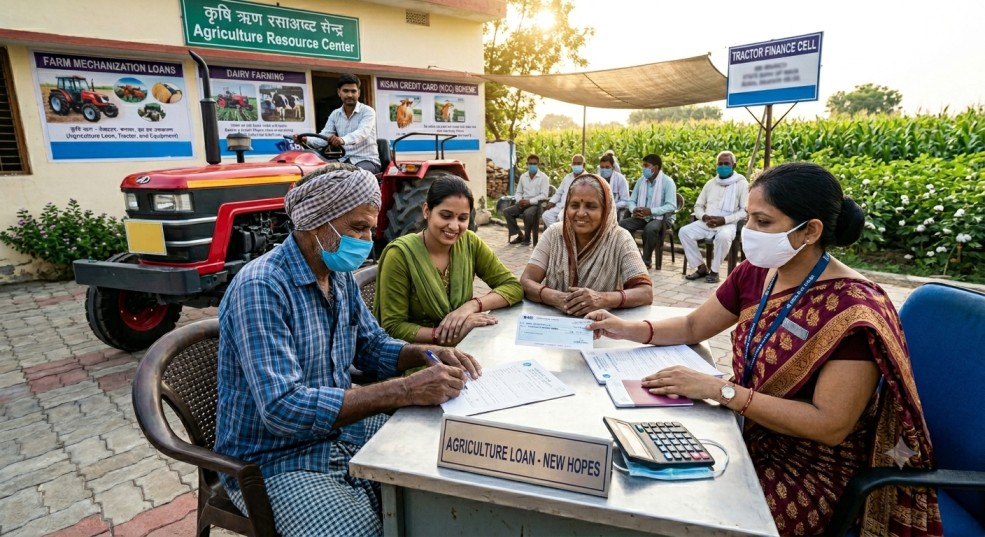
Start with the purpose of the loan
The first step is surprisingly simple: identify exactly why you need the money.
If you need funds for short-term operational expenses, a working-capital facility may make more sense than a long-term secured loan.
If you are expanding a warehouse, purchasing machinery or setting up infrastructure, longer-tenure financing may be more appropriate.
For example, a trader purchasing agricultural commodities may need capital for a few months, while a processing business investing in new equipment may require financing over several years. The tenure should therefore match the purpose.
Consider your cash-flow cycle
Agriculture is seasonal. Your loan should acknowledge that.
A business that earns primarily during harvest or procurement seasons may not have a uniform monthly cash flow. A repayment structure designed without considering this cycle can put unnecessary pressure on the business. Before choosing an agri business loan, assess:
- When do you receive payments?
- How long does inventory remain with you?
- How quickly can receivables be collected?
- Are your revenues seasonal?
- What is your peak working-capital requirement?
This helps determine whether you need short-term, structured or longer-term financing.
Explore different financing options
There isn’t one universal agri business loan.
- Loan Against Property (LAP) can be useful when an established business needs higher-ticket, longer-term funding against eligible property.
- Warehouse Receipt Finance can help businesses unlock working capital against commodities stored in recognised warehouses, potentially allowing them to avoid selling inventory immediately simply to generate liquidity. Agriwise has facilitated more than ₹2,500 crore in agricultural financing and works with leading banking and financial institution partners.
- Supply chain can be useful when a business has receivables locked in outstanding invoices and needs liquidity before customers make payment.
- Farmer Finance is designed around agricultural operating cycles, while specialised financing can also support equipment or renewable-energy investments.
- Customised Working Capital Loan: Tailored financing solutions designed around a business’s specific funding requirements, repayment capacity and working-capital cycle.

Don’t look only at the interest rate
A lower interest rate may appear attractive, but it isn’t the only factor that matters. When comparing an agri business loan, look at:
- Loan tenure: Does it align with your cash-flow cycle?
- Processing fees: What will the actual upfront cost be?
- Collateral requirements: Is security required?
- Repayment structure: Are instalments compatible with your revenue cycle?
- Approval timeline: How quickly will you actually receive the funds?
- Prepayment terms: Are there charges for early repayment?
- Documentation: How complex is the application process?
A loan that is marginally cheaper but takes too long to arrive may be less useful than a financing option designed around the actual business requirement.
Why sector expertise matters
Agricultural businesses operate differently from many conventional businesses. Commodity prices fluctuate, inventory is seasonal, and cash flows can depend on harvest cycles. That makes sector understanding valuable.
Agriwise provides financing solutions including LAP, Warehouse Receipt Finance, Invoice Bill Discounting, Farmer Finance and Solar Finance. Its recent disclosures indicate that it has supported 5,300+ customers with more than ₹2,500 crore in disbursements.
The right loan is the one that fits
Choosing an agri business loan shouldn’t be about finding the biggest loan or simply the lowest advertised interest rate. It should be about finding financing that fits the purpose, tenure, cash flow, collateral position and repayment capacity of your business. When those pieces line up, credit becomes more than borrowed capital. It becomes a tool for better procurement, smoother operations and sustainable growth.
FAQs
- What is an agri business loan?
It is financing designed to meet the working-capital, expansion, procurement or infrastructure needs of businesses operating in agriculture and allied sectors. - Which loan is best for an agricultural business?
There is no single best option. Working capital, LAP, Warehouse Receipt Finance and Invoice Bill Discounting serve different business requirements. - Can agri businesses get loans against commodities?
Yes. Warehouse Receipt Finance can provide financing against eligible commodities stored in recognised warehouses. - What documents are generally required?
Requirements vary by lender and product but may include business documents, financial statements, bank statements, KYC documents, tax records and collateral-related documents where applicable. - How should I choose an agri business loan?
Start with the purpose, estimate the amount and tenure required, understand your cash-flow cycle, compare total borrowing costs and assess repayment terms before selecting a financing option.


