Tag Archives: indian agri finance

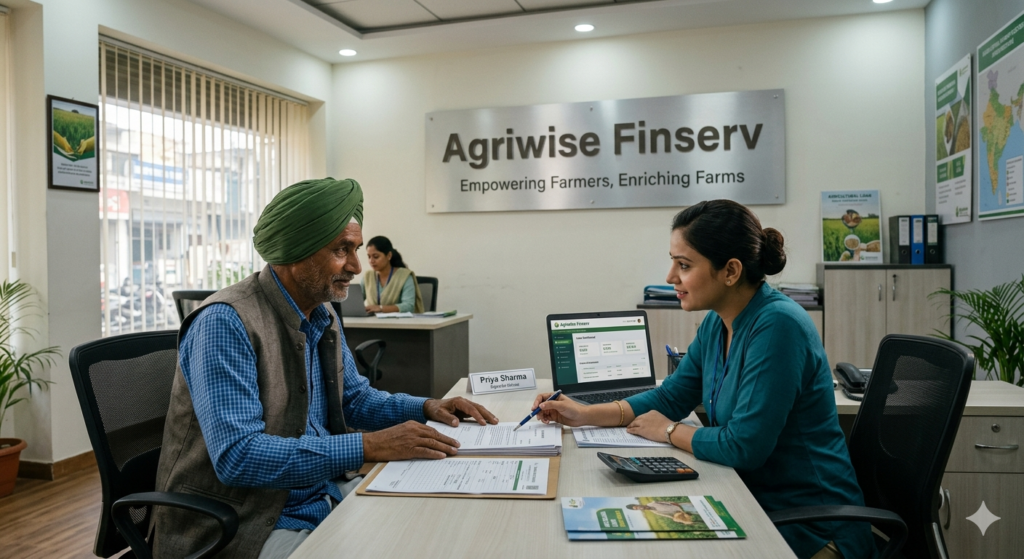
India’s Farmers Can’t Access Formal Credit: Agriwise Is Changing That

April 02, 2026

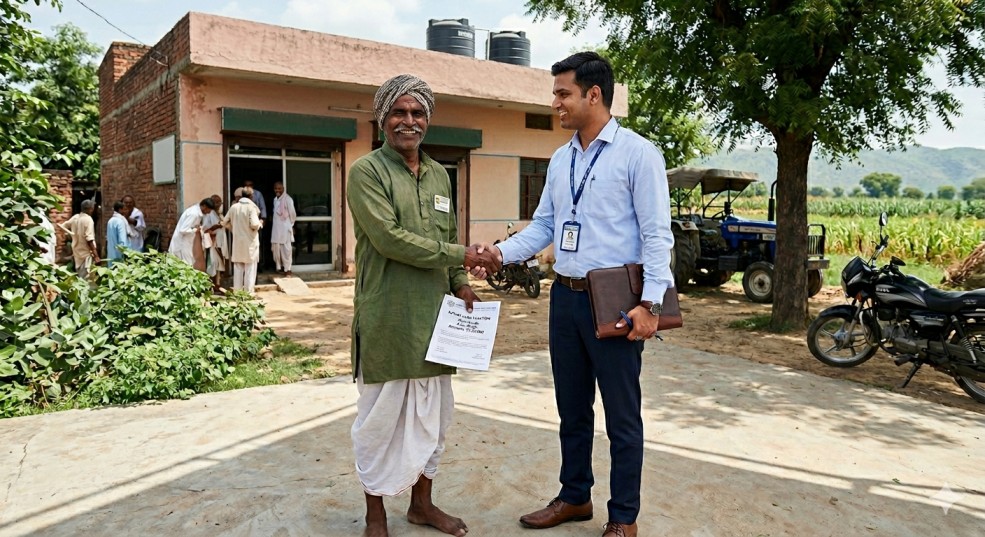
The monsoon arrives. Seeds need to be bought. Fertiliser needs to be sourced. Labour needs to be paid. And for millions of small and marginal farmers across India, the most consequential question of the season has nothing to do with weather. It is: where will the money come from?
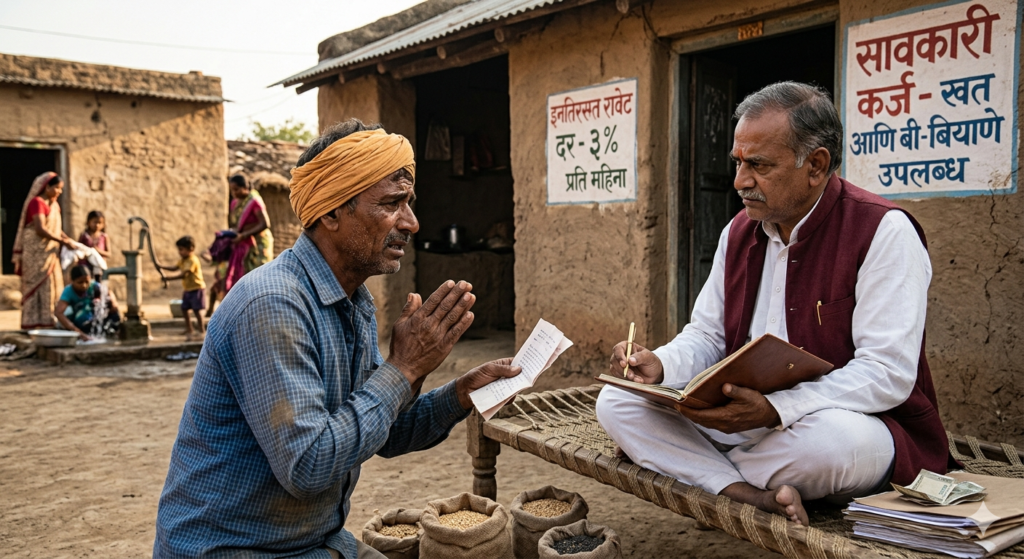
India’s agriculture sector contributes nearly 18% to national GDP and supports over 40% of the workforce. Yet only around 30% of farmers access formal credit services, leaving a vast majority dependent on informal moneylenders and punishing interest rates.

The formal credit is there. Agricultural Ground-Level Credit rose from ₹8.45 lakh crore in FY15 to ₹25.49 lakh crore in FY24. The problem is that it is not reaching the people who need it most, in the form they need it, at the time they need it.

Why Traditional Credit Fails Farmers

The barriers are structural. Fixed monthly repayments designed for salaried borrowers are incompatible with a farmer’s seasonal income. Traditional lenders struggle with informal supply chains, the absence of farm-level data, and high transaction costs in rural geographies.

Informal lenders charge 24–60% interest on agri loans, compared to 12–18% from agri-focused NBFCs. The result: India has one of the world’s largest agricultural credit markets, and millions of its participants remain effectively unbanked.

informal loans

Agriwise Finserv: Finance Built for Agricultural Reality

Agriwise Finserv is the NBFC arm of the StarAgri Group, built specifically to bridge this gap. As a subsidiary of one of Asia’s leading agritech companies, Agriwise brings what most lenders cannot offer: deep operational knowledge of the agri value chain, combined with the financial infrastructure to deliver on it.

Its services include:

  • Warehouse Receipt Finance: Businesses can access funding against commodities stored in approved warehouses, unlocking liquidity without selling immediately. This is especially powerful during post-harvest periods when prices are low, and farmers need cash most.
  • Invoice & Bill Discounting: By converting receivables into immediate cash flow, this solution helps agribusinesses, traders, processors, and input suppliers manage working capital more efficiently without waiting on lengthy payment cycles.
  • Loans Against Property (LAP): For businesses with higher capital requirements, LAP provides access to structured, higher-ticket funding to support expansion, procurement scale-up, or ongoing operational needs.
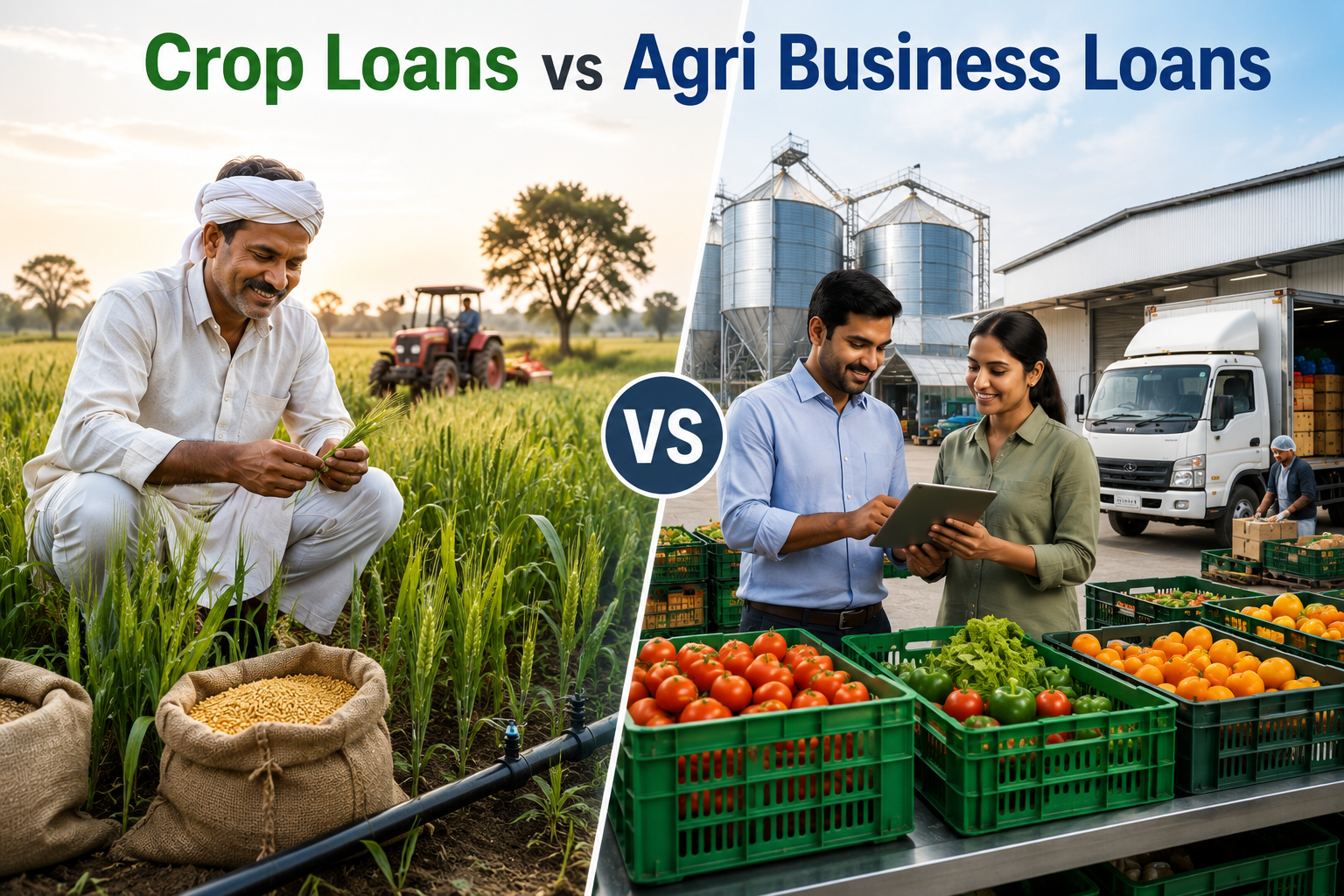
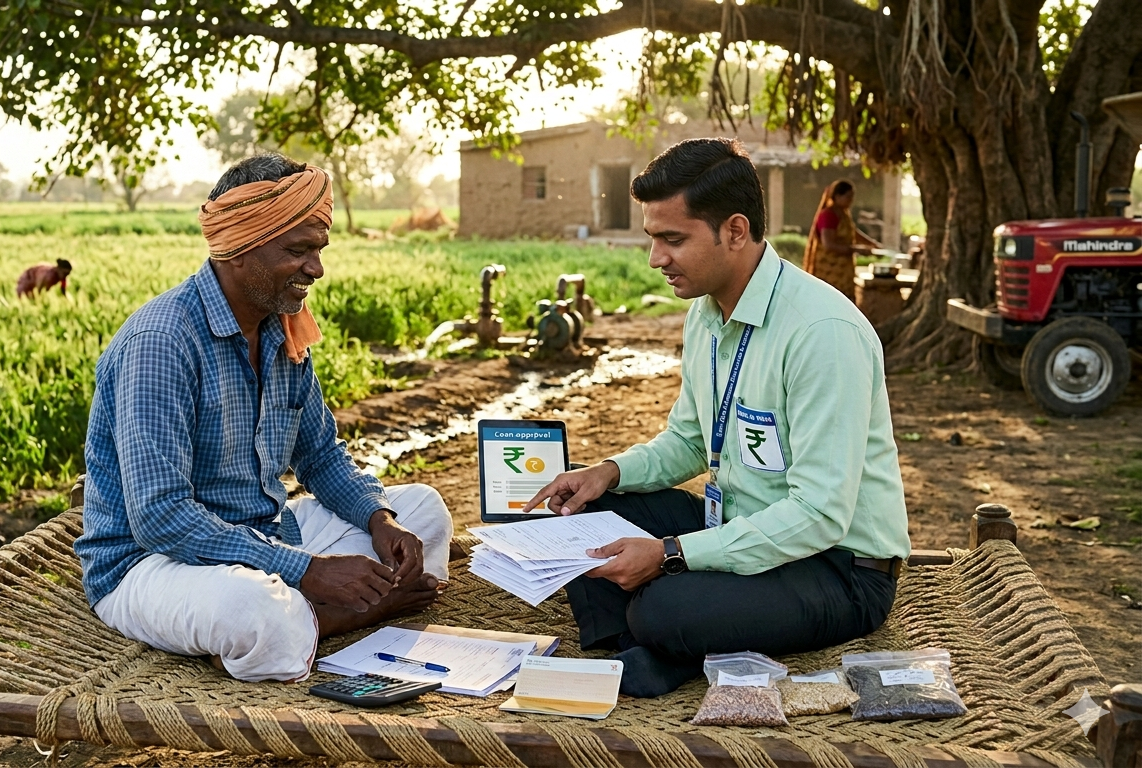
  • Farmer Finance: Designed around the rhythms of the agricultural calendar, this offering helps farmers manage input costs and working capital requirements across the crop cycle, so financial pressure never forces a bad agronomic decision.
  • Solar Finance: Enabling farmers and rural agri-linked enterprises to invest in renewable energy solutions, reducing dependence on expensive diesel-powered irrigation and aligning with both cost efficiency and sustainability goals.

Agriwise has disbursed over ₹2500 Cr+ in loans to over 2500+ customers across India. Agriwise has partnered with leading financial institution and Banks and reputed insurance institutions.

agriwise finance

The Agri-Fintech 2.0 Moment

India’s farm finance is at an inflection point. As of June 2025, the microfinance industry’s outstanding portfolio stood at ₹3.07 lakh crore, supporting 10 crore active loans, with NBFCs central to delivering that reach into rural India. In FY 2024–25, fintech NBFCs sanctioned approximately 10.9 crore personal loans amounting to ₹1,06,548 crore, demonstrating what digital-first lending can achieve at scale.

Several forces are converging to make this the right moment for agri-fintech to finally close the formal credit gap:

  • Digital Public Infrastructure: India’s Digital Agriculture Mission is creating farm registries and crop data that power AI-driven credit assessment for previously unscoreable borrowers.
  • Embedded Finance: Working capital embedded directly into procurement, warehousing, and trade flows, arriving at precisely the moment it is needed.
  • Satellite-Driven Underwriting: Remote sensing and AI make it viable to assess credit risk for smallholders with no formal credit history.

The Agriwise Edge

What makes Agriwise different from a generic NBFC is context. It draws on StarAgri’s operational intelligence — 2200+ warehouses, 6 Million Metric Tonnes in commodities under management, and direct relationships with over 3 lakh farmers — to underwrite with precision that traditional lenders cannot replicate.

For farmers, this means credit timed to crop cycles, built by a lender that understands what an agricultural season actually looks like. India’s farm credit gap is not inevitable. It is the product of systems designed for a different kind of borrower. Agriwise was built to fix that.

FAQs

  1. Who can apply for a loan through Agriwise Finserv?
    Agriwise serves a broad range of agricultural stakeholders, including individual farmers, Farmer Producer Organisations (FPOs), agri-traders, processors, input suppliers, and rural agribusinesses looking for working capital, asset-backed finance, or commodity-linked credit.
  2. How does Warehouse Receipt Finance work?
    When commodities are stored in approved warehouses, an electronic Warehouse Receipt (e-NWR) is issued against the stored stock. Agriwise uses this receipt as collateral to provide short-term working capital to the borrower, allowing them to access funds without having to sell their produce immediately at potentially unfavourable prices.
  3. What makes Agriwise different from a regular bank or NBFC?
    Agriwise is backed by StarAgri’s deep operational presence across India’s agri supply chain. This gives it access to commodity data, warehouse records, and farmer relationship intelligence, enabling it to underwrite formal credit with far greater precision than a traditional lender and to design products that genuinely fit agricultural cash flow patterns.
  4. How does Invoice & Bill Discounting help agribusinesses?
    For traders, processors, and input dealers who are waiting on payments from buyers, Invoice & Bill Discounting converts those outstanding receivables into immediate cash flow. This keeps working capital moving without taking on additional debt or waiting out long payment cycles.
  5. Is Solar Finance only for large farm operations?
    No. Agriwise’s Solar Finance is designed to be accessible to small and marginal farmers as well as rural agri-linked enterprises. It helps borrowers invest in solar-powered irrigation and energy solutions, reducing diesel dependence and long-term input costs, regardless of the scale of their operation.

Disclaimer

The content published on this blog is provided solely for informational and educational purposes and is not intended as professional or legal advice. While we strive to ensure the accuracy and reliability of the information presented, Agriwise make no representations or warranties of any kind, express or implied, about the completeness, accuracy, suitability, or availability with respect to the blog content or the information, products, services, or related graphics contained in the blog for any purpose. Any reliance you place on such information is therefore strictly at your own risk. Readers are encouraged to consult qualified agricultural experts, agronomists, or relevant professionals before making any decisions based on the information provided herein. Agriwise, its authors, contributors, and affiliates shall not be held liable for any loss or damage, including without limitation, indirect or consequential loss or damage, or any loss or damage whatsoever arising from reliance on information contained in this blog. Through this blog, you may be able to link to other websites that are not under the control of Agriwise. We have no control over the nature, content, and availability of those sites and inclusion of any links does not necessarily imply a recommendation or endorsement of the views expressed within them. We reserve the right to modify, update, or remove blog content at any time without prior notice.

Financing agritech startups in India: What farmers and MSMEs should know?

October 30, 2025

Agritech startups are reshaping how Indian agriculture works — from digital marketplaces and precision farming tools to alternative credit models and supply-chain traceability. For farmers and MSMEs looking to partner with or benefit from these new players, understanding how agrifinance works and where to find reliable agri-financial services is essential.

Why funding matters for agritech startups?

Access to capital fuels product development, field pilots, and wider farmer adoption. In recent years, funding for agritech startups has stabilised after a period of rapid deal activity: AgFoodTech reports show investments staying relatively flat in 2024 with a focus on mature companies, while Indian startup funding momentum continued in H1-2025, driven by larger checks to scaleups.

For farmers and MSMEs, this means startups you engage with are more likely to be past the “idea” stage and closer to delivering reliable services — but also that investors expect clear unit economics, repeatable revenue, and strong farmer outcomes.

Key finance types agritech startups use

  • Equity funding (angel, VC, growth) — fuels scaling, hiring, product R&D and Technology 
  • Debt & credit lines — working capital from banks, NBFCs, financial institutions or specialised lenders (useful when startups provide credit-linked services to farmers).
  • Grants & concessional capital — from foundations, climate funds, or government incubators for pilot projects.
  • Trade and supplier finance — for startups handling procurement, warehousing or agri input distribution.
  • SCF/ Channel Financing: Working capital against the Invoices raised by the seller to buyers, for the procurement of raw materials.

Understanding the mix matters because it determines how aggressively a startup will pursue growth, the pricing of services, and its tolerance for long sales cycles.

What farmers and MSMEs should check before partnering?

  • Funding stability & runway: Companies backed by steady capital are likelier to support long rural sales cycles. Recent market analyses indicate many agritech startups raised larger, selective rounds in 2024–25, signalling a move toward consolidation and sustainable scaling.
  • Regulatory & credit links: If a startup offers credit or payments, confirm partnerships with credible agri financial services providers, NBFCs or banks (for example, an agriculture loan company or an agri finance India partner). Government schemes like the KCC remain central to short-term crop credit.
  • Farmer outcomes & traceability: Look for measurable yield or income gains and transparent pricing. Satellite and digital advisory integrations are increasingly common and backed by case studies.
  • Ease of accessibility: The platform should be user-friendly and easily accessible via mobile apps, in regional languages, and with simple onboarding processes suitable for rural users.
  • Simplified documentation: Startups that minimise paperwork through digital KYC, Aadhaar-based verification, and e-agreements ensure quicker access to finance and services.
  • Market linkage & buyer connectivity: The startup should offer direct market access, connecting farmers or MSMEs with buyers, traders, or processors to improve price realisation and reduce dependence on middlemen.

How do agrifinance products differ from standard loans?

Agrifinance products are tailored for the crop cycle: flexible repayment schedules, collateral-free microloans, warehouse-receipt financing, or input-linked credit. An agrifinance company in India that understands seasonal risk and local value chains can offer better terms than a generic lender. For MSMEs, trade finance or invoice discounting is often a better fit than term loans.

Where to find trustworthy partners?

  • Search for startups that disclose investor names, banking partners, and audited pilots. Industry trackers show that India will host well over a thousand agritech startups by 2025 — a sign of both opportunity and the need for careful selection.
  • Look for endorsements from NABARD, local agri departments, or reputed incubators. NABARD and other agencies continue to expand priority sector credit, improving formal agricultural finance flows.
  • Compare offerings from agri financial services players like the terms, interest, processing transparency and then consider the best agrifinance company India only after mapping service coverage to your needs.

Role of Agriwise

NBFCs like Agriwise agrifinance bridge the gap between farmers/MSMEs and capital by packaging tailored products — from agri business loans India to integrated insurance and receivables financing. When evaluating an agriculture finance or agrifinance partner, check product examples, default management practices, and whether they operate as an agriculture loan company or as a facilitator with bank/NBFC backing.

Practical tips before taking or offering credit

  • Ask for a clear amortisation schedule tied to crop cycles.
  • Ensure documentation is simple and available in local languages.
  • Verify whether the provider reports to credit bureaus — helpful for building a borrower’s credit history.
  • For startups offering buy-now-pay-later or embedded credit, confirm recourse and late-fee structures.

Conclusion

Agritech startups offer transformative services, but financing shapes how durable those services will be for farmers and MSMEs. By focusing on transparency, proven outcomes, and partnerships with credible agri financial services and agriculture loan companies, stakeholders can tap into a market where formal agri credit is projected to grow strongly through 2025 and beyond. Whether you’re a farmer seeking input finance or an MSME evaluating a tech partner, prioritise due diligence — and consider partners like Agriwise when scouting for reliable, agriculture-focused funding solutions.

Disclaimer

The content published on this blog is provided solely for informational and educational purposes and is not intended as professional or legal advice. While we strive to ensure the accuracy and reliability of the information presented, Agriwise make no representations or warranties of any kind, express or implied, about the completeness, accuracy, suitability, or availability with respect to the blog content or the information, products, services, or related graphics contained in the blog for any purpose. Any reliance you place on such information is therefore strictly at your own risk. Readers are encouraged to consult qualified agricultural experts, agronomists, or relevant professionals before making any decisions based on the information provided herein. Agriwise, its authors, contributors, and affiliates shall not be held liable for any loss or damage, including without limitation, indirect or consequential loss or damage, or any loss or damage whatsoever arising from reliance on information contained in this blog. Through this blog, you may be able to link to other websites that are not under the control of Agriwise. We have no control over the nature, content, and availability of those sites and inclusion of any links does not necessarily imply a recommendation or endorsement of the views expressed within them. We reserve the right to modify, update, or remove blog content at any time without prior notice.