

Tag Archives: LAP

types of financial options

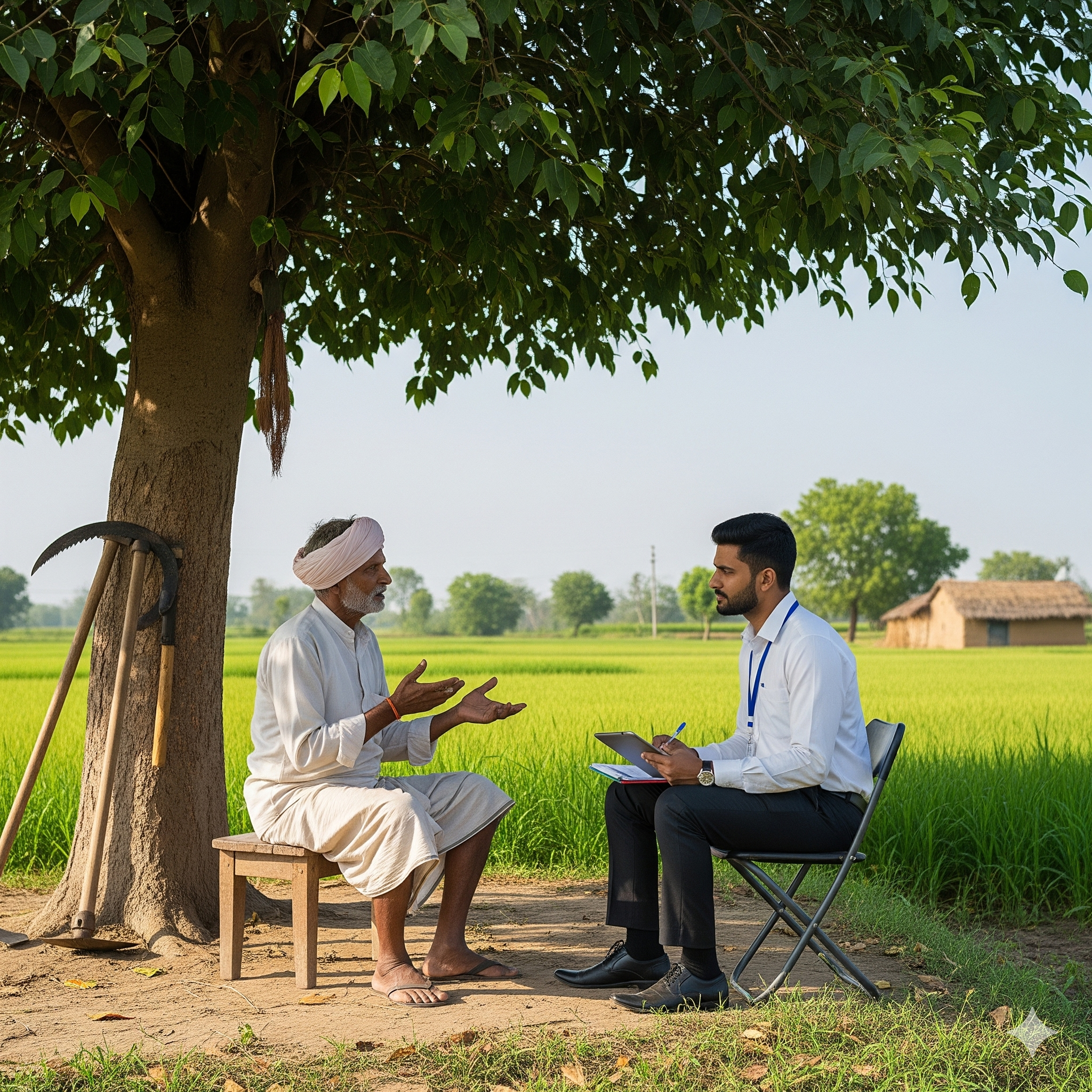
Top 5 types of financial options Indian farmers should explore in 2026

January 08, 2026

What if the key to transforming your farm’s profits this year isn’t just better seeds or machinery, but the types of financial options? According to NABARD projections, agricultural credit extended by commercial and regional rural banks is expected to exceed ₹32.5 lakh crore in FY26, a new record for institutional credit flow in the sector.

In 2026, Indian farmers have access to types of financial options that can do more than fund day-to-day operations. They can unlock growth, protect against risks, and even turn stored crops into ready cash.

From traditional crop loans to innovative trade-linked financing, the choices are expanding, but knowing which option fits your farm’s needs is the real game-changer. Among the various financial options, below are the top 5 that every farmer should explore this year to strengthen cash flow, manage risks, and future-proof their agricultural business.

types of financial options

1. Short‑Term Crop Loans and Kisan Credit Cards (KCC)

Short-term crop loans, particularly through the Kisan Credit Card (KCC) scheme, remain among the most accessible financial options. KCCs provide working capital for essential seasonal inputs like seeds, fertilisers, pesticides, labour, and irrigation. According to NABARD data, around 77.1 million KCCs are active, spanning crop, fisheries, and animal husbandry activities.

It matters in 2026 because:

    • Timely access to working capital reduces dependency on high-cost informal lenders.
    • Interest subvention under the Modified Interest Subvention Scheme (MISS) can bring effective rates down to around 4% for prompt repayment.

2. Crop insurance: Reducing financial risk

Crop insurance schemes help farmers manage financial losses from natural calamities, erratic weather, and pest infestations, critical risks in Indian farming. Under the Pradhan Mantri Fasal Bima Yojana (PMFBY), India’s flagship crop insurance programme, cumulative farmer applications insured crossed 1510 lakh (151 million) since inception through 2024‑25.

Why does this matter in 2026?

    • Broad coverage helps stabilise farm incomes after crop loss.
    • Timely claim payouts can protect farmers’ repayment ability and working capital.

3. Warehouse receipt financing & post‑harvest loans

Warehouse receipt financing is a critical post-harvest financial option that enables farmers to store produce in accredited warehouses and use the receipts as collateral to access working capital. Under this model, farmers avoid distress selling immediately after harvest, often when prices are lowest, and can unlock liquidity while waiting for better market conditions. Warehouses accredited under systems such as the Warehousing Development and Regulatory Authority (WDRA) issue legal documentation through negotiable warehouse receipts.

It’s essential in 2026 because: 

    • Turns stored produce into liquid assets without forcing low-price sales.
    • Integrates farmers into formal credit channels and larger market systems.

4. Long‑term investment loans for farm modernisation

Investment loans (multi-year credit) are an often underutilised financial option supporting capital expenditure, such as farm machinery, drip irrigation, greenhouses, and allied agri-activities, such as dairy or poultry units. Long-term loans provide the runway needed for efficiency-boosting investments that increase crop yields and operational scale.

Why this matters in 2026:

    • Supports the adoption of modern agricultural technology.
    • Enables diversification into allied sectors for additional income.

5. Value chain & allied sector financing

Beyond cultivation, diversified income streams are increasingly important. Value chain and allied sector financing, including supply chain finance, invoice discounting, and renewable energy loans (e.g., solar pumps and cold chains), is gaining traction as innovative financing options. These solutions support farmers and agripreneurs participating in organised buyer networks, processing units, and export channels, thereby directly supporting income continuity and working capital management.

Why does this matter in 2026?

    • Helps break dependency on crop cycles alone.
    • Unlocks financing linked to commercial activity rather than only land or crop collateral.

Macro financial trends: Importance of these types of financial options

While agricultural credit is rising overall, recent data shows bank credit growth to agriculture slowed to 10.4% year-on-year by March 2025, compared with higher growth rates in preceding years. This suggests that simply increasing credit flow may not be sufficient. Strategic, diversified financing mechanisms are needed so farmers can optimise working capital and investment decisions. As institutional credit targets expand (e.g., projected ₹32.5 lakh crore in FY26), combining different types of financial options, crop loans, insurance, warehouse financing, and investment credit enables a more resilient and growth-oriented financial structure for farm enterprises.

Agriwise: Financial solutions for modern Indian farmers

To help farmers leverage these opportunities, Agriwise offers a suite of specialised financial services tailored to Indian agriculture:

  • Secured Business Loans: Long-term finance for working capital purposes such as farm expansion, machinery purchase, and allied business growth.
  • Warehouse Receipt Finance: Short-term working capital against the post-harvested commodity, and get the better price realisation. 
  • Invoice Bill Discounting Finance: Convert receivables into immediate cash to manage working capital efficiently.
  • Solar Financing: Loans for renewable energy solutions, such as solar pumps and solar-powered cold storage, to help reduce operational costs and promote sustainability.

Conclusion

In 2026, Indian farmers have access to a broader range of financial options than ever before. From timely crop loans and risk-mitigating crop insurance to warehouse receipt financing, long-term investment loans, and allied-sector credit, each option addresses different needs throughout the farming lifecycle.

By leveraging these options and platforms like Agriwise, farmers can secure stable incomes, invest in modernisation, and strengthen long-term financial resilience.

FAQs

  • What are the main types of financial options available to Indian farmers in 2026?
    The key types of financial options include short-term crop loans like Agri Term Loan (Agri LAP),  Kisan Credit Cards (KCC), crop insurance, warehouse receipt financing, long-term investment loans for farm modernisation, and value chain or allied sector financing, such as invoice discounting and solar financing.
  • How can warehouse receipt financing help farmers?
    Warehouse receipt financing allows farmers to use stored produce as collateral to access loans. This helps them avoid distress selling immediately after harvest and provides liquidity while waiting for better market prices.
  • Why is crop insurance considered a critical financial option for farmers?
    Crop insurance protects farmers against losses due to unpredictable weather, pest attacks, or natural disasters. It stabilises income and ensures farmers can repay loans and maintain cash flow even in adverse conditions.
  • What types of loans can farmers use to modernise their farms?
    Farmers can access long-term investment loans for machinery, irrigation systems, greenhouses, and allied activities like dairy or poultry. These loans enable higher productivity, diversification, and sustainable growth.
  • What financial services does Agriwise offer to farmers?
    Agriwise provides Agri Term Loan (Agri LAP), Warehouse Receipt Finance, Invoice Bill Discounting Finance, and Solar Financing to help farmers and agri-entrepreneurs manage working capital, invest in growth, and adopt sustainable practices.

Disclaimer

The content published on this blog is provided solely for informational and educational purposes and is not intended as professional or legal advice. While we strive to ensure the accuracy and reliability of the information presented, Agriwise make no representations or warranties of any kind, express or implied, about the completeness, accuracy, suitability, or availability with respect to the blog content or the information, products, services, or related graphics contained in the blog for any purpose. Any reliance you place on such information is therefore strictly at your own risk. Readers are encouraged to consult qualified agricultural experts, agronomists, or relevant professionals before making any decisions based on the information provided herein. Agriwise, its authors, contributors, and affiliates shall not be held liable for any loss or damage, including without limitation, indirect or consequential loss or damage, or any loss or damage whatsoever arising from reliance on information contained in this blog. Through this blog, you may be able to link to other websites that are not under the control of Agriwise. We have no control over the nature, content, and availability of those sites and inclusion of any links does not necessarily imply a recommendation or endorsement of the views expressed within them. We reserve the right to modify, update, or remove blog content at any time without prior notice.

How to get an LAP loan (Loan Against Property) for your agribusiness?

September 03, 2025

For agribusinesses seeking capital without compromising operational liquidity, a loan against property (LAP loan) offers a compelling solution. An agri LAP loan leverages your existing property—be it farmland, warehouse, or residential premises—to raise funds, typically at lower interest rates than unsecured credit. For those in the agriculture sector, LAP for farmers/agribusiness bridges the gap between capital needs and formal credit access, especially in the face of rising input/raw material costs. At Agriwise Finserv, we specialize in customized LAP loans for agribusinesses, offering higher loan amounts, longer tenures, and simplified processes tailored to the unique cycles of agriculture.

LAP loan

Current landscape & why an agri LAP loan makes sense?

In 2025, the average agriculture loan interest rate in India stands at approximately 8.2% per annum—a decline from around 8.7% in 2023—thanks to interest subvention schemes that lower effective rates to as little as 4% for prompt repayment. These favourable terms make securing an LAP loan especially attractive for agribusinesses looking for long-term funding.

On the micro-lending end, the cooperative government in Maharashtra has capped private moneylenders’ interest rates at 9% p.a. for secured agricultural loans, reinforcing the advantage of formal borrowing routes such as agri LAP loans. Moreover, MSME loan portfolios remained robust in FY25, with portfolios at risk (PAR) in the 31–90 day bucket at just 1.7%, highlighting the relative safety and reliability of structured, collateral-backed financing such as LAP.

Step-by-Step Guide: How to secure an LAP loan for your agribusiness

1. Assess your eligibility and property value

The first step is to evaluate whether you qualify for an LAP loan. Lenders usually consider the type of property, its current market value, and your repayment capacity. The loan amount is generally a percentage of the property’s value, often between 60–70%. Farmers and agribusinesses should begin by gathering valuation details of their property such as residential, commercial or industrial.

2. Understand the terms of the loan

Before applying, understand the basics: expected loan amount, interest rates, tenure, and repayment flexibility. Agri LAP loans typically come with longer repayment tenures (up to 15 years), making them suitable for businesses with seasonal income cycles. Knowing the terms upfront ensures you borrow wisely and avoid unnecessary strain later.

3. Prepare the required documentation

Documentation is crucial for approval. Generally required papers include proof of property ownership, identity proof, financial statements, and in some cases, details of the agribusiness operations. Preparing accurate documents in advance reduces processing delays and increases the chances of a smooth approval process.

4. Apply through a trusted channel

Once prepared, you can submit your application either offline or through digital platforms. This is where Agriwise adds value—its technology-driven platform guides farmers and agribusiness owners through the application process, ensuring eligibility checks, quick submission, and hassle-free communication with lenders. By doing so, Agriwise helps applicants save time and avoid common errors.

5. Plan the utilisation of the loan

After approval, it is important to use the loan against property strategically. Funds can be allocated toward expanding storage facilities, purchasing farm equipment, or maintaining steady cash flow during crop cycles. Agriwise also provides advisory support to help borrowers align the loan with their business goals and repayment capacity.

Advantages of choosing an agri LAP loan through Agriwise

  • Lower interest costs compared to unsecured or informal credit
  • Longer tenures, up to 15 years, mitigating EMI pressures
  • Higher LTV, preserving capital for other needs
  • Formal, regulated lending environment, reducing risk of predatory terms
  • Less documentation & BT with top-up loan option available

This makes an LAP loan a strategic instrument for building resilience in your agribusiness.

Conclusion

Securing an LAP loan for your agribusiness is not just about unlocking capital—it’s about choosing a sustainable, cost-effective financing structure that aligns with long-term productivity goals. With competitive rates of interest and supportive platforms like Agriwise streamlining access, now is an ideal time to explore agri LAP loans.

Let Agriwise help you navigate the journey—from eligibility and documentation to approval and strategic utilization. When structured right, a loan against property can be the growth catalyst your agribusiness needs—secure, efficient, and attuned to the pulse of Indian agriculture.

Disclaimer

The content published on this blog is provided solely for informational and educational purposes and is not intended as professional or legal advice. While we strive to ensure the accuracy and reliability of the information presented, Agriwise make no representations or warranties of any kind, express or implied, about the completeness, accuracy, suitability, or availability with respect to the blog content or the information, products, services, or related graphics contained in the blog for any purpose. Any reliance you place on such information is therefore strictly at your own risk. Readers are encouraged to consult qualified agricultural experts, agronomists, or relevant professionals before making any decisions based on the information provided herein. Agriwise, its authors, contributors, and affiliates shall not be held liable for any loss or damage, including without limitation, indirect or consequential loss or damage, or any loss or damage whatsoever arising from reliance on information contained in this blog. Through this blog, you may be able to link to other websites that are not under the control of Agriwise. We have no control over the nature, content, and availability of those sites and inclusion of any links does not necessarily imply a recommendation or endorsement of the views expressed within them. We reserve the right to modify, update, or remove blog content at any time without prior notice.

Top ways agribusinesses can use Loan Against Property to grow

August 14, 2025

Agribusinesses require timely access to capital to expand, modernise, and stay competitive. One of the most effective ways to raise substantial funds is through a Loan Against Property (LAP). By leveraging owned agricultural, residential, or commercial property, businesses can unlock the value of their assets without selling them. With competitive loan against property interest rates and flexible repayment options, LAP loans are becoming a preferred financing solution for agri-entrepreneurs.

As per the insights, credit to the MSME sector crossed a whopping ₹40 trillion—growing 20% year-on-year—reflecting the expanding financial ecosystem for small businesses across India, as of March 2025.

loan against property

1. Expanding storage and warehousing capacity

Agribusinesses often face post-harvest losses due to insufficient storage infrastructure. With a property loan, you can build or upgrade warehouses, cold storage units, and silos. Accessing funds through a LAP loan ensures you can invest in large-scale storage without disrupting your operational cash flow.
According to the Business Standard,  MSME loans held up well in terms of asset quality in FY25, with the portfolio at risk (PAR) in the 31–90 days bucket at just 1.7%, and even improving in longer overdue buckets—clearly underlining the financial stability available for such structured lending options. Before applying, it’s wise to check the loan against property rate of interest and use a mortgage loan calculator India to plan your budget.

2. Investing in modern farming equipment

Mechanisation is crucial for increasing productivity. Tractors, harvesters, irrigation systems, and processing machinery require significant investment. A loan against property loan provides the capital needed for purchasing such equipment, improving efficiency and reducing labour costs.
NBFCsmicro-LAP segment grew over 25% annually in FY25, outpacing overall MSME credit growth and reflecting strong demand for property-secured loans for business capital.

Using an EMI calculator for mortgage loan helps determine monthly repayment amounts and ensures the investment aligns with revenue cycles.

3. Funding agri-processing and value-addition units

Value-added products, such as processed grains, packaged oils, or organic produce, command better market prices. By opting for a LAP loan, you can set up or expand processing facilities, meeting growing consumer demand.
The interest rate on loan against property can vary depending on the lender, tenure, and property value. Comparing multiple lenders before you LAP loan apply can help secure favourable terms.

4. Scaling distribution and logistics

Efficient logistics can significantly reduce transportation costs and expand your market reach. Whether it’s buying refrigerated vehicles or setting up a distribution hub, LAP loans provide a cost-effective funding route.
A property against loan interest rate is generally lower compared to unsecured loans, making it a practical choice for long-term infrastructure investments.

5. Diversifying into new crops or markets

Agribusinesses can use LAP loans to diversify into high-value crops, organic farming, or export markets. A home mortgage loan calculator helps assess feasibility based on projected income.
According to Money Control, MSME exports surged from ₹3.95 lakh crore (2020-21) to ₹12.39 lakh crore (2024-25), and MSMEs accounted for roughly 45.8% of total exports—underscoring the upside potential for agri diversification using formal credit instruments like LAP.

6. Clearing high-interest debt

If you have multiple loans with higher interest rates, consolidating them under a loan against property loan can reduce your overall interest burden. This allows for better cash flow management, freeing funds for expansion projects.
Using a mortgage loan calculator India will give you clarity on the potential savings by switching to a lower loan against property interest rate.

Agriwise LAP (Loan Against Property) solutions for agribusiness growth

At Agriwise, our Secured Business Loan (LAP) empowers Agri and MSME businesses to unlock the real value of their property. With loan amounts ranging from ₹5 lakhs to ₹5 crores and flexible tenures up to 15 years, our LAP serves as a strategic financial tool for business development, working capital, and capital expansion. You can mortgage residential, commercial, or industrial properties to access competitive loan against property interest rates. Plus, our services include top-up loans on existing LAPs and balance transfer options—making it easier to refinance and reduce overall borrowing costs.

Why use LAP loans?

  • Lower interest rates – Structured borrowing through property collateral tends to be more cost-effective than unsecured credit.
  • Large loan amounts – Access between ₹5 lakh and ₹5 crore—perfect for big investments.
  • Flexible tenures – Up to 15 years to align repayments with seasonal cash flows.
  • Retain ownership – You retain use and control of the mortgaged property.

Conclusion

For agribusinesses looking to modernise, expand, or diversify, a loan against property loan offers a powerful financing lever. Equipped with a mortgage loan calculator India and EMI calculator for mortgage loan, agripreneurs can construct sustainable growth models. With India’s MSME credit ecosystem strengthening and vast unmet financial demand still existing, structured solutions like LAP loans—especially Agriwise’s tailored offering—provide a potent combination of flexibility, scale, and financial prudence to fuel your growth journey.

Disclaimer

The content published on this blog is provided solely for informational and educational purposes and is not intended as professional or legal advice. While we strive to ensure the accuracy and reliability of the information presented, Agriwise make no representations or warranties of any kind, express or implied, about the completeness, accuracy, suitability, or availability with respect to the blog content or the information, products, services, or related graphics contained in the blog for any purpose. Any reliance you place on such information is therefore strictly at your own risk. Readers are encouraged to consult qualified agricultural experts, agronomists, or relevant professionals before making any decisions based on the information provided herein. Agriwise, its authors, contributors, and affiliates shall not be held liable for any loss or damage, including without limitation, indirect or consequential loss or damage, or any loss or damage whatsoever arising from reliance on information contained in this blog. Through this blog, you may be able to link to other websites that are not under the control of Agriwise. We have no control over the nature, content, and availability of those sites and inclusion of any links does not necessarily imply a recommendation or endorsement of the views expressed within them. We reserve the right to modify, update, or remove blog content at any time without prior notice.