
Tag Archives: LAP loan

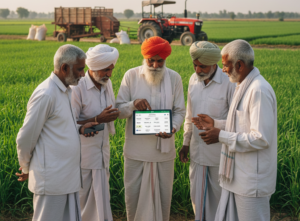
What are the best finance options for Indian farmers in 2025?

December 10, 2025

As Indian agriculture modernises, choosing the right finance options determines whether a farmer merely survives or grows. In FY2024–25, institutional agricultural credit disbursements rose sharply, reaching around ₹28.7 lakh crore against the government target, reflecting stronger formal lending to the sector. Against the prior year’s ₹25.48 lakh crore disbursed in FY2023–24, this shows rising access to credit in rural India. 

In this article, we see 4 practical finance options that are proving most useful to Indian farmers in 2025.

  • Loan Against Property (LAP): Loan Against Property is a secured lending option in which land or residential/commercial property is pledged to obtain a larger ticket loan. LAP suits farmers who need substantial funds for land improvement, mechanisation, or the establishment of cold storage. Use LAP when planned investments promise multi-year returns (e.g., warehouse or drip irrigation installations).
  • Warehouse Receipt Financing (WRF): Warehouse Receipt Financing converts stored produce under accredited warehouses into collateral to borrow against, enabling farmers or aggregators to avoid distress sales at harvest. WRF is ideal for commodity traders, farmer-producer organisations (FPOs), and farmers with access to certified warehousing — it preserves price upside and improves cash flow.

finance options


  • Invoice / Supply chain Finance: Invoice financing (including factoring) helps farmers, aggregators and agri-SMEs turn receivables into immediate cash by discounting invoices from processors or buyers. This is best for those integrated into off-take contracts (dairy, vegetables, contract farming) and for enterprises that supply inputs or buy and sell commodities.
  • Solar Loans: Solarisation (pump sets, rooftops, cold-chain) is growing as a dual-purpose solution: lower electricity cost and potential revenue from surplus sale. Rooftop and agricultural solar financing is now widely available through banks, NBFCs and government-subsidised schemes, making solar loans attractive for long-term savings. India’s rooftop and distributed solar deployment continues to expand, strengthening the case for targeted solar finance.

Picking the correct finance option: A simple decision guide

  • Short-term working capital (seasonal inputs): consider WRF or invoice finance.
  • Large, long-term investments (warehouses, machinery): consider LAP or term loans.
  • Energy cost reduction / cold chain: choose solar loans with subsidy layering.
  • For assured buyer contracts: invoice finance may be the fastest.

2025 is a better year to access formal agri credit

Policy focus and rising lender appetite have expanded the availability of credit. Institutional disbursements rose to ₹28.7 lakh crore (FY2024–25), reflecting stronger outreach and diverse product offerings from banks, NBFCs and fintechs, a positive backdrop for farmers seeking customised finance solutions.

types of financial options

Agriwise helps farmers choose the right finance options

At Agriwise, we advise farmers and agri-enterprises on finding the right finance options for each stage of their farming cycle. Our services include:

  • Assessment of cash flow and funding needs to match LAP, WRF, invoice finance or solar loan structures.
  • Assistance with documentary requirements, warehouse/receipt linking, and subsidy layering for solar projects.
  • Facilitation of partnerships with banks and NBFCs for competitive rates and quick disbursements.

We combine field-level understanding with lender network access so farmers and FPOs can deploy capital faster and more safely.

Conclusion

“Best” depends on the purpose: short-term liquidity is best addressed with WRF or invoice finance, while infrastructure and high-ticket investments often require LAP. Solar loans are increasingly strategic — they lower recurring costs and may open new revenue lines. Given rising institutional disbursement and improved product diversity in 2025, farmers have more finance options than before — choosing the right one starts with defining the objective, tenure and acceptable collateral.

FAQs:

  • What are the most useful finance options available to farmers in 2025?
    The top finance options include Loan Against Property (LAP), Warehouse Receipt Financing (WRF), Invoice Financing, and Solar Loans—each serving different capital needs.
  • How does Warehouse Receipt Financing help farmers?
    WRF allows farmers to store their produce in accredited warehouses and borrow against it, helping them avoid distress sales and wait for better market prices.
  • When should a farmer choose a Loan Against Property (LAP)?
    LAP is ideal for high-value, long-term investments such as land development, machinery purchase, or building agri infrastructure.
  • Is invoice financing suitable for small farmers?
    Yes, especially for those supplying to processors, FPOs or agri companies. It offers quick liquidity without needing land as collateral.
  • Why are solar loans becoming popular for farmers?
    Solar loans reduce energy costs, improve irrigation reliability, and can generate additional income through surplus power sales.
  • How does Agriwise help farmers with financing?
    Agriwise guides farmers in selecting the right finance option, supports documentation, and connects them with lending partners for fast approvals.

Disclaimer

The content published on this blog is provided solely for informational and educational purposes and is not intended as professional or legal advice. While we strive to ensure the accuracy and reliability of the information presented, Agriwise make no representations or warranties of any kind, express or implied, about the completeness, accuracy, suitability, or availability with respect to the blog content or the information, products, services, or related graphics contained in the blog for any purpose. Any reliance you place on such information is therefore strictly at your own risk. Readers are encouraged to consult qualified agricultural experts, agronomists, or relevant professionals before making any decisions based on the information provided herein. Agriwise, its authors, contributors, and affiliates shall not be held liable for any loss or damage, including without limitation, indirect or consequential loss or damage, or any loss or damage whatsoever arising from reliance on information contained in this blog. Through this blog, you may be able to link to other websites that are not under the control of Agriwise. We have no control over the nature, content, and availability of those sites and inclusion of any links does not necessarily imply a recommendation or endorsement of the views expressed within them. We reserve the right to modify, update, or remove blog content at any time without prior notice.


5 mistakes to avoid while checking your Loan Against Property eligibility

December 03, 2025

Taking a Loan Against Property (LAP) is one of the most cost-effective ways for farmers, agribusiness owners, MSMEs and SMEs to access large amounts of working capital. But many applicants lose time, money, or approval chances because they stumble over basic checks when assessing a loan against property eligibility. Below are 5 common mistakes and how to avoid them, so your application (and your business) stays on track.

Quick market snapshot: Why this matters?

The Indian loan against property market size reached USD 758.00 Billion in 2024. Looking forward, IMARC Group expects the market to reach USD 2,369.36 Billion by 2033, exhibiting a growth rate (CAGR) of 13.50% during 2025-2033. This growth means more lenders, more products, and more reasons to check eligibility carefully.

lap loan emi calculator

Mistake 1: Relying on a single rough EMI estimate

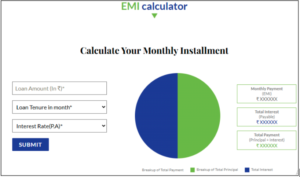
Many borrowers start with a vague monthly payment idea and proceed to apply. Using an accurate loan against property EMI calculator is essential because EMI, tenure, and interest rate determine affordability and LTV (loan-to-value) decisions. Free calculators that let you change interest rate, tenure and loan amount will show whether your cash flows truly support the loan. Agriwise offers a dedicated EMI calculator tailored for LAP customers. Use it before you apply to avoid surprises!

Fix: Run multiple scenarios on a loan against property EMI calculator (different tenures and rates) and save the outputs to share with your relationship manager.

Mistake 2: Ignoring the precise eligibility inputs

“Am I eligible?” is too broad. Lenders evaluate multiple variables — credit score, income, property type (residential/commercial/industrial), clear title, and age of the property. Don’t assume you’ll qualify because you own land. Use a loan against property eligibility calculator to get a data-driven read on likely outcomes. Remember that eligibility criteria for loan against property can differ widely between banks and NBFCs, especially for agricultural/ rural properties.

Fix: Collect documents (title deed, latest property tax receipt, income proofs, bank statements) and feed accurate numbers into a loan against property eligibility calculator before applying. Agriwise’s LAP guides agri-clients through property doc checks and provides an easy eligibility check process.

Mistake 3: Overestimating the property valuation or LTV

A common misstep is assuming a lender will accept the market value you see on listing sites or broker quotes. Lenders perform independent valuations and often offer conservative LTVs of 40–70%, depending on the property and lender risk. Assuming a higher LTV can leave you short of the funds you are  expected to have.

Fix: Ask prospective lenders for indicative LTV ranges and plan financing with conservative figures. Use your LAP loan EMI calculator with the lower loan amount to test affordability if LTV is reduced.

loan against property emi calculator


Mistake 4: Underestimating the impact of credit score and debt profile

The macro trend shows household debt rising and more formal loans being sanctioned through fintechs and NBFCs — meaning underwriting is getting data-driven and stricter in certain pockets. A weak credit history or multiple recent loans can increase your interest rate or reduce sanction amount. Don’t assume secured lending removes all credit scrutiny.

Fix: Pull your credit report, correct errors, and reduce outstanding high-cost unsecured debt before applying. If you need a lender who understands agri cash flow cycles, Agriwise’s LAP team often structures repayments aligned with crop cycles and cash inflows.

Mistake 5: Overlooking total costs beyond the EMI

EMI is just one part of the cost. Processing fees, valuation fees, legal charges, insurance, pre-payment penalties, and GST can add materially to borrowing costs. Comparing only the headline rate (or only the EMI) can mislead you into choosing a more expensive option.

Fix: Use a loan against property EMI calculator that allows you to add fees, or keep a separate fees worksheet. Ask lenders for a full break-up of charges and compute the effective cost. Agriwise’s platform provides a transparent fee summary alongside the EMI output so agribusiness customers can compare offers quickly.

Final checklist before you apply

  1. Run multiple scenarios on an accurate LAP loan EMI calculator and an eligibility calculator.
  2. Gather title documents and income proofs in advance.
  3. Confirm the likely LTV and valuation process with the lender.
  4. Clean up your credit profile and consolidate high-cost debt.
  5. Compare total costs (fees + EMI), not just headline interest.

loan against property eligibility

Why choose Agriwise for LAP checks?

Agriwise combines agri-sector expertise with tailored LAP solutions for farmers and agribusinesses. Their LAP offering understands seasonal cash flows and typical rural property documentation, and their online EMI calculator (explicitly designed for LAP customers) helps you model realistic EMIs quickly. Use Agriwise to run both your EMI scenarios and a guided eligibility check before you approach banks or NBFCs.

Staying methodical when checking a loan against property eligibility saves time, reduces costs, and increases your chance of approval. Run the right calculators, validate documents, and work with an agri-savvy lender like Agriwise, and your LAP will become a working-capital tool rather than an unexpected burden.

FAQs

  • What is loan against property eligibility, and why is it important?
    Loan Against Property (LAP) eligibility refers to the set of criteria that a borrower must meet to qualify for a loan by pledging their residential, commercial, or industrial property as collateral. These criteria may include the borrower’s income, credit score, repayment capacity, property value, property title clarity, and overall financial profile.
  • How can I check my loan against property eligibility accurately?
    The easiest way is to use a loan against property eligibility calculator. It evaluates factors like income, current EMIs, and property value to give a quick indication of your eligibility. Agriwise also guides applicants through document checks for accurate results.
  • Which tools help me estimate EMIs before applying for a LAP?
    You can use a loan against property emi calculator or a LAP loan emi calculator to estimate monthly payments based on interest rate, loan amount, and tenure. Agriwise offers a simple online EMI calculator designed specifically for LAP customers.
  • What documents do I need to meet the eligibility criteria for a loan against property?
    Typically, you need property papers (clear title deed), ID & address proof, bank statements, income documents, and latest property tax receipts. Lenders may ask for additional paperwork depending on the property and loan profile.
  • How does Agriwise help improve my chances of LAP approval?
    Agriwise provides a transparent eligibility-check flow, assists with property and income documentation, and offers customised LAP solutions suited to agricultural and rural borrowers. Its online EMI calculator also helps you fine-tune the right loan and repayment plan before applying.

Disclaimer

The content published on this blog is provided solely for informational and educational purposes and is not intended as professional or legal advice. While we strive to ensure the accuracy and reliability of the information presented, Agriwise make no representations or warranties of any kind, express or implied, about the completeness, accuracy, suitability, or availability with respect to the blog content or the information, products, services, or related graphics contained in the blog for any purpose. Any reliance you place on such information is therefore strictly at your own risk. Readers are encouraged to consult qualified agricultural experts, agronomists, or relevant professionals before making any decisions based on the information provided herein. Agriwise, its authors, contributors, and affiliates shall not be held liable for any loss or damage, including without limitation, indirect or consequential loss or damage, or any loss or damage whatsoever arising from reliance on information contained in this blog. Through this blog, you may be able to link to other websites that are not under the control of Agriwise. We have no control over the nature, content, and availability of those sites and inclusion of any links does not necessarily imply a recommendation or endorsement of the views expressed within them. We reserve the right to modify, update, or remove blog content at any time without prior notice.
How to get an LAP loan (Loan Against Property) for your agribusiness?

September 03, 2025

For agribusinesses seeking capital without compromising operational liquidity, a loan against property (LAP loan) offers a compelling solution. An agri LAP loan leverages your existing property—be it farmland, warehouse, or residential premises—to raise funds, typically at lower interest rates than unsecured credit. For those in the agriculture sector, LAP for farmers/agribusiness bridges the gap between capital needs and formal credit access, especially in the face of rising input/raw material costs. At Agriwise Finserv, we specialize in customized LAP loans for agribusinesses, offering higher loan amounts, longer tenures, and simplified processes tailored to the unique cycles of agriculture.

LAP loan

Current landscape & why an agri LAP loan makes sense?

In 2025, the average agriculture loan interest rate in India stands at approximately 8.2% per annum—a decline from around 8.7% in 2023—thanks to interest subvention schemes that lower effective rates to as little as 4% for prompt repayment. These favourable terms make securing an LAP loan especially attractive for agribusinesses looking for long-term funding.

On the micro-lending end, the cooperative government in Maharashtra has capped private moneylenders’ interest rates at 9% p.a. for secured agricultural loans, reinforcing the advantage of formal borrowing routes such as agri LAP loans. Moreover, MSME loan portfolios remained robust in FY25, with portfolios at risk (PAR) in the 31–90 day bucket at just 1.7%, highlighting the relative safety and reliability of structured, collateral-backed financing such as LAP.

Step-by-Step Guide: How to secure an LAP loan for your agribusiness

1. Assess your eligibility and property value

The first step is to evaluate whether you qualify for an LAP loan. Lenders usually consider the type of property, its current market value, and your repayment capacity. The loan amount is generally a percentage of the property’s value, often between 60–70%. Farmers and agribusinesses should begin by gathering valuation details of their property such as residential, commercial or industrial.

2. Understand the terms of the loan

Before applying, understand the basics: expected loan amount, interest rates, tenure, and repayment flexibility. Agri LAP loans typically come with longer repayment tenures (up to 15 years), making them suitable for businesses with seasonal income cycles. Knowing the terms upfront ensures you borrow wisely and avoid unnecessary strain later.

3. Prepare the required documentation

Documentation is crucial for approval. Generally required papers include proof of property ownership, identity proof, financial statements, and in some cases, details of the agribusiness operations. Preparing accurate documents in advance reduces processing delays and increases the chances of a smooth approval process.

4. Apply through a trusted channel

Once prepared, you can submit your application either offline or through digital platforms. This is where Agriwise adds value—its technology-driven platform guides farmers and agribusiness owners through the application process, ensuring eligibility checks, quick submission, and hassle-free communication with lenders. By doing so, Agriwise helps applicants save time and avoid common errors.

5. Plan the utilisation of the loan

After approval, it is important to use the loan against property strategically. Funds can be allocated toward expanding storage facilities, purchasing farm equipment, or maintaining steady cash flow during crop cycles. Agriwise also provides advisory support to help borrowers align the loan with their business goals and repayment capacity.

Advantages of choosing an agri LAP loan through Agriwise

  • Lower interest costs compared to unsecured or informal credit
  • Longer tenures, up to 15 years, mitigating EMI pressures
  • Higher LTV, preserving capital for other needs
  • Formal, regulated lending environment, reducing risk of predatory terms
  • Less documentation & BT with top-up loan option available

This makes an LAP loan a strategic instrument for building resilience in your agribusiness.

Conclusion

Securing an LAP loan for your agribusiness is not just about unlocking capital—it’s about choosing a sustainable, cost-effective financing structure that aligns with long-term productivity goals. With competitive rates of interest and supportive platforms like Agriwise streamlining access, now is an ideal time to explore agri LAP loans.

Let Agriwise help you navigate the journey—from eligibility and documentation to approval and strategic utilization. When structured right, a loan against property can be the growth catalyst your agribusiness needs—secure, efficient, and attuned to the pulse of Indian agriculture.

Disclaimer

The content published on this blog is provided solely for informational and educational purposes and is not intended as professional or legal advice. While we strive to ensure the accuracy and reliability of the information presented, Agriwise make no representations or warranties of any kind, express or implied, about the completeness, accuracy, suitability, or availability with respect to the blog content or the information, products, services, or related graphics contained in the blog for any purpose. Any reliance you place on such information is therefore strictly at your own risk. Readers are encouraged to consult qualified agricultural experts, agronomists, or relevant professionals before making any decisions based on the information provided herein. Agriwise, its authors, contributors, and affiliates shall not be held liable for any loss or damage, including without limitation, indirect or consequential loss or damage, or any loss or damage whatsoever arising from reliance on information contained in this blog. Through this blog, you may be able to link to other websites that are not under the control of Agriwise. We have no control over the nature, content, and availability of those sites and inclusion of any links does not necessarily imply a recommendation or endorsement of the views expressed within them. We reserve the right to modify, update, or remove blog content at any time without prior notice.