

Tag Archives: loan against property

5 mistakes to avoid while checking your Loan Against Property eligibility

December 03, 2025

Taking a Loan Against Property (LAP) is one of the most cost-effective ways for farmers, agribusiness owners, MSMEs and SMEs to access large amounts of working capital. But many applicants lose time, money, or approval chances because they stumble over basic checks when assessing a loan against property eligibility. Below are 5 common mistakes and how to avoid them, so your application (and your business) stays on track.

Quick market snapshot: Why this matters?

The Indian loan against property market size reached USD 758.00 Billion in 2024. Looking forward, IMARC Group expects the market to reach USD 2,369.36 Billion by 2033, exhibiting a growth rate (CAGR) of 13.50% during 2025-2033. This growth means more lenders, more products, and more reasons to check eligibility carefully.

lap loan emi calculator

Mistake 1: Relying on a single rough EMI estimate

Many borrowers start with a vague monthly payment idea and proceed to apply. Using an accurate loan against property EMI calculator is essential because EMI, tenure, and interest rate determine affordability and LTV (loan-to-value) decisions. Free calculators that let you change interest rate, tenure and loan amount will show whether your cash flows truly support the loan. Agriwise offers a dedicated EMI calculator tailored for LAP customers. Use it before you apply to avoid surprises!

Fix: Run multiple scenarios on a loan against property EMI calculator (different tenures and rates) and save the outputs to share with your relationship manager.

Mistake 2: Ignoring the precise eligibility inputs

“Am I eligible?” is too broad. Lenders evaluate multiple variables — credit score, income, property type (residential/commercial/industrial), clear title, and age of the property. Don’t assume you’ll qualify because you own land. Use a loan against property eligibility calculator to get a data-driven read on likely outcomes. Remember that eligibility criteria for loan against property can differ widely between banks and NBFCs, especially for agricultural/ rural properties.

Fix: Collect documents (title deed, latest property tax receipt, income proofs, bank statements) and feed accurate numbers into a loan against property eligibility calculator before applying. Agriwise’s LAP guides agri-clients through property doc checks and provides an easy eligibility check process.

Mistake 3: Overestimating the property valuation or LTV

A common misstep is assuming a lender will accept the market value you see on listing sites or broker quotes. Lenders perform independent valuations and often offer conservative LTVs of 40–70%, depending on the property and lender risk. Assuming a higher LTV can leave you short of the funds you are  expected to have.

Fix: Ask prospective lenders for indicative LTV ranges and plan financing with conservative figures. Use your LAP loan EMI calculator with the lower loan amount to test affordability if LTV is reduced.
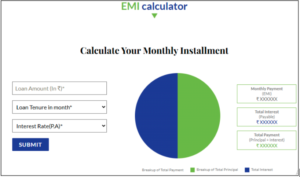
loan against property emi calculator


Mistake 4: Underestimating the impact of credit score and debt profile

The macro trend shows household debt rising and more formal loans being sanctioned through fintechs and NBFCs — meaning underwriting is getting data-driven and stricter in certain pockets. A weak credit history or multiple recent loans can increase your interest rate or reduce sanction amount. Don’t assume secured lending removes all credit scrutiny.

Fix: Pull your credit report, correct errors, and reduce outstanding high-cost unsecured debt before applying. If you need a lender who understands agri cash flow cycles, Agriwise’s LAP team often structures repayments aligned with crop cycles and cash inflows.

Mistake 5: Overlooking total costs beyond the EMI

EMI is just one part of the cost. Processing fees, valuation fees, legal charges, insurance, pre-payment penalties, and GST can add materially to borrowing costs. Comparing only the headline rate (or only the EMI) can mislead you into choosing a more expensive option.

Fix: Use a loan against property EMI calculator that allows you to add fees, or keep a separate fees worksheet. Ask lenders for a full break-up of charges and compute the effective cost. Agriwise’s platform provides a transparent fee summary alongside the EMI output so agribusiness customers can compare offers quickly.

Final checklist before you apply

  1. Run multiple scenarios on an accurate LAP loan EMI calculator and an eligibility calculator.
  2. Gather title documents and income proofs in advance.
  3. Confirm the likely LTV and valuation process with the lender.
  4. Clean up your credit profile and consolidate high-cost debt.
  5. Compare total costs (fees + EMI), not just headline interest.
loan against property eligibility

Why choose Agriwise for LAP checks?

Agriwise combines agri-sector expertise with tailored LAP solutions for farmers and agribusinesses. Their LAP offering understands seasonal cash flows and typical rural property documentation, and their online EMI calculator (explicitly designed for LAP customers) helps you model realistic EMIs quickly. Use Agriwise to run both your EMI scenarios and a guided eligibility check before you approach banks or NBFCs.

Staying methodical when checking a loan against property eligibility saves time, reduces costs, and increases your chance of approval. Run the right calculators, validate documents, and work with an agri-savvy lender like Agriwise, and your LAP will become a working-capital tool rather than an unexpected burden.

FAQs

  • What is loan against property eligibility, and why is it important?
    Loan Against Property (LAP) eligibility refers to the set of criteria that a borrower must meet to qualify for a loan by pledging their residential, commercial, or industrial property as collateral. These criteria may include the borrower’s income, credit score, repayment capacity, property value, property title clarity, and overall financial profile.
  • How can I check my loan against property eligibility accurately?
    The easiest way is to use a loan against property eligibility calculator. It evaluates factors like income, current EMIs, and property value to give a quick indication of your eligibility. Agriwise also guides applicants through document checks for accurate results.
  • Which tools help me estimate EMIs before applying for a LAP?
    You can use a loan against property emi calculator or a LAP loan emi calculator to estimate monthly payments based on interest rate, loan amount, and tenure. Agriwise offers a simple online EMI calculator designed specifically for LAP customers.
  • What documents do I need to meet the eligibility criteria for a loan against property?
    Typically, you need property papers (clear title deed), ID & address proof, bank statements, income documents, and latest property tax receipts. Lenders may ask for additional paperwork depending on the property and loan profile.
  • How does Agriwise help improve my chances of LAP approval?
    Agriwise provides a transparent eligibility-check flow, assists with property and income documentation, and offers customised LAP solutions suited to agricultural and rural borrowers. Its online EMI calculator also helps you fine-tune the right loan and repayment plan before applying.

Disclaimer

The content published on this blog is provided solely for informational and educational purposes and is not intended as professional or legal advice. While we strive to ensure the accuracy and reliability of the information presented, Agriwise make no representations or warranties of any kind, express or implied, about the completeness, accuracy, suitability, or availability with respect to the blog content or the information, products, services, or related graphics contained in the blog for any purpose. Any reliance you place on such information is therefore strictly at your own risk. Readers are encouraged to consult qualified agricultural experts, agronomists, or relevant professionals before making any decisions based on the information provided herein. Agriwise, its authors, contributors, and affiliates shall not be held liable for any loss or damage, including without limitation, indirect or consequential loss or damage, or any loss or damage whatsoever arising from reliance on information contained in this blog. Through this blog, you may be able to link to other websites that are not under the control of Agriwise. We have no control over the nature, content, and availability of those sites and inclusion of any links does not necessarily imply a recommendation or endorsement of the views expressed within them. We reserve the right to modify, update, or remove blog content at any time without prior notice.


How to get an LAP loan (Loan Against Property) for your agribusiness?

September 03, 2025

For agribusinesses seeking capital without compromising operational liquidity, a loan against property (LAP loan) offers a compelling solution. An agri LAP loan leverages your existing property—be it farmland, warehouse, or residential premises—to raise funds, typically at lower interest rates than unsecured credit. For those in the agriculture sector, LAP for farmers/agribusiness bridges the gap between capital needs and formal credit access, especially in the face of rising input/raw material costs. At Agriwise Finserv, we specialize in customized LAP loans for agribusinesses, offering higher loan amounts, longer tenures, and simplified processes tailored to the unique cycles of agriculture.

LAP loan

Current landscape & why an agri LAP loan makes sense?

In 2025, the average agriculture loan interest rate in India stands at approximately 8.2% per annum—a decline from around 8.7% in 2023—thanks to interest subvention schemes that lower effective rates to as little as 4% for prompt repayment. These favourable terms make securing an LAP loan especially attractive for agribusinesses looking for long-term funding.

On the micro-lending end, the cooperative government in Maharashtra has capped private moneylenders’ interest rates at 9% p.a. for secured agricultural loans, reinforcing the advantage of formal borrowing routes such as agri LAP loans. Moreover, MSME loan portfolios remained robust in FY25, with portfolios at risk (PAR) in the 31–90 day bucket at just 1.7%, highlighting the relative safety and reliability of structured, collateral-backed financing such as LAP.

Step-by-Step Guide: How to secure an LAP loan for your agribusiness

1. Assess your eligibility and property value

The first step is to evaluate whether you qualify for an LAP loan. Lenders usually consider the type of property, its current market value, and your repayment capacity. The loan amount is generally a percentage of the property’s value, often between 60–70%. Farmers and agribusinesses should begin by gathering valuation details of their property such as residential, commercial or industrial.

2. Understand the terms of the loan

Before applying, understand the basics: expected loan amount, interest rates, tenure, and repayment flexibility. Agri LAP loans typically come with longer repayment tenures (up to 15 years), making them suitable for businesses with seasonal income cycles. Knowing the terms upfront ensures you borrow wisely and avoid unnecessary strain later.

3. Prepare the required documentation

Documentation is crucial for approval. Generally required papers include proof of property ownership, identity proof, financial statements, and in some cases, details of the agribusiness operations. Preparing accurate documents in advance reduces processing delays and increases the chances of a smooth approval process.

4. Apply through a trusted channel

Once prepared, you can submit your application either offline or through digital platforms. This is where Agriwise adds value—its technology-driven platform guides farmers and agribusiness owners through the application process, ensuring eligibility checks, quick submission, and hassle-free communication with lenders. By doing so, Agriwise helps applicants save time and avoid common errors.

5. Plan the utilisation of the loan

After approval, it is important to use the loan against property strategically. Funds can be allocated toward expanding storage facilities, purchasing farm equipment, or maintaining steady cash flow during crop cycles. Agriwise also provides advisory support to help borrowers align the loan with their business goals and repayment capacity.

Advantages of choosing an agri LAP loan through Agriwise

  • Lower interest costs compared to unsecured or informal credit
  • Longer tenures, up to 15 years, mitigating EMI pressures
  • Higher LTV, preserving capital for other needs
  • Formal, regulated lending environment, reducing risk of predatory terms
  • Less documentation & BT with top-up loan option available

This makes an LAP loan a strategic instrument for building resilience in your agribusiness.

Conclusion

Securing an LAP loan for your agribusiness is not just about unlocking capital—it’s about choosing a sustainable, cost-effective financing structure that aligns with long-term productivity goals. With competitive rates of interest and supportive platforms like Agriwise streamlining access, now is an ideal time to explore agri LAP loans.

Let Agriwise help you navigate the journey—from eligibility and documentation to approval and strategic utilization. When structured right, a loan against property can be the growth catalyst your agribusiness needs—secure, efficient, and attuned to the pulse of Indian agriculture.

Disclaimer

The content published on this blog is provided solely for informational and educational purposes and is not intended as professional or legal advice. While we strive to ensure the accuracy and reliability of the information presented, Agriwise make no representations or warranties of any kind, express or implied, about the completeness, accuracy, suitability, or availability with respect to the blog content or the information, products, services, or related graphics contained in the blog for any purpose. Any reliance you place on such information is therefore strictly at your own risk. Readers are encouraged to consult qualified agricultural experts, agronomists, or relevant professionals before making any decisions based on the information provided herein. Agriwise, its authors, contributors, and affiliates shall not be held liable for any loss or damage, including without limitation, indirect or consequential loss or damage, or any loss or damage whatsoever arising from reliance on information contained in this blog. Through this blog, you may be able to link to other websites that are not under the control of Agriwise. We have no control over the nature, content, and availability of those sites and inclusion of any links does not necessarily imply a recommendation or endorsement of the views expressed within them. We reserve the right to modify, update, or remove blog content at any time without prior notice.

Agri term loan vs. Short-term working capital: Make the right choice

August 28, 2025

Choosing between an agri term loan and short-tenor working capital can decide how smoothly your season runs—and how quickly you scale. India’s agricultural finance landscape is deepening.
According to PIB, as of March 2024, there were 7.75 crore operational Kisan Credit Card (KCC) accounts with ₹9.81 lakh crore outstanding, underscoring the centrality of short-term credit for input purchases and in-season cash flow. At the same time, medium-to-long-term investment credit remains critical; in FY2025, NABARD disbursed ₹1.9 lakh crore in short-term refinance and ₹1 lakh crore in long-term refinance to support banks’ farm lending.

agri term loan

What is an Agri Term Loan—and when does it fit best?

An agri term loan is designed for asset creation and long-horizon payback. Think agriculture equipment financing (tractors, harvesters), pack-house or dairy unit set-ups, micro-irrigation, solar pumps, or land development. Tenors usually run 3–7 years (sometimes longer), with structured repayment aligned to your farm’s cash generation. For many borrowers, evaluating a farm loan in India, an agri term loan is ideal when:

  • You’re creating or upgrading productive capacity that yields benefits over multiple seasons.
  • Cash flows are predictable but lumpy (e.g., perennial crops or a new greenhouse).
  • You want interest rates and repayment schedules tailored under priority sector agriculture loan norms.

Critically, India continues to push agricultural credit: by December 31, 2024, ₹19.28 lakh crore of ground-level agri credit had already been disbursed against an annual target of ₹27.5 lakh crore—evidence that banks have liquidity and appetite for both investment and in-season credit.

Short-term working capital financing: The right tool for the season

Short-term working capital financing keeps operations moving between sowing and sale. Popular instruments include:

  • Kisan Credit Card and crop loan (including seasonal crop loan): revolving limits for seeds, fertilizer, diesel, labour, and plant protection.
  • Invoice financing and accounts receivable financing: unlock cash tied up in trade credit when buyers take 30–60 days to pay.
  • Warehouse receipt financing: borrow against stored produce to avoid distress sale and capture better post-harvest prices.

For many MSMEs in the agri value chain—aggregators, FPOs, food processors—an MSME agriculture loan structured as a working capital loan can smooth procurement cycles, bridge receivables, and fund short production runs. Policy continues to encourage access: the RBI’s Priority Sector Lending (PSL) Master Directions, March 24, 2025 added incentives—125% weight to incremental PSL in low-credit districts—to push banks deeper into underserved agri geographies.

agriculture term loan

Agri term loan vs. Short-term working capital: How to choose?

Use this quick lens to decide which instrument fits your immediate need:

  • Purpose
    • Agri term loan: asset creation—tractor, combine, drip irrigation, dairy shed, primary processing.
    • Short-term working capital: input purchases, wages, logistics, short cash-flow gaps.
  • Tenor & repayment
    • Agri term loan: multi-year tenor; repayment aligned to harvest cycles and asset life.
    • Short-term working capital: 6–12 months (often revolving); interest on utilized amount.
  • Security & pricing
    • Agri term loan: often secured against the asset/land; eligible under agriculture loan India PSL norms.
    • Short-term working capital: may be cash-flow backed (KCC), commodity-backed (warehouse receipt financing), or invoice-backed.
  • Cash-flow impact
    • Agri term loan: spreads cost of expansion; improves productivity/quality over time.
    • Short-term working capital: protects margins by preventing stock-outs, distress sales, or production stoppages.

Eligibility and application: getting prepared

Most lenders evaluate agriculture loan eligibility on the basis of land ownership/lease documentation (or FPO MSME credentials), cropping pattern, historical yields, credit history, and projected cash flows. Digital rails mean you can now complete a farm loan application online with e-KYC, e-sign, and document uploads. Borrowers should keep soil-health cards, Khasra/Khatauni or lease agreements, past sales invoices, and bank statements ready. For value-chain MSMEs, maintain GST returns, audited statements, and buyer contracts to strengthen accounts receivable financing or invoice financing proposals.

Note that regulatory parameters evolve: in June 2025, the RBI reduced small finance banks’ overall priority sector lending requirement from 75% to 60%, offering them more portfolio flexibility while continuing to support priority sectors, including agriculture—useful context if you bank with an SFB.

crop capital

Smart combinations that often work

Many successful farms and agri-MSMEs blend both instruments:

  • Pair an agri term loan for a new cold room with warehouse receipt financing to hold inventory until prices improve.
  • Finance a harvester via an agri term loan, while running input purchases through KCC/crop loan to keep operations liquid.
  • Use invoice financing post-dispatch to shorten your cash cycle, while long-term expansion (additional pack-line or a solar pump) rides on a separate agri term loan.

With 7.75 crore KCCs already active and substantial refinance lines from NABARD in FY2025, borrowers have both breadth (short-term liquidity) and depth (long-term investment credit) to choose from—provided proposals are well-documented and cash-flows are realistic.

How Agriwise can help you choose?

At Agriwise, we understand that no two borrowers have the same agricultural finance needs. That’s why we offer both short-term working capital financing and long-term solutions like agri term loans—including structured options such as Loan Against Property. Our expertise lies in helping farmers, agri-MSMEs, and value-chain players evaluate their farm loan options, determine agriculture loan eligibility, and align repayment schedules with seasonal cash flows. Whether it’s an agriculture equipment financing, seasonal crop loan, invoice financing, or warehouse receipt financing to keep your operations liquid, or a customized agri term loan for asset creation, Agriwise ensures that financing works as a growth enabler. With a seamless farm loan application online process and deep knowledge of priority sector agriculture loan norms, we help you access the right credit at the right time—fueling productivity and profitability.

agriwise loan

Conclusion

If you’re investing for multi-season productivity, an agri term loan is the right backbone. If you’re protecting margins this season, prioritize short-term working capital. Many agri enterprises need both—sequenced and sized to their cash-flow. Agriwise can help you choose the mix, get the agriculture loan eligibility right, and execute your farm loan application online—so credit fuels growth, not stress.

Disclaimer

The content published on this blog is provided solely for informational and educational purposes and is not intended as professional or legal advice. While we strive to ensure the accuracy and reliability of the information presented, Agriwise make no representations or warranties of any kind, express or implied, about the completeness, accuracy, suitability, or availability with respect to the blog content or the information, products, services, or related graphics contained in the blog for any purpose. Any reliance you place on such information is therefore strictly at your own risk. Readers are encouraged to consult qualified agricultural experts, agronomists, or relevant professionals before making any decisions based on the information provided herein. Agriwise, its authors, contributors, and affiliates shall not be held liable for any loss or damage, including without limitation, indirect or consequential loss or damage, or any loss or damage whatsoever arising from reliance on information contained in this blog. Through this blog, you may be able to link to other websites that are not under the control of Agriwise. We have no control over the nature, content, and availability of those sites and inclusion of any links does not necessarily imply a recommendation or endorsement of the views expressed within them. We reserve the right to modify, update, or remove blog content at any time without prior notice.

Top ways agribusinesses can use Loan Against Property to grow

August 14, 2025

Agribusinesses require timely access to capital to expand, modernise, and stay competitive. One of the most effective ways to raise substantial funds is through a Loan Against Property (LAP). By leveraging owned agricultural, residential, or commercial property, businesses can unlock the value of their assets without selling them. With competitive loan against property interest rates and flexible repayment options, LAP loans are becoming a preferred financing solution for agri-entrepreneurs.

As per the insights, credit to the MSME sector crossed a whopping ₹40 trillion—growing 20% year-on-year—reflecting the expanding financial ecosystem for small businesses across India, as of March 2025.

loan against property

1. Expanding storage and warehousing capacity

Agribusinesses often face post-harvest losses due to insufficient storage infrastructure. With a property loan, you can build or upgrade warehouses, cold storage units, and silos. Accessing funds through a LAP loan ensures you can invest in large-scale storage without disrupting your operational cash flow.
According to the Business Standard,  MSME loans held up well in terms of asset quality in FY25, with the portfolio at risk (PAR) in the 31–90 days bucket at just 1.7%, and even improving in longer overdue buckets—clearly underlining the financial stability available for such structured lending options. Before applying, it’s wise to check the loan against property rate of interest and use a mortgage loan calculator India to plan your budget.

2. Investing in modern farming equipment

Mechanisation is crucial for increasing productivity. Tractors, harvesters, irrigation systems, and processing machinery require significant investment. A loan against property loan provides the capital needed for purchasing such equipment, improving efficiency and reducing labour costs.
NBFCsmicro-LAP segment grew over 25% annually in FY25, outpacing overall MSME credit growth and reflecting strong demand for property-secured loans for business capital.

Using an EMI calculator for mortgage loan helps determine monthly repayment amounts and ensures the investment aligns with revenue cycles.

3. Funding agri-processing and value-addition units

Value-added products, such as processed grains, packaged oils, or organic produce, command better market prices. By opting for a LAP loan, you can set up or expand processing facilities, meeting growing consumer demand.
The interest rate on loan against property can vary depending on the lender, tenure, and property value. Comparing multiple lenders before you LAP loan apply can help secure favourable terms.

4. Scaling distribution and logistics

Efficient logistics can significantly reduce transportation costs and expand your market reach. Whether it’s buying refrigerated vehicles or setting up a distribution hub, LAP loans provide a cost-effective funding route.
A property against loan interest rate is generally lower compared to unsecured loans, making it a practical choice for long-term infrastructure investments.

5. Diversifying into new crops or markets

Agribusinesses can use LAP loans to diversify into high-value crops, organic farming, or export markets. A home mortgage loan calculator helps assess feasibility based on projected income.
According to Money Control, MSME exports surged from ₹3.95 lakh crore (2020-21) to ₹12.39 lakh crore (2024-25), and MSMEs accounted for roughly 45.8% of total exports—underscoring the upside potential for agri diversification using formal credit instruments like LAP.

6. Clearing high-interest debt

If you have multiple loans with higher interest rates, consolidating them under a loan against property loan can reduce your overall interest burden. This allows for better cash flow management, freeing funds for expansion projects.
Using a mortgage loan calculator India will give you clarity on the potential savings by switching to a lower loan against property interest rate.

Agriwise LAP (Loan Against Property) solutions for agribusiness growth

At Agriwise, our Secured Business Loan (LAP) empowers Agri and MSME businesses to unlock the real value of their property. With loan amounts ranging from ₹5 lakhs to ₹5 crores and flexible tenures up to 15 years, our LAP serves as a strategic financial tool for business development, working capital, and capital expansion. You can mortgage residential, commercial, or industrial properties to access competitive loan against property interest rates. Plus, our services include top-up loans on existing LAPs and balance transfer options—making it easier to refinance and reduce overall borrowing costs.

Why use LAP loans?

  • Lower interest rates – Structured borrowing through property collateral tends to be more cost-effective than unsecured credit.
  • Large loan amounts – Access between ₹5 lakh and ₹5 crore—perfect for big investments.
  • Flexible tenures – Up to 15 years to align repayments with seasonal cash flows.
  • Retain ownership – You retain use and control of the mortgaged property.

Conclusion

For agribusinesses looking to modernise, expand, or diversify, a loan against property loan offers a powerful financing lever. Equipped with a mortgage loan calculator India and EMI calculator for mortgage loan, agripreneurs can construct sustainable growth models. With India’s MSME credit ecosystem strengthening and vast unmet financial demand still existing, structured solutions like LAP loans—especially Agriwise’s tailored offering—provide a potent combination of flexibility, scale, and financial prudence to fuel your growth journey.

Disclaimer

The content published on this blog is provided solely for informational and educational purposes and is not intended as professional or legal advice. While we strive to ensure the accuracy and reliability of the information presented, Agriwise make no representations or warranties of any kind, express or implied, about the completeness, accuracy, suitability, or availability with respect to the blog content or the information, products, services, or related graphics contained in the blog for any purpose. Any reliance you place on such information is therefore strictly at your own risk. Readers are encouraged to consult qualified agricultural experts, agronomists, or relevant professionals before making any decisions based on the information provided herein. Agriwise, its authors, contributors, and affiliates shall not be held liable for any loss or damage, including without limitation, indirect or consequential loss or damage, or any loss or damage whatsoever arising from reliance on information contained in this blog. Through this blog, you may be able to link to other websites that are not under the control of Agriwise. We have no control over the nature, content, and availability of those sites and inclusion of any links does not necessarily imply a recommendation or endorsement of the views expressed within them. We reserve the right to modify, update, or remove blog content at any time without prior notice.