
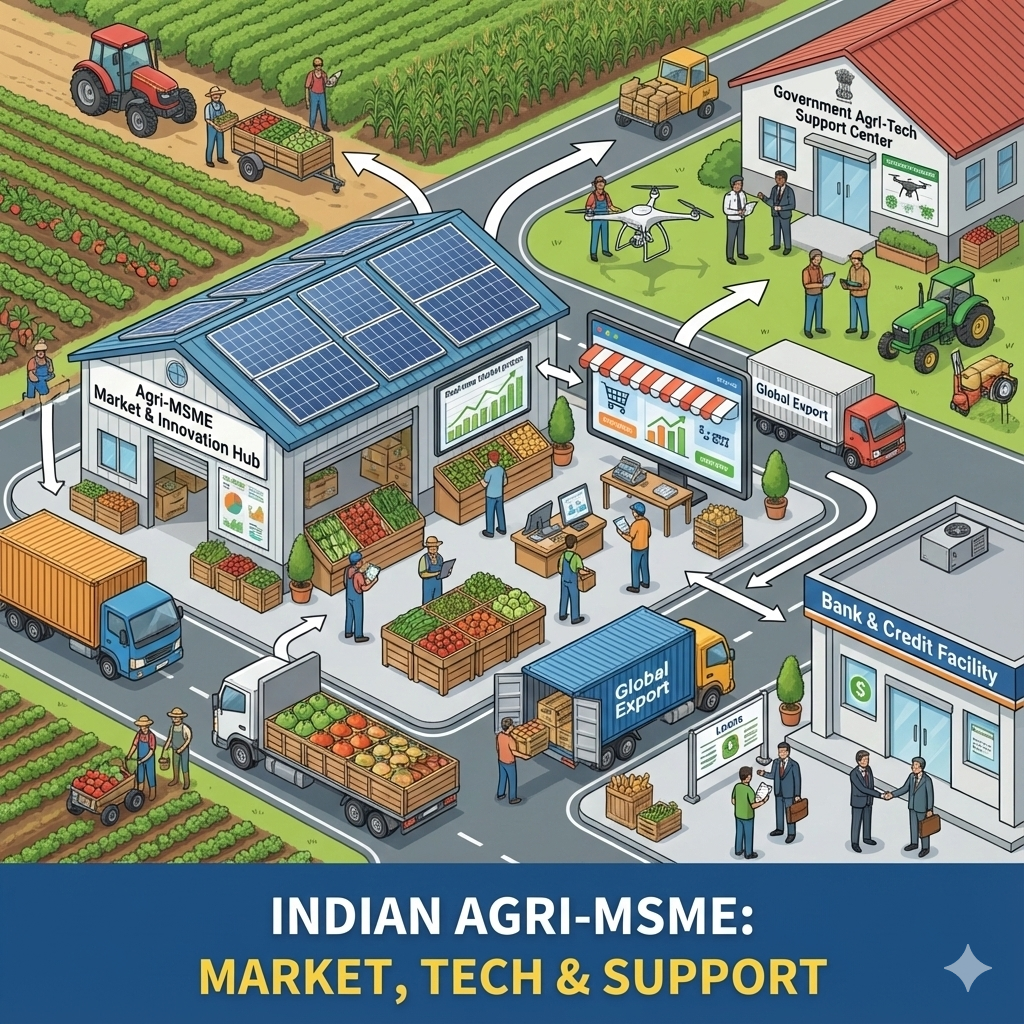
Indian agricultural MSMEs are demonstrating strong resilience and adaptability in the current dynamic economic landscape. With greater access to markets, technology, and institutional support, these enterprises are well-positioned for sustainable growth. Strengthening cash flow practices allows them to convert this potential into performance, ensuring liquidity, continuity, and confidence across business cycles.
According to the Ministry of MSME, as of 2025, there are over 6.8 crore registered MSMEs in India, collectively employing nearly 30 crore people across sectors, including agriculture-linked enterprises. However, money flow remains one of the most persistent and painful challenges for MSMEs in Indian agriculture, affecting their ability to operate efficiently, invest in technology, and scale profitably.
Why cash flow is a critical issue for agricultural MSMEs?
Unlike large agribusinesses with diversified revenues, MSMEs operate on thin margins and often depend on seasonal cycles tied to planting and harvesting. Seasonal revenue variability combined with delayed payments from buyers and procurement agencies can create acute liquidity shortfalls.
Moreover:
- Only 16–20% of MSMEs in India have access to formal credit, leaving the rest dependent on costly informal financing.
- Chronic payment delays, reportedly amounting to unpaid invoices worth over ₹10.7 lakh crore nationwide, exacerbate working capital stress across the MSME value chain.
Such constraints reduce MSMEs’ capacity to procure raw materials, pay labour on time, adopt new technology, and fulfil large orders reliably.

Key cash flow pain points in the agriculture MSME landscape
- Delayed payments and long receivable cycles: A significant drain for agricultural MSMEs. Large corporate buyers, government agencies, and even cooperative procurement systems sometimes delay payment beyond standard credit periods. This leaves MSMEs stretched thin as they fund operations while waiting for payments.
- Inadequate access to affordable credit: Despite targeted schemes like the Credit Guarantee Fund Scheme (CGTMSE) and Mudra loans, formal finance penetration remains modest. Many MSMEs, especially those linked to agriculture, lack sufficient collateral or credit history, forcing them to turn to informal credit at high interest rates.
- Seasonal business dynamics: Agricultural MSMEs often generate significant revenue during crop harvest seasons. During off-season periods, operating expenses still accrue, including payroll, utilities, and inventory storage, which demand consistent cash flow management strategies.
Strategies to improve cash flow for agricultural MSMEs
- Leverage digital payments and invoicing: Adopting digital financial tools can reduce payment delays and improve transparency. E-invoicing and e-payment systems help MSMEs track receivables more accurately, speed up reconciliations, and reduce disputes with buyers.
- Adopt short-term working capital facilities: Flexible working capital loans or lines of credit calibrated to agricultural cycles help balance the mismatch between revenue inflows and payables. MSMEs should explore specialised merchant cash advances, invoice discounting, or receivables financing to maintain liquidity during peak operational periods.
- Use financial forecasting and planning tools: Forecasting cash flow helps predict cash shortfalls before they occur. Simple budgeting tools and forecasting models can be valuable for MSME owners to prepare for lean periods, plan inventory purchases, and negotiate better credit terms with suppliers.
- Negotiate payment terms with buyers: Proactive negotiation with buyers to shorten credit terms, such as moving from 90-day to 45-day payment terms, can significantly reduce receivable days and strengthen cash flow health. Early payment incentives for buyers can also encourage prompt payments.
- Formalise supplier and buyer agreements: Formal contracts with defined payment terms, interest on delayed payments, and dispute resolution clauses improve financial discipline and reduce unplanned cash flow disruptions.

Government initiatives aiding cash flow management
The Indian government has boosted MSME support through enhanced credit guarantees and fiscal budget allocations. In FY26, the Union Budget allocated over ₹23,000 crore to the MSME ministry to strengthen credit access, skill development, and technological upgradation.
In addition, initiatives such as collateral-free business loans up to ₹1 crore and broader coverage under CGTMSE have eased access to financing, helping MSMEs maintain smoother cash flow cycles.
Yet many agriculture-linked MSMEs remain unaware of, or underutilise, these schemes, highlighting a need for tailored financial guidance and easier access mechanisms.
How Agriwise helps agricultural MSMEs
At Agriwise, we understand the unique cash flow challenges faced by MSMEs in the agriculture ecosystem. Our services are designed to empower MSMEs with the financial tools, insights, and support they need to operate with confidence:
- Working capital solutions: Tailored financing products that match seasonal needs, enabling agribusinesses to fund procurement, inventory, and operations without liquidity stress.
- Credit access support: Assistance in securing formal loans under government schemes like CGTMSE, MUDRA, and priority sector lending, improving access to affordable credit.
- Cash flow advisory and planning: Expert guidance in financial forecasting, budgeting, and cash flow optimisation strategies to strengthen financial resilience.
- Digital finance integration: Support for MSMEs to adopt digital invoicing and payment platforms to accelerate receivables and reduce payment delays.
With Agriwise’s integrated financial services, MSMEs in the agricultural sector can improve cash visibility, enhancing stability and enabling growth in a competitive market.

Conclusion
For MSMEs in Indian agriculture, effective cash flow management is no longer just a financial necessity. It is a strategic advantage. With seasonal income cycles, delayed receivables, and limited access to formal credit, businesses that actively plan, forecast, and optimise their cash flow are better positioned to sustain operations and scale responsibly. By leveraging digital tools, structured working capital solutions, and supportive financial partners such as Agriwise, agricultural MSMEs can shift from reactive liquidity management to proactive financial resilience, ensuring long-term stability and growth in an increasingly competitive agri-economy.
FAQs
- What is cash flow, and why is it critical for MSMEs?
Cash flow refers to the movement of money into and out of a business. For MSMEs, steady cash flow ensures payments to suppliers, staff, and creditors are made on time, which is critical for operational continuity and growth.
- How can agricultural MSMEs reduce payment delays from buyers?
Agricultural MSMEs can negotiate shorter payment terms, adopt electronic invoicing, and establish clear contracts with defined payment deadlines to reduce receivable delays.
- What financing options can help strengthen cash flow?
Options include working capital loans, invoice discounting, receivables financing, and government-guaranteed credit schemes such as CGTMSE and Mudra, which offer affordable credit.
- Are government schemes effective in improving MSME cash flow?
Yes, schemes backed by credit guarantees and collateral-free loans improve access to finance. However, awareness and proper utilisation are essential to gain the full benefit.
- How does Agriwise support cash flow management?
Agriwise offers tailored working capital solutions, credit access support, cash flow advisory, and digital finance integration, helping MSMEs plan more effectively and maintain liquidity throughout operational cycles.
Disclaimer
The content published on this blog is provided solely for informational and educational purposes and is not intended as professional or legal advice. While we strive to ensure the accuracy and reliability of the information presented, Agriwise make no representations or warranties of any kind, express or implied, about the completeness, accuracy, suitability, or availability with respect to the blog content or the information, products, services, or related graphics contained in the blog for any purpose. Any reliance you place on such information is therefore strictly at your own risk. Readers are encouraged to consult qualified agricultural experts, agronomists, or relevant professionals before making any decisions based on the information provided herein. Agriwise, its authors, contributors, and affiliates shall not be held liable for any loss or damage, including without limitation, indirect or consequential loss or damage, or any loss or damage whatsoever arising from reliance on information contained in this blog. Through this blog, you may be able to link to other websites that are not under the control of Agriwise. We have no control over the nature, content, and availability of those sites and inclusion of any links does not necessarily imply a recommendation or endorsement of the views expressed within them. We reserve the right to modify, update, or remove blog content at any time without prior notice.