

Tag Archives: rural credit

The role of NBFCs in shaping rural credit access

October 16, 2025

Access to reliable rural credit is vital for India’s agricultural productivity, rural livelihoods, and inclusive growth. In areas where commercial banks are scarce, Non-Bank Financial Companies (NBFCs) are rapidly emerging as critical providers of credit, adapting their models to meet the unique challenges of remote and small-scale borrowers.

Why NBFCs matter for rural credit?

NBFCs offer flexibility, speed, and product innovation tailored to the needs of farmers and rural micro-entrepreneurs. Because of their lighter infrastructure and ability to work through field agents, partner organisations (such as Farmer Producer Organisations or Self Help Groups), and use alternate data, NBFCs reduce transaction costs and delays — two major obstacles for many seeking rural credit from traditional banks. For instance, in FY 2024–25, fintech NBFCs sanctioned approximately 10.9 crore personal loans amounting to ₹1,06,548 crore, a scale that has brought formal financial access to many who previously depended on informal sources.

rural credit

NBFCs + Microfinance: A credit accelerator

Microfinance NBFCs (NBFC-MFIs) are a fundamental source for supplying credit to small borrowers. As of 30 June 2025, the microfinance industry’s outstanding portfolio stood at about ₹3.07 lakh crore, supporting some 10 crore active loans with around 6 crore unique borrowers — many in rural areas with limited formal credit options. Moreover, in FY 2024–25, nearly 80% of microfinance loan books of NBFCs were from rural India, indicating a strong shift toward serving underserved borrowers.

Product innovation & improved quality of rural credit

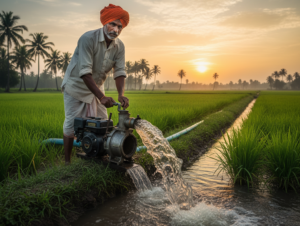
NBFCs are not just increasing reach — they are improving the type of rural credit on offer. Examples of innovations include small-ticket credit for crop inputs, loans against warehouse receipts, pump-set financing, seasonal working capital aligned with harvest cycles, and two-wheeler financing for last-mile connectivity. NBFCs are also shortening approval times through remote onboarding and leveraging mobile or digital payments.

Partnership models are also key: NBFCs are co-lending with banks, entering into ATL (Agri Term Loan), WHR , FPO Financing, Cattle Financing with agri-firms, and working with FPOs/SHGs to build trust and reduce risk. These models help tailor credit products in rural areas that reflect local crop cycles, rainfall variability, and seasonal incomes.
rural farm credit

The broader context: Institutional credit & NBFC opportunity

Institutional credit to agriculture has more than doubled since 2014-15. For 2024-25, the official target for agri-credit was set in the range of ₹25-28 lakh crore, showing that government policy recognises the need for scale. NBFCs and MFIs are well-positioned to complement this push by reaching borrowers in areas with limited bank presence.

In regions where banks are sparse, NBFCs drive credit access; for example, the fintech NBFCs’ disbursals of over ₹1,06,548 crore via 10.9 crore personal loans in FY 2024-25 have helped many rural households move into the formal financial system.

Challenges & regulatory considerations

Scaling rural credit via NBFCs is not without challenges. Rural lending is exposed to climatic risks, commodity price fluctuations, and uncertainty in repayment cycles. NBFCs often face higher funding costs than banks, which may raise interest rates for borrowers. Ensuring consumer protection and transparent terms is essential, particularly for new borrowers with limited financial literacy.

Regulators have begun addressing these through co-lending guidelines, district-level credit plans (PLPs), and efforts to extend grievance redressal channels in rural areas. The goal is to ensure that rural credit remains accessible, affordable, and does not lead to overindebtedness.

The way forward: Scaling responsible rural credit

To build on the gains so far, NBFCs should:

  • Deepen partnerships with NABARD, banks, FPOs, and SHGs for last-mile delivery.
  • Use data-driven underwriting (e.g., using satellite imagery, payment histories, supply chain flows) to better assess risk in rural settings.
  • Offer bundled services — insurance, crop advisory, and digital payment/income smoothing tools — to improve borrower resilience.
  • Align loan tenors and repayment schedules with seasonal rural income flows so that credit is not burdensome during lean periods.

With rural areas contributing about 80% of NBFC microfinance loan books in FY 2024-25, and with the microfinance portfolio outstanding at ₹3.07 lakh crore supporting 10 crore loans, NBFCs are clearly playing an expanding role in formalising rural credit delivery. If these efforts are guided by responsible lending, NBFCs like Agriwise Finserv can help transform how rural India accesses finance — enabling innovation, investment, and sustainable growth.

Disclaimer

The content published on this blog is provided solely for informational and educational purposes and is not intended as professional or legal advice. While we strive to ensure the accuracy and reliability of the information presented, Agriwise make no representations or warranties of any kind, express or implied, about the completeness, accuracy, suitability, or availability with respect to the blog content or the information, products, services, or related graphics contained in the blog for any purpose. Any reliance you place on such information is therefore strictly at your own risk. Readers are encouraged to consult qualified agricultural experts, agronomists, or relevant professionals before making any decisions based on the information provided herein. Agriwise, its authors, contributors, and affiliates shall not be held liable for any loss or damage, including without limitation, indirect or consequential loss or damage, or any loss or damage whatsoever arising from reliance on information contained in this blog. Through this blog, you may be able to link to other websites that are not under the control of Agriwise. We have no control over the nature, content, and availability of those sites and inclusion of any links does not necessarily imply a recommendation or endorsement of the views expressed within them. We reserve the right to modify, update, or remove blog content at any time without prior notice.

Top government schemes for farmers: What to know before applying for credit?

July 03, 2025

Agriculture remains the backbone of India’s economy, employing over 50% of the nation’s workforce and contributing nearly 18% to the country’s GDP. Yet, farmers—especially smallholders—often face severe financial constraints in accessing quality inputs, mechanisation, storage facilities, and post-harvest services. Recognising this, the Indian government has rolled out several targeted initiatives to provide timely and affordable credit to the farming community. From subsidised loans to direct benefit transfers, these government schemes for farmers are designed to improve financial inclusion and build long-term resilience in the agriculture sector.
However, to fully utilise these benefits, farmers must understand the eligibility requirements, application process, and documentation involved. What are the top credit-linked schemes, and what do farmers need to know before applying—empowering them to make informed choices that support their growth and well-being? Let’s understand that!

government schemes for farmers

  1. Kisan Credit Card Schemes (KCC schemes): According to the Press Information Bureau, operative KCC accounts have disbursed over ₹10.05 lakh crore as of December 2024, benefiting 7.72 crore farmers. The government’s Modified Interest Subvention Scheme (MISS) supports short-term loans up to ₹5 lakh at reduced rates—1.5% subsidy to banks, plus a prompt repayment incentive of 3%, effectively lowering the interest rate to 4%.
    Additionally, collateral-free loans of up to ₹2 lakh (soon rising to ₹2 lakh after the RBI raised the collateral-free limit from ₹1.6 lakh to ₹2 lakh in late 2024) ensure smallholder farmers receive hassle-free credit.
  2. PM Kisan Samman Nidhi (PM-KISAN): Launched in February 2019, PM-KISAN provides ₹6,000/year in three installments to landholding farmers. While not a credit scheme per se, this cash transfer enhances liquidity and supports the rural agricultural economy. A substantial beneficiary base—over 12 crore farmers—makes it a key government scheme for welfare for farmers.

  3. Agricultural Infrastructure Fund (AIF): Introduced in 2020 with a ₹1 lakh crore corpus, AIF finances agri-infrastructure like cold stores, warehouses, and processing units. According to the Press Information Bureau, ₹47,575 crore has been sanctioned across 74,508 projects as of August 2024—supporting 6,623 warehouses, 688 cold stores, and 21 silos, which adds 500 LMT storage capacity. Farmers, FPOs, cooperatives, and panchayats are eligible to apply. Enhanced credit guarantee coverage via NABARD’s guarantee trust reduces lender risk.

  4. NABARD Refinancing & Rural Agri MSME Funding: NABARD, established in 1982, plays a dual role in direct financing and refinancing to partner banks, facilitating rural credit. It supports agri-MSMEs through capital subsidy and credit-linked capital subsidy schemes, enabling infrastructure development, organic input manufacturing, dairy entrepreneurship, and more. State-level initiatives, such as Mukhya Mantri Krishak Samridhi Yojana in Uttar Pradesh, also channel NABARD refinancing through cooperative banks to reach smallholders.

  5. PM-KUSUM & Green Energy Schemes: Under PM-KUSUM, farmers receive up to 60% subsidy for installing solar pumps and developing community solar projects. This furthers energy security, lowers diesel dependence, and offers additional income through surplus electricity sales. AIF’s synergy with the PM-KUSUM Component-A further enhances funding options.

  6. Additional Support—Crop Insurance & Godown Subsidies: Insurance under the PMFBY (Pradhan Mantri Fasal Bima Yojana) provides comprehensive coverage against crop loss and post-harvest damage. Gramin Bhandaran Yojana offers capital subsidies for building or renovating rural godowns, increasing farmers’ ability to store produce, avoid distress sale, and access MSP or e-NAM.

Before You Apply: Key Considerations

  • Eligibility criteria: Read scheme-specific norms, including farm size, cropping pattern, and FPO status.
  • Documentation: Aadhar, land records, bank account, income/farmer certificates are essential.
  • Scheme integration: You can simultaneously access various government schemes and subsidies for farmers in India, including KCC, PM-KISAN, PM-KUSUM, PMFBY, and AIF.
  • Interest subvention: Prompt repayment is often necessary to maximise benefits; KCC requires timely repayment for full subsidy.
  • Collateral requirements: Failure to meet subsidies or exceeding thresholds may necessitate collateral.

How Agriwise Is Helping Farmers?

Agriwise Finserv is StarAgri’s specialised financing arm, offering flexible, tech-driven agri and MSME finance solutions that support Indian farmers, FPOs, agri-input retailers, and value chain participants by providing transparent, tech-driven finance solutions. Their product suite includes:

  • Secured Business Loan (Loan Against Property or LAP)
  • Warehouse receipt financing (Commodity finance)
  • Invoice Bill Discounting (Supply Chain Finance)
  • Farmer financing & Solar financing

By partnering with over 25 Indian banks and refining processes through digital platforms, Agriwise ensures faster disbursements and efficient access to credit. They are bridging gaps in rural agri-MSME funding and enabling farmers to fully leverage government-sponsored schemes.

Conclusion

The landscape of government schemes for farmers in India is robust—from welfare programmes like PM-KISAN and PMFBY to credit-led schemes like KCC, AIF, and NABARD-backed infrastructure financing. 

To maximise benefits:

  • Choose schemes aligned with your farming needs.
  • Prepare accurate documentation.
  • Leverage interest subsidies and insurance.
  • Integrate the scheme benefits.
  • Utilise structured financing partners, such as Agriwise, for improved access and process efficiency.

With ₹10+ lakh crore KCC disbursals, ₹47,575 crore AIF support, and thousands of cold stores and warehouses sanctioned, these Government schemes and subsidies for farmers in India are transforming the rural economy. The key is awareness, diligence, and smart financial planning—empowered by institutions like Agriwise.