

Tag Archives: WHR finance

warehouse receipt

Top 5 Benefits of Warehouse Receipt Financing for Farmers and Agri-Traders

January 15, 2026

Did you know that the crops sitting in a warehouse could actually earn you money before they’re even sold? That’s the power of Warehouse Receipt Financing.

Financial institutions are expected to meet the agriculture credit target of Rs 32.5 lakh crore for 2025–26.

By turning stored produce into collateral, farmers and agri-traders can access instant credit, avoid distress sales, and even sell at the most profitable time. This financial tool is helping stakeholders protect their harvest, maximise returns, and step confidently into formal markets. In India, electronic Warehouse Receipts (e-NWRs) and regulated storage systems are now unlocking significant value for agricultural stakeholders by enabling stored commodities to be used as collateral for short-term loans. But what are those benefits?

1. Improved access to working capital: One of the most immediate benefits of Warehouse Receipt Financing is the ability for farmers and traders to convert stored produce into cash without having to sell immediately. By pledging e-NWRs issued from registered warehouses/warehouse receipts by collateral managers, borrowers can access loans typically amounting to 70–75% of the commodity’s market value, helping manage input costs such as seeds, fertilisers, labour, and transport. This access to formal finance is significant in a sector where formal institutions historically offer less than 3% of agricultural credit in emerging markets.

2. Avoidance of distress sales & price timing advantage: Post-harvest periods often lead to oversupply, suppressing prices when farmers need cash the most. Warehouse Receipt Financing allows produce to be stored under certified conditions and sold later, capturing higher seasonal prices instead of resorting to low-price distress sales immediately after harvest.
For example, India’s food grain production in 2023-24 was approximately 330 million tonnes, but only about 1.24 million tonnes were financed via warehousing/e-NWR instruments, indicating huge untapped potential for price optimisation through timely selling.

warehouse receipt

3. Reduced post-harvest losses and quality preservation: Certified warehouses, governed by the Warehousing Development and Regulatory Authority (WDRA), ensure that stored commodities are graded, inspected, and preserved under optimal conditions. Proper storage reduces waste, maintains quality, and allows farmers to fetch better prices later in the season. Without access to formal warehousing and finance, farmers face significantly higher spoilage rates, up to 30–40% in unregulated storage systems worldwide.

4. Strengthened bargaining power & market participation: By delaying sales and leveraging formal receipts, farmers and agri-traders gain stronger bargaining power in the market. Instead of selling to local brokers at low prices, they can reach broader markets, including institutional and export channels, often resulting in better price realisation and income stability. Warehouse Receipt Financing also encourages farmers to become “price setters” rather than “price takers”, as they have the flexibility to choose when and where to sell.

5. Formal credit history and lower reliance on informal lending: By engaging with formal WRF mechanisms, farmers and traders build a credit history that can open the door to future loans on favourable terms. e-NWR-based financing also helps reduce reliance on informal moneylenders, who typically charge exorbitant interest rates, thereby improving the overall financial health of agrarian communities.
Moreover, WRF helps lenders better assess risk through verified commodity collateral, often resulting in competitive interest rates and structured repayment terms.
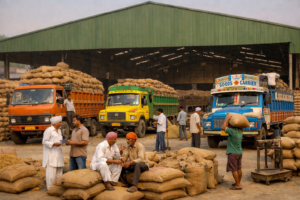
negotiable warehouse receipt

Warehouse receipt industry figures that matter

  • India’s regulated warehouse capacity reached approximately 44.8 million tonnes by March 2025, signalling expanding storage infrastructure.
  • Electronic Warehouse Receipts (e-NWRs) were issued for roughly 54 million metric tonnes of agricultural commodities, indicating growing adoption of digital instruments.
  • The warehouse receipt financing ecosystem, including negotiable receipts, was valued at around ₹35,000 crore in recent years, demonstrating substantial credit flows into agriculture.
  • Commodity valuations backed by storage receipts surged from ₹12,362 crore in FY23 to nearly ₹19,930 crore in FY25, reflecting institutional confidence and market growth. Based on current growth momentum, commodity valuations are expected to cross 24,000–26,000 crore in FY26.

How Agriwise helps farmers & agri-traders

At Agriwise, we empower farmers, traders, and agri-businesses to unlock the full potential of Warehouse Receipt Financing through a comprehensive suite of services:

  • Access to WHR (Warehouse Receipt) finance: Agriwise Finserv provides tailored financing solutions against warehouse receipts issued by the collateral manager (CM), ensuring borrowers get the cash they need without distress selling.
  • Wide network of accredited warehouses: We partner with Asia’s leading warehousing & collateral management company (Staragri). 
  • Market insights & advisory: Our platform gives real-time price trends, market data, and sell timing guidance, helping clients maximise returns on stored commodities.
  • Technology-driven transparency: Digital documentation and tracking through secure systems enhance lender confidence and streamline loan approvals.
  • Farmer education & support: From documentation help to training on using receipts and understanding loan terms, Agriwise bridges the gap between farmers and formal credit.
Conclusion

Warehouse Receipt Financing stands out as a powerful tool in modern agricultural finance, enabling farmers and agri-traders to stabilise incomes, avoid premature selling, and access formal credit with fewer hurdles. As India’s regulated warehousing ecosystem expands and digital receipts gain traction, WRF will play an increasingly pivotal role in strengthening rural economies and enhancing farm profitability. With partners like Agriwise, stakeholders can confidently leverage these financial instruments to grow sustainably and prosper in a competitive market.

FAQs

  1. What is Warehouse Receipt Financing (WRF)?
    WRF is a credit facility that allows farmers or agri-traders to pledge stored commodities in certified warehouses/professional warehouses as collateral to access short-term loans.
  2. Who can benefit from WRF?
    Farmers, agri-traders, manufacturers, exporters, importers and agribusinesses who want timely working capital, better price realisation, and reduced post-harvest losses can benefit from WRF.
  3. How does WRF help avoid distress sales?
    By storing commodities in certified warehouses and using receipts as collateral for loans, farmers can wait for better market prices before selling immediately after harvest.
  4. What types of commodities are eligible for WRF?
    Grains, pulses, oilseeds, spices, and other non-perishable agricultural products stored in WDRA-approved or accredited warehouses can be financed under WRF.
  5. How does WRF improve financial inclusion?
    WRF builds formal credit history for farmers and traders, reducing reliance on informal lenders and enabling easier access to future loans at competitive interest rates.

Disclaimer

The content published on this blog is provided solely for informational and educational purposes and is not intended as professional or legal advice. While we strive to ensure the accuracy and reliability of the information presented, Agriwise make no representations or warranties of any kind, express or implied, about the completeness, accuracy, suitability, or availability with respect to the blog content or the information, products, services, or related graphics contained in the blog for any purpose. Any reliance you place on such information is therefore strictly at your own risk. Readers are encouraged to consult qualified agricultural experts, agronomists, or relevant professionals before making any decisions based on the information provided herein. Agriwise, its authors, contributors, and affiliates shall not be held liable for any loss or damage, including without limitation, indirect or consequential loss or damage, or any loss or damage whatsoever arising from reliance on information contained in this blog. Through this blog, you may be able to link to other websites that are not under the control of Agriwise. We have no control over the nature, content, and availability of those sites and inclusion of any links does not necessarily imply a recommendation or endorsement of the views expressed within them. We reserve the right to modify, update, or remove blog content at any time without prior notice.


types of financial options

Top 5 types of financial options Indian farmers should explore in 2026

January 08, 2026

What if the key to transforming your farm’s profits this year isn’t just better seeds or machinery, but the types of financial options? According to NABARD projections, agricultural credit extended by commercial and regional rural banks is expected to exceed ₹32.5 lakh crore in FY26, a new record for institutional credit flow in the sector.

In 2026, Indian farmers have access to types of financial options that can do more than fund day-to-day operations. They can unlock growth, protect against risks, and even turn stored crops into ready cash.

From traditional crop loans to innovative trade-linked financing, the choices are expanding, but knowing which option fits your farm’s needs is the real game-changer. Among the various financial options, below are the top 5 that every farmer should explore this year to strengthen cash flow, manage risks, and future-proof their agricultural business.

types of financial options

1. Short‑Term Crop Loans and Kisan Credit Cards (KCC)

Short-term crop loans, particularly through the Kisan Credit Card (KCC) scheme, remain among the most accessible financial options. KCCs provide working capital for essential seasonal inputs like seeds, fertilisers, pesticides, labour, and irrigation. According to NABARD data, around 77.1 million KCCs are active, spanning crop, fisheries, and animal husbandry activities.

It matters in 2026 because:

    • Timely access to working capital reduces dependency on high-cost informal lenders.
    • Interest subvention under the Modified Interest Subvention Scheme (MISS) can bring effective rates down to around 4% for prompt repayment.

2. Crop insurance: Reducing financial risk

Crop insurance schemes help farmers manage financial losses from natural calamities, erratic weather, and pest infestations, critical risks in Indian farming. Under the Pradhan Mantri Fasal Bima Yojana (PMFBY), India’s flagship crop insurance programme, cumulative farmer applications insured crossed 1510 lakh (151 million) since inception through 2024‑25.

Why does this matter in 2026?

    • Broad coverage helps stabilise farm incomes after crop loss.
    • Timely claim payouts can protect farmers’ repayment ability and working capital.

3. Warehouse receipt financing & post‑harvest loans

Warehouse receipt financing is a critical post-harvest financial option that enables farmers to store produce in accredited warehouses and use the receipts as collateral to access working capital. Under this model, farmers avoid distress selling immediately after harvest, often when prices are lowest, and can unlock liquidity while waiting for better market conditions. Warehouses accredited under systems such as the Warehousing Development and Regulatory Authority (WDRA) issue legal documentation through negotiable warehouse receipts.

It’s essential in 2026 because: 

    • Turns stored produce into liquid assets without forcing low-price sales.
    • Integrates farmers into formal credit channels and larger market systems.

4. Long‑term investment loans for farm modernisation

Investment loans (multi-year credit) are an often underutilised financial option supporting capital expenditure, such as farm machinery, drip irrigation, greenhouses, and allied agri-activities, such as dairy or poultry units. Long-term loans provide the runway needed for efficiency-boosting investments that increase crop yields and operational scale.

Why this matters in 2026:

    • Supports the adoption of modern agricultural technology.
    • Enables diversification into allied sectors for additional income.

5. Value chain & allied sector financing

Beyond cultivation, diversified income streams are increasingly important. Value chain and allied sector financing, including supply chain finance, invoice discounting, and renewable energy loans (e.g., solar pumps and cold chains), is gaining traction as innovative financing options. These solutions support farmers and agripreneurs participating in organised buyer networks, processing units, and export channels, thereby directly supporting income continuity and working capital management.

Why does this matter in 2026?

    • Helps break dependency on crop cycles alone.
    • Unlocks financing linked to commercial activity rather than only land or crop collateral.

Macro financial trends: Importance of these types of financial options

While agricultural credit is rising overall, recent data shows bank credit growth to agriculture slowed to 10.4% year-on-year by March 2025, compared with higher growth rates in preceding years. This suggests that simply increasing credit flow may not be sufficient. Strategic, diversified financing mechanisms are needed so farmers can optimise working capital and investment decisions. As institutional credit targets expand (e.g., projected ₹32.5 lakh crore in FY26), combining different types of financial options, crop loans, insurance, warehouse financing, and investment credit enables a more resilient and growth-oriented financial structure for farm enterprises.

Agriwise: Financial solutions for modern Indian farmers

To help farmers leverage these opportunities, Agriwise offers a suite of specialised financial services tailored to Indian agriculture:

  • Secured Business Loans: Long-term finance for working capital purposes such as farm expansion, machinery purchase, and allied business growth.
  • Warehouse Receipt Finance: Short-term working capital against the post-harvested commodity, and get the better price realisation. 
  • Invoice Bill Discounting Finance: Convert receivables into immediate cash to manage working capital efficiently.
  • Solar Financing: Loans for renewable energy solutions, such as solar pumps and solar-powered cold storage, to help reduce operational costs and promote sustainability.

Conclusion

In 2026, Indian farmers have access to a broader range of financial options than ever before. From timely crop loans and risk-mitigating crop insurance to warehouse receipt financing, long-term investment loans, and allied-sector credit, each option addresses different needs throughout the farming lifecycle.

By leveraging these options and platforms like Agriwise, farmers can secure stable incomes, invest in modernisation, and strengthen long-term financial resilience.

FAQs

  • What are the main types of financial options available to Indian farmers in 2026?
    The key types of financial options include short-term crop loans like Agri Term Loan (Agri LAP),  Kisan Credit Cards (KCC), crop insurance, warehouse receipt financing, long-term investment loans for farm modernisation, and value chain or allied sector financing, such as invoice discounting and solar financing.
  • How can warehouse receipt financing help farmers?
    Warehouse receipt financing allows farmers to use stored produce as collateral to access loans. This helps them avoid distress selling immediately after harvest and provides liquidity while waiting for better market prices.
  • Why is crop insurance considered a critical financial option for farmers?
    Crop insurance protects farmers against losses due to unpredictable weather, pest attacks, or natural disasters. It stabilises income and ensures farmers can repay loans and maintain cash flow even in adverse conditions.
  • What types of loans can farmers use to modernise their farms?
    Farmers can access long-term investment loans for machinery, irrigation systems, greenhouses, and allied activities like dairy or poultry. These loans enable higher productivity, diversification, and sustainable growth.
  • What financial services does Agriwise offer to farmers?
    Agriwise provides Agri Term Loan (Agri LAP), Warehouse Receipt Finance, Invoice Bill Discounting Finance, and Solar Financing to help farmers and agri-entrepreneurs manage working capital, invest in growth, and adopt sustainable practices.

Disclaimer

The content published on this blog is provided solely for informational and educational purposes and is not intended as professional or legal advice. While we strive to ensure the accuracy and reliability of the information presented, Agriwise make no representations or warranties of any kind, express or implied, about the completeness, accuracy, suitability, or availability with respect to the blog content or the information, products, services, or related graphics contained in the blog for any purpose. Any reliance you place on such information is therefore strictly at your own risk. Readers are encouraged to consult qualified agricultural experts, agronomists, or relevant professionals before making any decisions based on the information provided herein. Agriwise, its authors, contributors, and affiliates shall not be held liable for any loss or damage, including without limitation, indirect or consequential loss or damage, or any loss or damage whatsoever arising from reliance on information contained in this blog. Through this blog, you may be able to link to other websites that are not under the control of Agriwise. We have no control over the nature, content, and availability of those sites and inclusion of any links does not necessarily imply a recommendation or endorsement of the views expressed within them. We reserve the right to modify, update, or remove blog content at any time without prior notice.

How does warehouse receipt finance help farmers unlock working capital?

September 24, 2025

In India’s agricultural economy, cash flow challenges are one of the biggest barriers for farmers, especially smallholders, in accessing inputs, waiting for good market prices, and avoiding distress sales. Warehouse receipt finance (WHR finance) has emerged as a powerful tool to enable farmers to convert stored produce into working capital, improve bargaining power, and reduce risk.
But how does warehouse receipt finance work? Let’s explore the current status in India, benefits and challenges, and how Agriwise is helping farmers access commodity finance via warehouse receipt systems.

What is warehouse receipt finance?

Warehouse receipt finance refers to a financial arrangement where farmers deposit their agricultural produce in approved warehouses and receive a warehouse receipt (physical or electronic) that acts as collateral to obtain a loan or loan‐equivalent financing. Because the produce is stored under regulated conditions, the receipt assures both the lender and borrower about quality, quantity, and storage integrity.

In India, with the advent of e-NWR (electronic Negotiable Warehouse Receipts), warehouse receipt finance India has become more formalised, efficient, traceable, and scalable.

According to data published on the WDRA portal, the country’s active regulated warehousing capacity as of the end of March 2025 is approximately 44.8 million tonnes. In 2023-24, India produced ~330 million tonnes of food grains, but only about 1.24 million tonnes have been financed using warehousing / e-NWR instruments.

warehouse receipt finance

How does warehouse receipt finance help farmers?

Here are the ways in which WHR finance (often a subset of wider commodity finance for farmers) can make a difference:

  • Avoiding distress sales & price timing: Farmers often have to sell produce immediately after harvest when supply is high and prices are low. By using WHR finance, they can store produce under good conditions, obtain liquidity via the receipt, and sell when market conditions improve.
  • Higher bargaining power: With the ability to hold produce, farmers aren’t forced sellers. They can wait for better demand, possibly export markets, better MSP, or private buyers who pay premiums for quality. The formal system of such finance in India (primarily through e-NWR) improves trust in the quality and condition.
  • Reduced post-harvest losses: Warehouses registered under WDRA and collateral managers ensure quality, pest control, good storage practices. When produce is stored properly, spoilage reduces, so less loss, better quality, which fetches higher price. WHR finance makes storing financially viable.
  • Improved access to formal finance: Receipt acts as collateral; banks, NBFCs more willing to lend against regulated receipts. This is especially critical for small/marginal farmers who often lack land or other strong collateral. Commodity finance for farmers can be more inclusive via WHR finance.
  • Better cash flow & working capital: Input purchases (seeds, fertilisers, labour), paying workers, transportation—all need working capital. By converting stored produce into cash via credit, farmers can plan, invest in inputs, improve yield, rather than relying on informal (often more expensive) borrowing.
  • Risk mitigation (price, weather, market): Storage plus delayed selling helps farmers mitigate risk of price drop. Also, some financial schemes are linked with insurance or regulated storage, so the risk of spoilage or theft is lower.

loan against warehouse receipts

What needs to improve?

While warehouse receipt finance has strong potential, several challenges hinder its full deployment:

  • Low awareness and adoption among small farmers about e-NWR and WHR finance mechanism.
  • Insufficient number of registered/regulatable warehouses, especially close to production centres. Logistics cost is high; many warehouses do not meet regulatory or quality standards.
  • Operational costs, documentation, and collateral valuation complexities; lenders may perceive risk due to storage, quality, warehousing fraud.
  • Price volatility and shelf life constraints of some commodities: some perish quickly, so storage + loan tenure may not match.
  • Regulatory & policy barriers: though WDRA is pushing regulation, more clarity, standardised processes, better infrastructure, and stronger guarantee schemes are required.

Agriwise & its role in facilitating warehouse receipt finance

Agriwise, as part of StarAgri’s platform ecosystem, plays a pivotal role in bridging the gap between farmers, warehouses, and financiers. Here’s how Agriwise helps:

  • Offering warehouse receipt financing services: Agriwise Finserv provides financing to farmers by accepting electronic warehouse receipts (e-NWRs) or other approved warehouse receipts as collateral, enabling access to working capital without forcing immediate sale.
  • Linking with registered warehouses & collateral managers: Agriwise ensures that warehouses used meet regulatory requirements (e.g. WDRA registration), which raises lender confidence and assures quality of stored commodities.
  • Leveraging commodity finance for farmers: Through its network and partnerships, Agriwise facilitates commodity finance for farmers, not just via loans but also via advisory and market linkages, helping farmers decide when to sell for best returns.
  • Technology & transparency: Use of digital platforms, real-time tracking, and valuation tools helps in credible issuance of warehouse receipts. Transparency in storage conditions, quality checks, and valuations improves lender and farmer trust.
  • Education & capacity building: Agriwise provides training, information & awareness to farmers about the benefits of warehouse receipt finance, documentation required, storage quality, and risk mitigation. These reduce friction in adoption.

warehouse receipt financing process

Policy & institutional support in India

To support and scale up warehouse receipt finance, the following institutional & policy supports are important (some already underway):

  • WDRA is regulating warehouses to make them eligible for e-NWR and building a framework for negotiable receipts.
  • Government guarantee schemes provides over 50% loan‐to‐value and applies credit guarantee for e-NWR based pledge financing.
  • Efforts to expand warehousing network: India aims to reduce post-harvest losses via scientific storage. Over 100,000 warehouses identified or being brought into regulatory fold.
  • MSP increases and stable procurement policies allow farmers to be more confident of selling if they wait; storage plus finance is more effective under such stable procurement frameworks.

What’s the best farmers can do?

Farmers looking to use warehouse receipt finance should consider:

  • WDRA warehouses: Using warehouses registered with WDRA or recognised collateral managers, so receipts are valid and lenders accept them.
  • Understanding loan terms: loan-to-value ratio, tenure (often limited by the shelf life of the commodity), interest rates, repayment schedule.
  • Ensuring proper quality: moisture, grading, packaging; as quality defects reduce value.
  • Monitoring storage costs and fees: warehousing and handling costs can eat into profits.
  • Timing the market: balancing storage costs vs price rise; sometimes selling earlier may be better, in other cases waiting yields more.
  • Using Agriwise or similar service providers: for advice, tech platforms, and connections to financiers.

warehouse receipt financing

Conclusion

Warehouse receipt finance is a key instrument in unlocking working capital for farmers in India, enabling them to store produce, access formal credit, and sell under favourable conditions. While uptake remains modest relative to the scale of India’s agricultural production, policy momentum, regulatory frameworks like WDRA, and service providers such as Agriwise are helping overcome obstacles. For commodity finance for farmers to truly reach its potential, awareness, infrastructure, transparency, and trust are critical.

As Agriwise continues to invest in building capacities, integrating technology, and facilitating credible warehousing and finance linkages, more farmers will benefit from warehouse receipt finance, unlocking capital, improving incomes, and building resilience in India’s agricultural sector.

Disclaimer

The content published on this blog is provided solely for informational and educational purposes and is not intended as professional or legal advice. While we strive to ensure the accuracy and reliability of the information presented, Agriwise make no representations or warranties of any kind, express or implied, about the completeness, accuracy, suitability, or availability with respect to the blog content or the information, products, services, or related graphics contained in the blog for any purpose. Any reliance you place on such information is therefore strictly at your own risk. Readers are encouraged to consult qualified agricultural experts, agronomists, or relevant professionals before making any decisions based on the information provided herein. Agriwise, its authors, contributors, and affiliates shall not be held liable for any loss or damage, including without limitation, indirect or consequential loss or damage, or any loss or damage whatsoever arising from reliance on information contained in this blog. Through this blog, you may be able to link to other websites that are not under the control of Agriwise. We have no control over the nature, content, and availability of those sites and inclusion of any links does not necessarily imply a recommendation or endorsement of the views expressed within them. We reserve the right to modify, update, or remove blog content at any time without prior notice.

How to apply for a Warehouse Receipt loan at Agriwise: A step-by-step guide

June 05, 2025

A warehouse receipt loan can be a lifeline for farmers, traders, and processors who need liquidity without having to sell their produce at suboptimal prices. Agriwise Finserv, a trusted name in agri-focused lending, offers this facility as part of its commodity finance portfolio, providing short-term working capital against the value of agricultural stock stored in approved warehouses.

India’s agricultural credit target has been set at ₹20 lakh crore for FY 2024–25, and the emphasis on inclusive rural finance is growing; understanding how to apply for a loan against warehouse receipt is more relevant than ever.
But how to apply for one? Here’s a step-by-step guide to navigating the process of applying for a warehouse receipt loan at Agriwise.

warehouse receipt loan

Step 1: Customer Walk-in or Lead Generation

The journey begins with the customer—whether a farmer, commodity trader, or processor—approaching Agriwise through its branch office, field location, or sales team. During this initial interaction, the Agriwise team shares key details about the agri loan product, including loan tenure, interest rates, eligibility, and repayment options. This conversation helps establish clarity and sets expectations, ensuring the applicant is well-informed before moving forward.

Step 2: Lead Creation in Loan Origination System (LOS)

Once the customer agrees to proceed, their details are digitally entered into Agriwise’s Loan Origination System (LOS). This step includes capturing:

  • KYC documents
  • Financial and business background
  • Details of the agricultural commodities to be pledged

Using LOS ensures a systematic and efficient onboarding process, reducing delays and paperwork.

WHR finance

Step 3: Credit Appraisal

Agriwise then conducts a thorough credit appraisal. A credit bureau check is performed to assess the borrower’s credit history, followed by an internal evaluation against Agriwise’s credit policy. Parameters like repayment behaviour, past borrowing records, and current eligibility are taken into account.

This step ensures that credit is extended responsibly, ensuring the security of both the borrower’s and lender’s interests.

Step 4: Case Sanction and Documentation

Once the application passes the credit check, the case is sanctioned. The borrower is then required to complete the documentation process, which includes signing the loan agreement and other pledge-related papers. Agriwise ensures that all documentation is transparent, giving the borrower complete visibility into the terms and conditions.

Step 5: Commodity Pledge and Warehouse Receipt Generation

The borrower deposits the agricultural commodities at an Agriwise-approved warehouse. A designated Collateral Manager (CM) checks the quality and quantity of the stock. Once satisfied, the CM issues a warehouse receipt in favour of Agriwise and forwards it to the credit operations team.

This warehouse receipt is the basis for the loan and reflects the value of the pledged commodity, making it the cornerstone of the loan against warehouse receipt process.

Step 6: Disbursement of Funds

Agriwise disburses funds to the borrower based on the value of the warehouse receipt. Generally, loans are offered up to 75% of the WR value, which is known as the Loan-to-Value (LTV) ratio.

This quick access to funds allows borrowers to manage their short-term working capital needs efficiently, be it to finance the next crop cycle, pay labour, or meet operational expenses—without the pressure to sell produce immediately.

agri finance

Step 7: Repayment and Collection

Repayment terms are flexible:

  • For farmers: Both interest and principal are repaid at the end of the loan term.
  • For traders and processors: Interest is payable monthly, and the principal is repaid at maturity.

Importantly, Agriwise does not levy foreclosure or part release charges. This flexibility gives borrowers the freedom to repay as per their cash flow, especially in times of market volatility.

Why Warehouse Receipt Loans Matter?

With only about 30% of India’s small and marginal farmers having access to formal credit, innovative solutions like warehouse receipt loans are crucial. They allow borrowers to realise better value for their produce by avoiding distress sales, while also ensuring that the agricultural supply chain continues to function smoothly.

These loans are particularly powerful because they are asset-backed, low-risk for the lender, and timely for the borrower—fitting perfectly into the broader ecosystem of commodity finance.

Conclusion

Agriwise’s approach to warehouse receipt loans combines the assurance of physical collateral with a fast, transparent lending process. Whether you’re a farmer waiting for better prices or a trader looking for liquidity, a loan against warehouse receipt can offer the breathing space you need—without compromising the value of your produce.

By turning stored crops into working capital, Agriwise continues to play a key role in strengthening India’s rural economy, one loan at a time.