

Tag Archives: working capital

Working Capital in Agri Trade to Keep the Market Moving

March 26, 2026

A trader spots a good opportunity in the market. Prices are favourable, supply is available, and demand looks steady. On paper, everything makes sense.

But there’s a small problem. The capital isn’t available right away.

And in agriculture, that’s often enough to miss the opportunity entirely.

Because, unlike many other sectors, agri trade moves quickly. Prices shift, arrivals fluctuate, and decisions often need to be made in real time. In this environment, one factor influences everything: working capital.

Why Traditional Financing Doesn’t Always Fit

Traditional lending has played an important role in agriculture, but it doesn’t always align with how agri trade actually works.

Some common challenges include:

  • Approval timelines that don’t match market speed
  • Collateral requirements that not all participants can meet
  • Standard loan structures that don’t reflect commodity cycles
  • Limited flexibility in repayment and usage

For a trader or agri-business operating in a fast-moving market, these gaps can make financing less practical, even when it is available.

A Shift Toward Trade-Linked Financing

Instead of viewing financing as a standalone product, there’s a growing shift toward linking finance directly to trade activity.

In simple terms, credit is structured around what’s actually happening on the ground: procurement, storage, movement, and sale of commodities.

This approach includes solutions like:

  • Inventory-backed financing
  • Invoice bill discounting
  • Warehouse receipt-based lending
  • Supply chain financing models

The advantage here is that finance becomes more contextual and responsive, rather than rigid. It moves with the trade cycle instead of working around it.
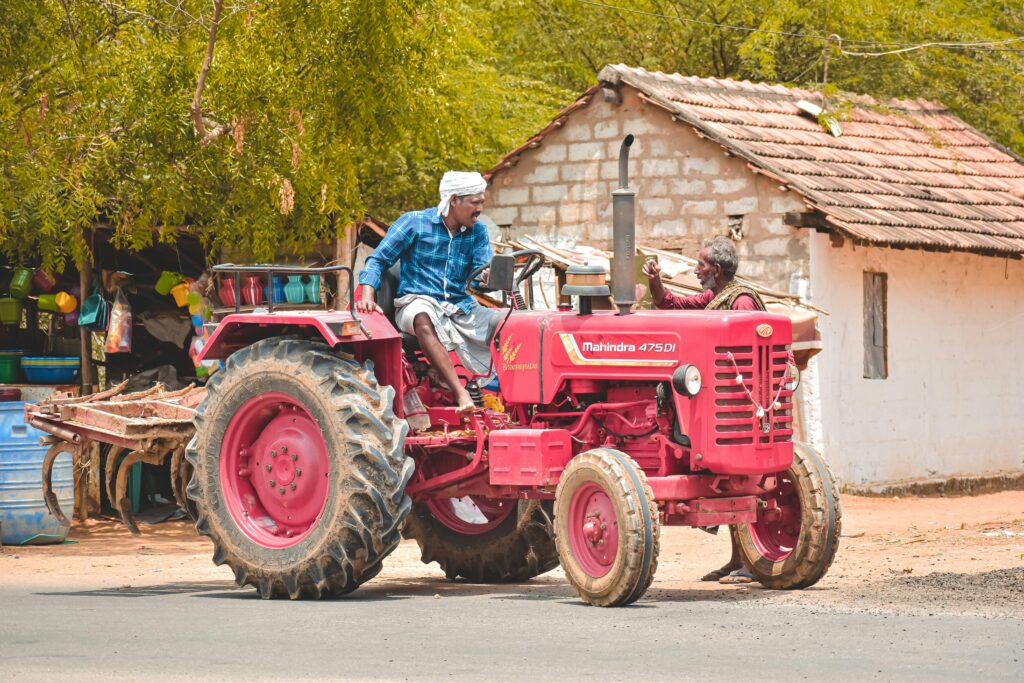
Why Working Capital Matters Across the Value Chain

Working capital is often seen as a trader’s concern, but in reality, it affects the entire agricultural ecosystem.

When liquidity is constrained:

  • Farmers may face delayed payments
  • Traders may limit procurement volumes
  • Processors may slow down operations
  • Market activity overall becomes less efficient

On the other hand, when working capital flows smoothly:

  • Procurement becomes more active
  • Supply chains move faster
  • Price discovery improves
  • Market participation increases

In that sense, beyond being just financial support, working capital keeps the system moving.

How Agriwise Supports Working Capital Needs

As the need for more flexible, trade-aligned financing grows, platforms like Agriwise are helping bridge some of these gaps.

Agriwise focuses on offering financial solutions that are designed around the realities of agricultural trade, rather than generic lending structures. Its key offerings include:

  • Warehouse Receipt Finance: This allows businesses to access funding against stored commodities, helping them unlock liquidity without selling immediately.
  • Invoice Bill Discounting: By converting receivables into immediate cash flow, this solution helps businesses manage working capital more efficiently.
  • Loans Against Property (LAP): These provide access to larger, structured funding for expansion, procurement, or operational needs.
  • Farmer Finance: Designed to support agricultural cycles, helping farmers manage input costs and working capital requirements.
  • Solar Finance: Enabling investment in renewable energy solutions, particularly relevant for rural and agri-linked enterprises.

What ties these solutions together is their focus on flexibility and relevance, ensuring that financing aligns more closely with how agri businesses actually operate.

Looking Ahead

Agricultural markets are becoming more connected, more data-driven, and more time-sensitive.

In this environment, access to working capital is essential.

We’re gradually moving toward a system where:

  • Finance is linked to real trade activity
  • Credit decisions are faster and more informed
  • Solutions are tailored to specific stages of the value chain

And as this shift continues, Agriwise will play an important role in making financing more accessible, structured, and aligned with the needs of the agri ecosystem.

Because in the end, every transaction in agriculture, whether it’s buying, storing, or selling, depends on access to capital.

FAQs:

  1. Why is working capital important in agricultural trade?
    Working capital helps traders and agribusinesses manage procurement, storage, and operations without delays, ensuring smooth, timely market participation.
  2. What causes working capital gaps in agriculture?
    Timing mismatches between immediate expenses and delayed payments, along with price fluctuations, often create cash flow gaps in agri trade.
  3. How is structured trade finance different from traditional loans?
    Structured trade finance is linked to actual trade activities, such as inventory or invoices, making it more flexible and aligned with business needs.
  4. What are common financing solutions used in agri trade?
    Solutions include warehouse receipt finance, invoice discounting, supply chain financing, and working capital loans tailored to commodity cycles.
  5. How does Agriwise support working capital needs?
    Agriwise offers flexible solutions such as warehouse receipt finance, invoice discounting, and trade-linked credit to ensure timely and efficient access to capital.

Disclaimer

The content published on this blog is provided solely for informational and educational purposes and is not intended as professional or legal advice. While we strive to ensure the accuracy and reliability of the information presented, Agriwise make no representations or warranties of any kind, express or implied, about the completeness, accuracy, suitability, or availability with respect to the blog content or the information, products, services, or related graphics contained in the blog for any purpose. Any reliance you place on such information is therefore strictly at your own risk. Readers are encouraged to consult qualified agricultural experts, agronomists, or relevant professionals before making any decisions based on the information provided herein. Agriwise, its authors, contributors, and affiliates shall not be held liable for any loss or damage, including without limitation, indirect or consequential loss or damage, or any loss or damage whatsoever arising from reliance on information contained in this blog. Through this blog, you may be able to link to other websites that are not under the control of Agriwise. We have no control over the nature, content, and availability of those sites and inclusion of any links does not necessarily imply a recommendation or endorsement of the views expressed within them. We reserve the right to modify, update, or remove blog content at any time without prior notice.

working capital

How Better Working Capital Can Change Your Agribusiness in 2026

January 02, 2026

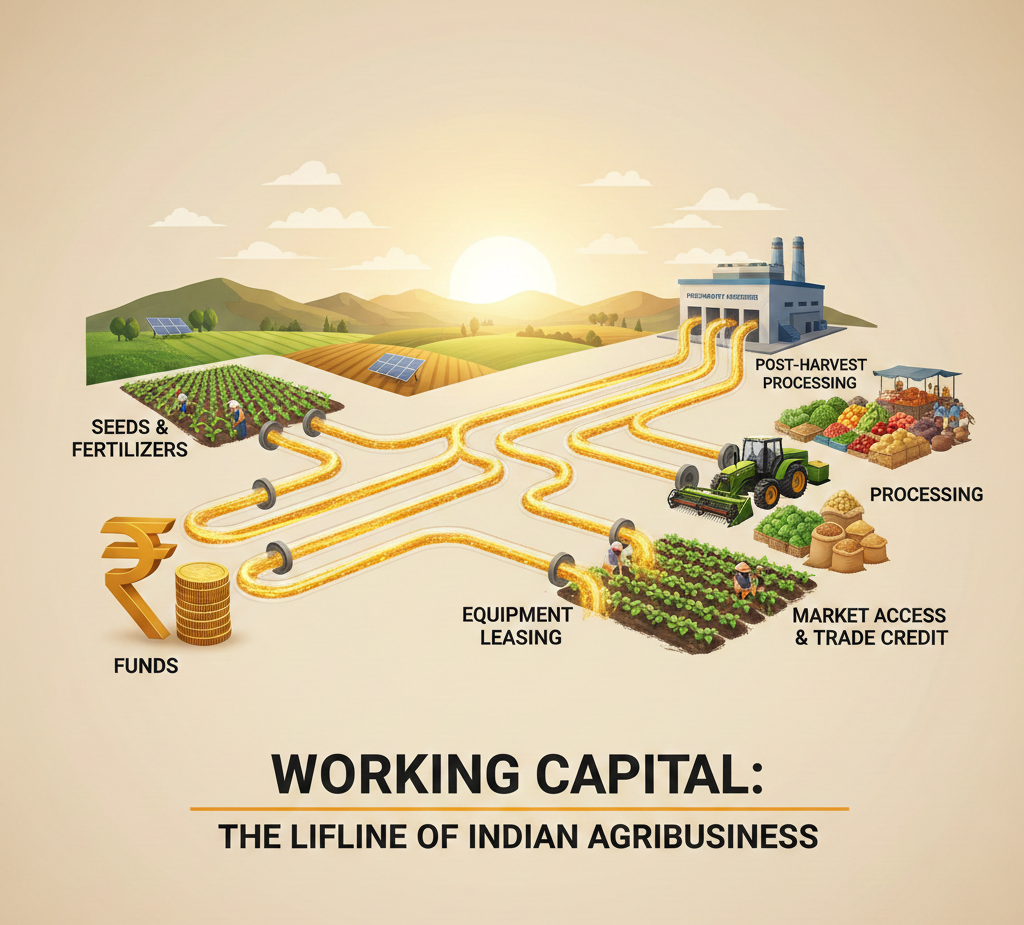
Indian agribusiness is entering a pivotal phase of financial transformation. With agricultural credit forecasted to hit a record ₹32.5 lakh crore in FY26, up from ₹28.7 lakh crore in FY25, access to credit, especially working capital, is becoming more abundant and more critical than ever before. This surge in financing is helping farmers and agri-enterprises modernise operations, invest in advanced technologies, and withstand market volatility, laying the foundation for a resilient agribusiness sector in 2026.

In this context, working capital isn’t just a financial metric but the lifeline that enables growth, innovation, and stability across agricultural value chains. From input procurement and labour costs to logistics and inventory, effective working-capital management determines how swiftly an agribusiness can respond to opportunities and challenges.

working capital loan

Importance of working capital

These are the funds available for everyday operations, which drive the engine of agribusiness. Unlike industrial sectors with predictable cash cycles, agriculture is highly seasonal. Expenses such as seeds, fertilisers, equipment hire, and workforce wages occur long before revenues from crop sales are realised. Without a smooth working capital flow, even high-potential enterprises can face delayed cash flows, squeezed profit margins, and limited growth.
For example, the Government of India’s Modified Interest Subvention Scheme (MISS) continues to support short-term loans through Kisan Credit Cards (KCCs), offering concessions explicitly aimed at working capital needs. Around 77 million KCCs are active, offering farmers access to subsidised credit at effective interest rates as low as 4 %, thereby enhancing short-term liquidity.

Despite these positive trends, credit distribution remains uneven across regions, and many agribusinesses still struggle to bridge cash flow gaps, underscoring the importance of strategic capital management.

Better working capital can transform agribusinesses in 2026

Here’s how improved access and management will reshape the sector in the year ahead:

  • Ensuring operational continuity and growth: This ensures that routine expenses, from seed purchases to harvesting logistics, are met without borrowing at high rates or disrupting production schedules. With sufficient capital, agribusinesses can plan ahead, participate in competitive markets, and negotiate bulk discounts with suppliers.
  • Fueling technology adoption and efficiency: In 2026, digital and precision farming tools are increasingly central to competitiveness. Technologies like soil sensors, drone monitoring, and automated irrigation improve yields and reduce costs. However, deploying these innovations often requires upfront investment. Adequate capital enables agribusinesses to adopt such technologies without compromising liquidity.
  • Supporting value-added and SME segments: Value-added players, from cold storage operators to food processors, face longer cash-conversion cycles due to inventory storage, grading, and quality clearance procedures. Tailored working capital solutions help these agribusiness SMEs cover operating costs and maintain production quality while navigating fluctuations in market demand.

cold storage

  • Enhancing market access and exports: India’s agri-exports are poised for expansion in 2026, backed by government initiatives and infrastructure support. Enterprises with strong working capital positions can better navigate export cycles, secure international contracts, and manage seasonal price fluctuations. Flexible capital also enables participation in futures markets, enhancing price discovery and risk management.
  • Building resilience to market and climate risks: Agriculture remains vulnerable to climatic unpredictability and price swings. Better capital provides a buffer against adverse weather events and crop failures, enabling agribusinesses to withstand shocks without compromising future productivity.

Agriwise supports working capital needs

At this juncture, Agriwise is reshaping how agribusinesses access finance. Agriwise specialises in tailored agricultural financing solutions that go beyond traditional credit products. They offer short-term working capital loans, term loans, and commodity-linked financing designed explicitly for agri-enterprises, enabling smoother cash flows and better financial planning.

Unlike generic lending options, Agriwise understands the unique cash flow cycles of the farm and allied sectors. By combining deep agricultural insights with flexible financing products, Agriwise empowers businesses to optimise working-capital utilisation, bridge seasonal gaps, and invest in growth opportunities. This kind of nuanced financing support is especially critical in 2026, as agribusinesses scale, innovate, and compete both domestically and globally.

Practical strategies for managing capital

To harness the full potential of working capital, agribusinesses should embrace a mix of financial discipline and smart tools:

  • Accurate cash-flow forecasting: Predict peaks and troughs in expenses and revenues to avoid liquidity crunches.
  • Digital lending platforms: Use fintech and agri-finance solutions that offer fast approval and tailored working-capital loans.
  • Optimised inventory management: Reduce excess stock and align purchases with market cycles.
  • Government credit programmes: Use initiatives like KCCs and interest subvention schemes to reduce borrowing costs.
  • Strong banking relationships: Maintain robust interactions with lenders to facilitate better credit access when needed.

The future of agribusiness in 2026

As India cements its position as a global agrarian powerhouse, effective working-capital management will differentiate successful agribusinesses from the rest. As financial inclusion increases and credit products become more tailored and accessible, the focus should shift from merely accessing funds to strategically managing them.

Working capital will not just support daily operations; it will fuel innovation, strengthen resilience, and unlock new markets. Agribusinesses that prioritise efficient capital practices in 2026 will be well-placed to lead India’s agricultural growth story, sustainably and profitably.

FAQs:

  • What is working capital in agribusiness, and why is it important?
    Working capital in agribusiness refers to the funds used for day-to-day operations such as buying inputs, paying labour, managing logistics, and storing produce. It is important because agriculture involves seasonal cash flows, and timely access to cash ensures uninterrupted operations and higher productivity.
  • How does better working capital improve agribusiness profitability?
    Better capital enables agribusinesses to procure quality inputs on time, reduce reliance on high-interest informal loans, and manage inventory more efficiently. This leads to improved yields, lower operational costs, and stronger margins over the production cycle.
  • What are the typical working capital challenges faced by agribusinesses?
    Agribusinesses often face delayed payments, long cash-conversion cycles, rising input costs, and seasonal income gaps. Limited access can restrict growth, delay technology adoption, and increase financial stress during critical periods.
  • How can agribusinesses improve working capital management in 2026?
    In 2026, agribusinesses can improve capital management by accurately forecasting cash flows, using digital and agri-focused financing platforms, optimising inventory levels, and leveraging government credit schemes for short-term agricultural finance.
  • How does Agriwise help agribusinesses meet their working capital needs?
    Agriwise provides customised financial solutions tailored to the agricultural sector, including short-term loans and commodity-linked financing. By understanding seasonal cycles and operational needs, Agriwise helps agribusinesses maintain liquidity, manage cash flows efficiently, and scale sustainably.

Disclaimer

The content published on this blog is provided solely for informational and educational purposes and is not intended as professional or legal advice. While we strive to ensure the accuracy and reliability of the information presented, Agriwise make no representations or warranties of any kind, express or implied, about the completeness, accuracy, suitability, or availability with respect to the blog content or the information, products, services, or related graphics contained in the blog for any purpose. Any reliance you place on such information is therefore strictly at your own risk. Readers are encouraged to consult qualified agricultural experts, agronomists, or relevant professionals before making any decisions based on the information provided herein. Agriwise, its authors, contributors, and affiliates shall not be held liable for any loss or damage, including without limitation, indirect or consequential loss or damage, or any loss or damage whatsoever arising from reliance on information contained in this blog. Through this blog, you may be able to link to other websites that are not under the control of Agriwise. We have no control over the nature, content, and availability of those sites and inclusion of any links does not necessarily imply a recommendation or endorsement of the views expressed within them. We reserve the right to modify, update, or remove blog content at any time without prior notice.