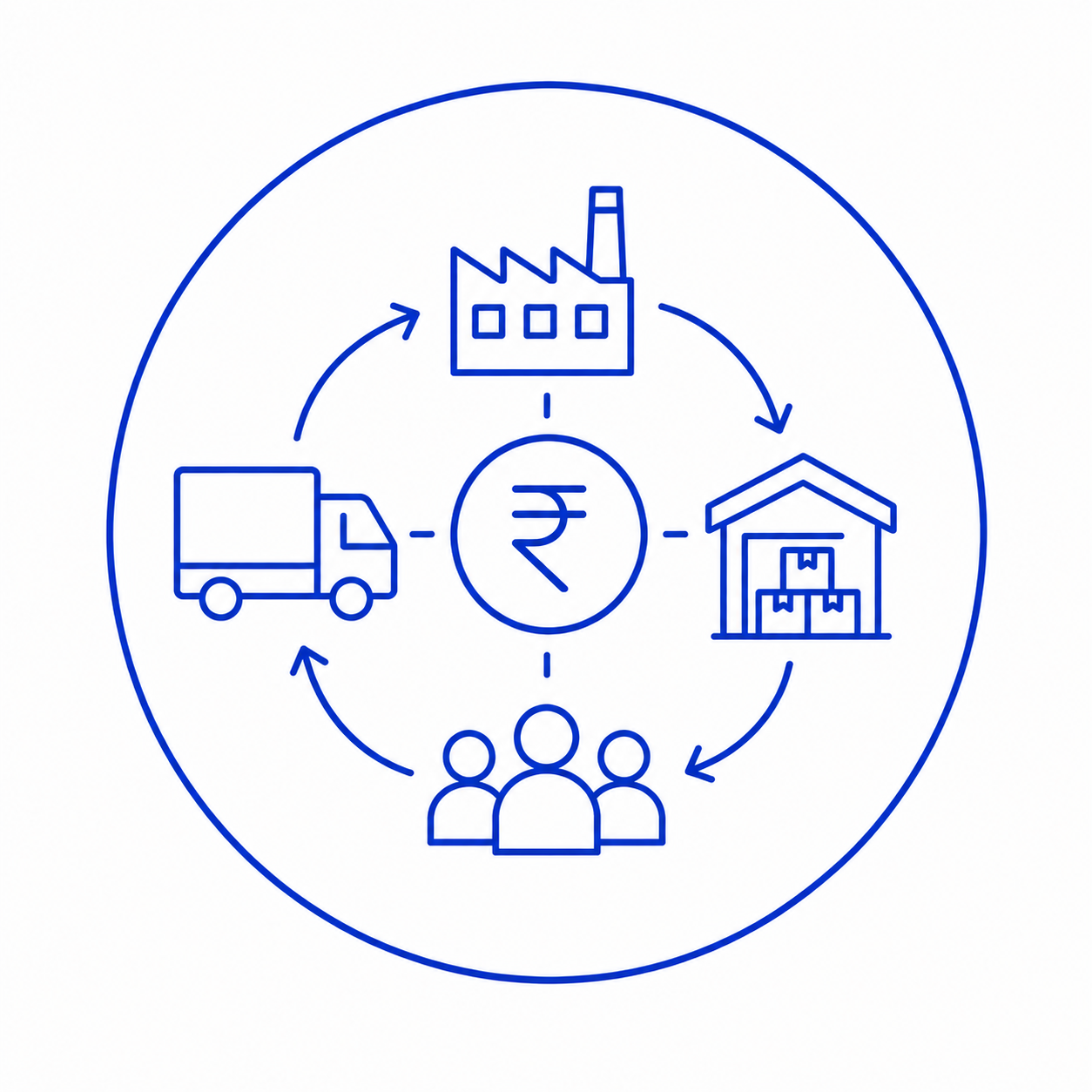



warehouse receipt financing

10 Things Every Farmer Should Know About Warehouse Receipt Finance

June 17, 2026

For many farmers, harvest season brings a familiar dilemma.

Should they sell their produce immediately to meet cash requirements, or should they wait for better market prices?

The challenge is that waiting often isn’t an option. Expenses for the next crop cycle, labour payments, household needs, and existing financial commitments create an urgent need for liquidity.

But what if farmers could access funds without selling their produce right away?

That’s exactly what warehouse receipt financing is designed to do. By storing commodities in a recognised warehouse and obtaining finance against them, farmers can meet their immediate financial needs while retaining the flexibility to sell when market conditions are more favourable.

As India’s agricultural finance ecosystem evolves, warehouse receipt financing is becoming an increasingly important tool for farmers, traders, FPOs, and agribusinesses.

Here are 10 important things every farmer should know.

1. Warehouse Receipt Finance lets you borrow without selling your produce

After harvest, farmers often need cash immediately. A warehouse receipt loan allows them to store their produce in an approved warehouse and obtain financing against its value, instead of selling at potentially lower harvest-time prices.
Simply put, your commodity continues to work for you even while it is in storage.

2. It helps avoid distress sales

One of the biggest challenges in agriculture is price fluctuation. During harvest season, increased supply often leads to lower market prices. Farmers who need immediate cash may have no choice but to sell.
Warehouse receipt financing provides liquidity while allowing farmers to wait for more favourable market conditions. This can significantly improve price realisation.

farmer financing

3. Your commodity remains safe & protected

Modern warehouses are designed to preserve commodity quality, which makes it a valuable component of post-harvest finance.Some key benefits include:

  • Protection from moisture
  • Pest management and quality control
  • Reduced spoilage and wastage
  • Inventory tracking and monitoring
  • Better preservation of market value

4. It is backed by a growing national ecosystem

India has witnessed significant growth in regulated warehousing over the past few years. The adoption of Electronic Negotiable Warehouse Receipts (e-NWRs) has increased transparency and efficiency in commodity financing.

According to industry estimates, e-NWRs have been issued against tens of millions of tonnes of agricultural commodities, highlighting the growing acceptance of this financing model across the country.

5. It can support multiple types of commodities

Warehouse receipt financing is not limited to one crop. It is commonly used for:

  • Wheat
  • Maize
  • Soybean
  • Chana
  • Mustard
  • Paddy
  • Pulses and oilseeds
  • Other storable agricultural commodities

The eligibility may vary depending on commodity type, quality standards, and storage requirements.

6. It is an important form of post-harvest finance

Many people associate agricultural finance only with crop loans. However, financing needs continue even after harvest. Post-harvest finance helps farmers:

  • Meet immediate cash requirements
  • Manage household expenses
  • Fund the next crop cycle
  • Pay labour and operational costs
  • Avoid forced sales

This makes it a critical component of modern agricultural finance.

 post harvest finance

7. Commodity finance is becoming more accessible

Traditionally, commodity-backed lending was utilised primarily by large traders and businesses. Today, improved warehousing infrastructure and digital systems have made commodity finance more accessible to farmers and farmer-producer organisations as well. This has expanded financing opportunities across the agricultural value chain.

8. Financing is based on the value of stored produce

The amount sanctioned under a warehouse receipt loan is generally linked to the value of the commodity stored. Factors that may influence financing include:

  • Commodity type
  • Market value
  • Quality assessment
  • Quantity stored
  • Warehouse eligibility

Higher-value commodities often qualify for larger financing limits.

9. It supports better financial planning

Access to timely liquidity gives farmers greater control over their financial decisions. Instead of making decisions under pressure, farmers can:

  • Choose when to sell
  • Monitor market trends
  • Plan future cultivation activities
  • Manage cash flow more effectively

In many cases, this flexibility can contribute to stronger long-term financial outcomes.

10. Choosing the right financing partner matters

Not all financing experiences are the same.

The right partner can make the process faster, more transparent, and more convenient through streamlined documentation and industry expertise. When evaluating warehouse receipt financing options, farmers should look for:

  • Transparent processes
  • Competitive financing structures
  • Strong warehousing partnerships
  • Commodity expertise
  • Reliable customer support

commodity finance

How Agriwise supports farmers through Warehouse Receipt Finance

Agriwise Finserv specialises in agricultural finance solutions designed to address the unique needs of farmers, traders, processors, and agribusinesses. Its offerings include:

  • Warehouse Receipt Finance
  • Commodity Finance
  • Farmer Financing
  • Loan Against Property (LAP)
  • Supply Chain Finance
  • Solar Finance
  • Working Capital Solutions

As part of the larger StarAgri ecosystem, Agriwise combines financial expertise with a deep understanding of agricultural supply chains, helping customers unlock value from their commodities while meeting their financing needs.

Conclusion

Agriculture does not end at harvest, and neither do financing needs.

As India’s warehousing and agricultural finance infrastructure continues to strengthen, warehouse receipt financing is emerging as a powerful tool that helps farmers access liquidity, avoid distress sales, and improve financial flexibility.

For farmers looking to maximise the value of their produce, a warehouse receipt loan can offer something that is often just as important as finance itself: the freedom to choose when to sell.

FAQs

  • What is warehouse receipt financing?
    Warehouse receipt financing is a loan facility where farmers can obtain funds against agricultural commodities stored in approved warehouses.
  • How does a warehouse receipt loan work?
    The farmer stores produce in a recognised warehouse and receives financing based on the value of the stored commodity.
  • Is warehouse receipt financing different from a crop loan?
    Yes. A crop loan supports cultivation activities, while warehouse receipt financing provides funds after harvest against stored produce.
  • What is post-harvest finance?
    Post harvest finance refers to financial support provided after harvesting to help farmers manage expenses and avoid distress sales.
  • Who can avail warehouse receipt financing?
    Farmers, FPOs, traders, processors, and agribusinesses can typically avail warehouse receipt financing, subject to eligibility criteria.

Disclaimer

The content published on this blog is provided solely for informational and educational purposes and is not intended as professional or legal advice. While we strive to ensure the accuracy and reliability of the information presented, Agriwise make no representations or warranties of any kind, express or implied, about the completeness, accuracy, suitability, or availability with respect to the blog content or the information, products, services, or related graphics contained in the blog for any purpose. Any reliance you place on such information is therefore strictly at your own risk. Readers are encouraged to consult qualified agricultural experts, agronomists, or relevant professionals before making any decisions based on the information provided herein. Agriwise, its authors, contributors, and affiliates shall not be held liable for any loss or damage, including without limitation, indirect or consequential loss or damage, or any loss or damage whatsoever arising from reliance on information contained in this blog. Through this blog, you may be able to link to other websites that are not under the control of Agriwise. We have no control over the nature, content, and availability of those sites and inclusion of any links does not necessarily imply a recommendation or endorsement of the views expressed within them. We reserve the right to modify, update, or remove blog content at any time without prior notice.