


Access to timely finance has become one of the most important drivers of growth in Indian agriculture. Whether it’s purchasing quality seeds, investing in farm machinery, expanding storage infrastructure, or managing working capital after harvest, access to the right agricultural loan can significantly improve productivity and profitability.
This growing need for agricultural finance is reflected in India’s expanding credit ecosystem. For the financial year 2025–26, the Government of India has increased the agricultural credit target to ₹27.5 lakh crore, reinforcing its commitment to improving credit access across the agricultural value chain. However, as agriculture becomes more diversified and technology-driven, financing needs are also evolving.
Today’s borrowers require solutions that extend beyond seasonal crop loans to support post-harvest management, agri-business expansion, and long-term infrastructure development.
What are agricultural loans?
Agricultural loans are financial products designed to meet the funding needs of farmers, agri-businesses, traders, and other stakeholders in agriculture. Depending on the purpose, these loans may be used for cultivation, equipment purchases, warehouse financing, business expansion, renewable energy adoption, or managing short-term cash flow.
Choosing the right loan depends on the borrower’s specific financial needs, repayment capacity, and stage within the agricultural value chain.

Types of agricultural loans in India
- Crop Loans: Crop loans are among the most widely used agricultural loans in India. They help farmers finance seasonal cultivation expenses such as seeds, fertilisers, pesticides, irrigation, labour, and harvesting. These loans are typically repaid after the crop is harvested and sold, making them suitable for meeting short-term production expenses.
- Farm Equipment Loans: Mechanisation has become essential for improving productivity and reducing labour dependency. Farm equipment loans help finance tractors, harvesters, irrigation systems, power tillers, drones, and other agricultural machinery. These loans enable farmers to modernise operations without making large upfront investments.
- Warehouse Receipt Finance: Farmers and commodity owners often face pressure to sell immediately after harvest when market prices are relatively low. Warehouse Receipt Finance allows them to pledge their stored commodities as collateral and access working capital without selling their produce. This helps improve liquidity while allowing borrowers to wait for more favourable market prices before selling.
- Invoice Bill Discounting: Delayed payments can disrupt the working capital cycle for agri-businesses, traders, processors, and suppliers. Invoice Bill Discounting enables businesses to receive immediate funds against outstanding invoices instead of waiting for customer payments. This improves cash flow and supports uninterrupted business operations.
- Loan Against Property (LAP): For businesses planning expansion or requiring larger amounts of capital, Loan Against Property provides financing by leveraging owned residential, commercial, or industrial property as collateral. The funds can be used for business growth, infrastructure development, equipment purchases, or other long-term financial requirements.
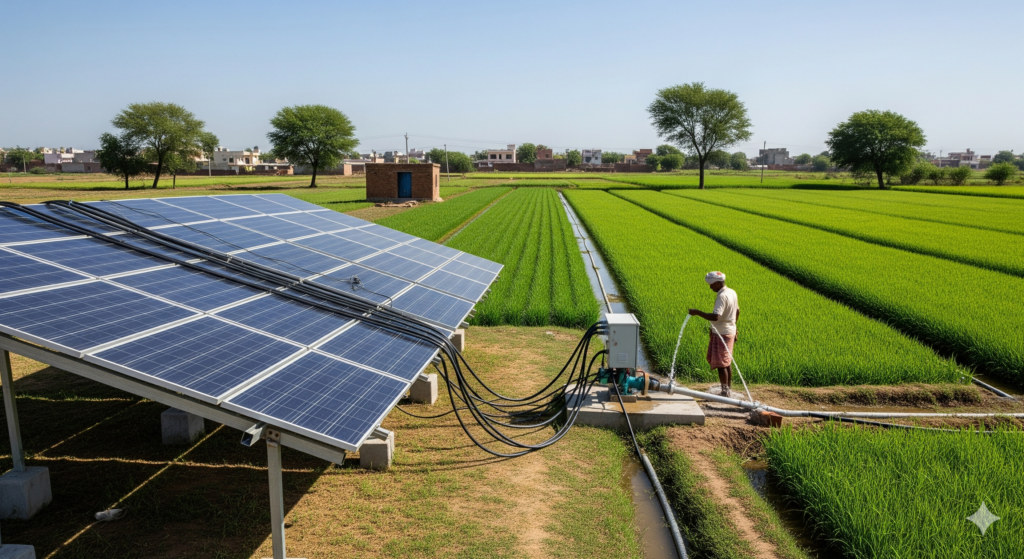
- Solar Finance: Renewable energy is becoming an increasingly important part of modern agriculture. Solar Finance helps farmers and businesses invest in solar pumps, rooftop solar systems, and other clean energy solutions that reduce electricity costs and improve long-term sustainability.
Why agricultural finance is evolving
Agriculture today extends far beyond cultivation. Farmers are adopting precision farming technologies, traders require faster working capital, processors need reliable supply chains, and businesses are investing in modern storage and logistics infrastructure.
As a result, financial institutions are increasingly offering specialised lending products tailored to different stages of the agricultural value chain rather than relying solely on conventional crop loans.
Digital documentation, faster credit assessments, alternative data sources, and technology-driven underwriting are also making agricultural finance more accessible and efficient.
Choosing the right agricultural loan
Before applying for an agricultural loan, borrowers should evaluate several factors:
- Clearly define the purpose of the loan.
- Estimate repayment capacity based on expected income.
- Compare interest rates and repayment tenures.
- Understand collateral requirements.
- Choose lenders that offer specialised agricultural financing.
- Ensure the loan aligns with long-term business or farming goals.
Selecting the right financial product not only improves access to capital but also supports sustainable financial planning.
How Agriwise supports agricultural financing
As agriculture becomes more integrated and technology-driven, financing needs vary across different participants in the value chain. Agriwise addresses these diverse requirements through specialised financial solutions designed for farmers, agri-businesses, traders, and commodity owners.
Its portfolio includes Farmer Finance for cultivation and farm-related needs, Warehouse Receipt Finance that enables borrowers to unlock working capital against stored agricultural commodities, and Invoice Bill Discounting, which helps businesses improve cash flow by converting receivables into immediate liquidity.
For long-term growth, Agriwise also offers Loan Against Property (LAP) to support business expansion and Solar Finance for investments in clean energy infrastructure. By combining sector expertise with technology-enabled credit assessment, Agriwise delivers financing solutions that are aligned with the evolving needs of India’s agricultural ecosystem.

Conclusion
Agricultural finance has evolved into a comprehensive ecosystem that supports every stage of the agricultural value chain, from cultivation and mechanisation to storage, trading, processing, and business expansion. As farming becomes increasingly commercial and technology-driven, choosing the right financing solution has become just as important as choosing the right crop or market.
Whether it’s managing seasonal expenses, improving cash flow, or investing in long-term growth, specialised agricultural loans empower farmers and agri-businesses to make informed financial decisions. With flexible financing options tailored to different requirements, institutions like Agriwise are helping strengthen the financial foundation of India’s rapidly evolving agricultural sector.
FAQs
- What are the different types of agricultural loans available in India?
Agricultural loans include crop loans, farm equipment loans, warehouse receipt finance, invoice discounting, loans against property (LAP), livestock loans, horticultural loans, and solar finance. Each is designed to meet different financial needs across the agricultural value chain. - Who can apply for agricultural loans?
Agricultural loans are available to farmers, Farmer Producer Organisations (FPOs), agri-businesses, commodity traders, processors, warehouse operators, and other stakeholders involved in agriculture, subject to the lender’s eligibility criteria. - What is Warehouse Receipt Finance?
Warehouse Receipt Finance allows farmers and commodity owners to obtain loans against agricultural produce stored in accredited warehouses. This enables them to access working capital while waiting for favourable market prices. - How does Invoice Bill Discounting benefit agri-businesses?
Invoice Bill Discounting helps businesses improve cash flow by providing immediate funds against unpaid invoices, reducing the waiting period for customer payments and supporting uninterrupted operations. - How does Agriwise support agricultural financing?
Agriwise offers specialised financial solutions including Farmer Finance, Warehouse Receipt Finance, Invoice Bill Discounting, Loan Against Property (LAP), and Solar Finance, helping farmers and agri-businesses access timely capital for growth, operations, and long-term investments.