

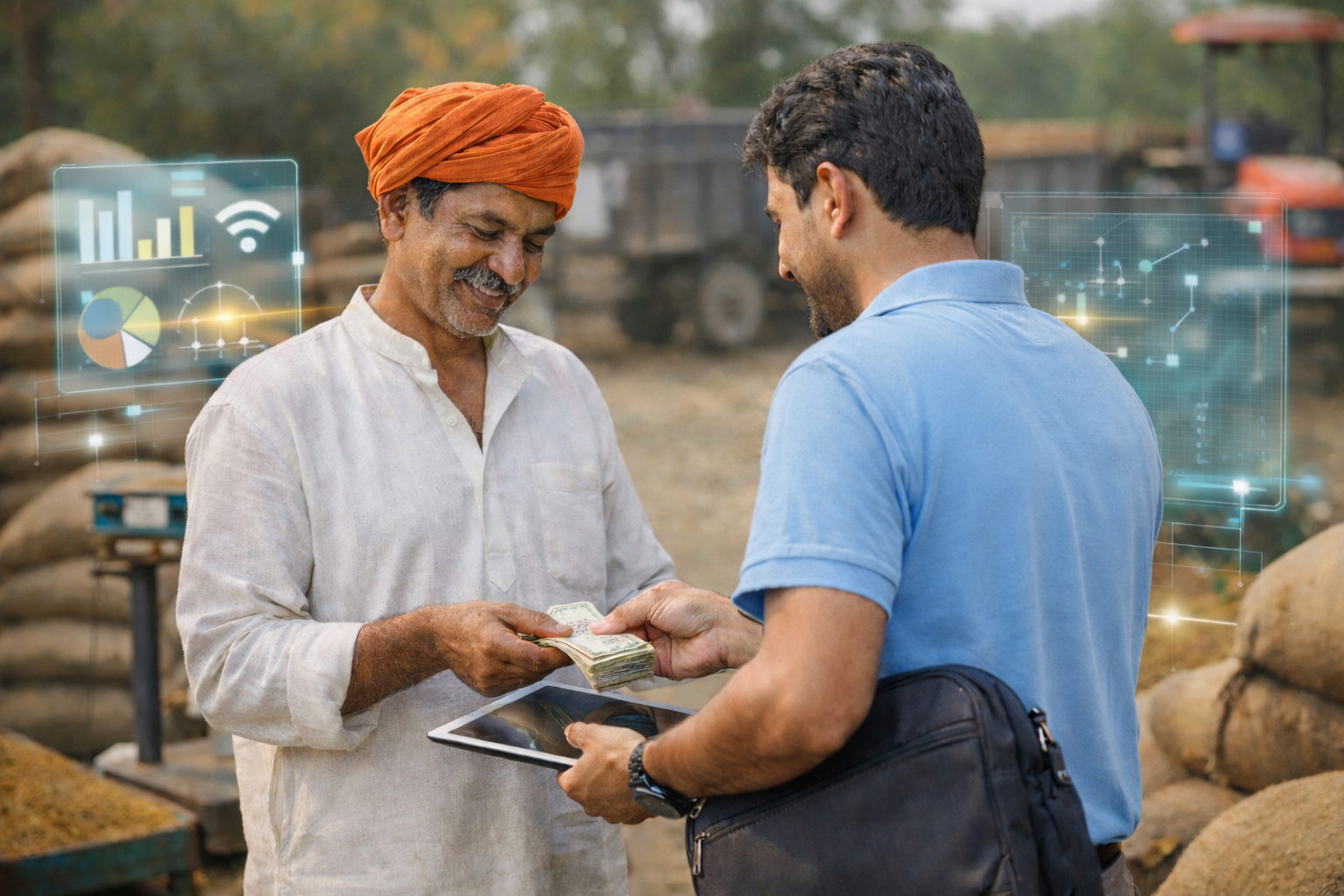
Imagine if farmers didn’t have to search for loans. What if credit simply appeared, right when they needed it most? That’s exactly what embedded finance in agriculture is beginning to do.
Traditionally, agricultural credit has been slow, paperwork-heavy, and disconnected from real transactions. But agriculture doesn’t work in isolation. Every stage, from buying inputs to storing produce to selling in markets, requires capital.
Embedded finance flips the model. Instead of separate loan processes, credit becomes part of the transaction itself.
Why agriculture needs this change
Liquidity constraints are among the biggest reasons for post-harvest losses and distress selling, leading to rushed decisions and lost value. Farmers often lack the capital to:
- Store produce
- Transport to better markets
- Wait for favourable prices
The opportunity is massive
India’s agri ecosystem is ripe for transformation:
- Post-harvest inefficiencies alone lead to losses worth ₹1.5 lakh crore annually
- Supply chain gaps continue to limit income realisation
Embedded finance directly addresses these gaps by linking credit with real activity.

How embedded finance works in agriculture
Think of it as contextual credit. Instead of applying for a loan, credit is triggered when:
- A farmer stores produce in a warehouse
- A trader raises an invoice
- A buyer confirms a purchase order
This includes:
- Warehouse Receipt Finance
- Invoice Discounting
- Input Financing
The key difference? Credit becomes data-backed and purpose-driven.
The Role of Technology
Technology makes embedded finance possible. With digital platforms:
- Transactions are recorded in real time
- Creditworthiness is assessed using data
- Loan approvals become faster and more accurate
AI and analytics are increasingly used to:
- Predict repayment capacity
- Assess risk based on crop, region, and price trends
- Enable smarter underwriting
This reduces risk for lenders and expands access for borrowers.
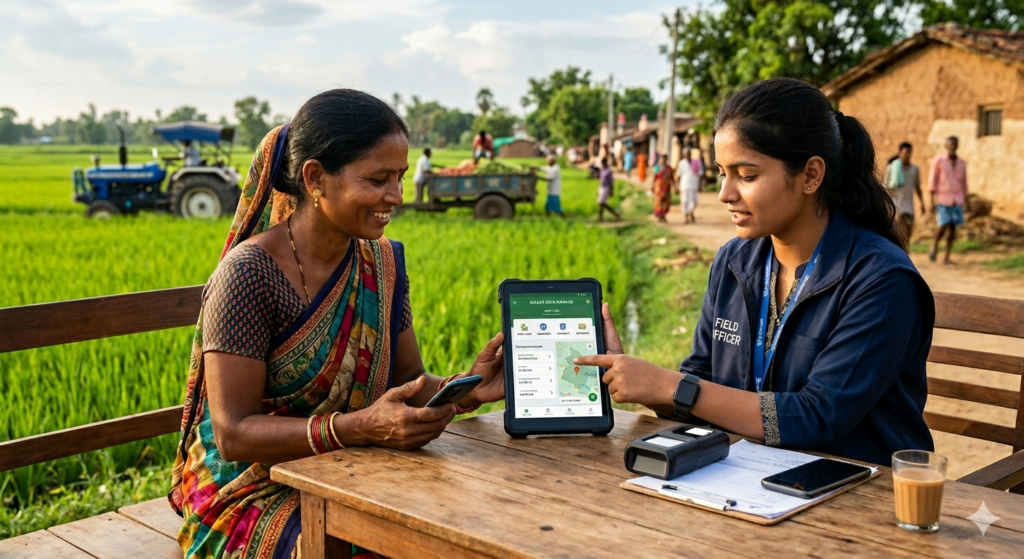
What is Agriwise’s role
As a specialised agri-finance platform, Agriwise offers:
- Warehouse Receipt Finance
- Invoice Bill Discounting
- Loans Against Property
- Farmer Financing
- Solar Finance
By aligning credit with real agricultural activities, Agriwise enables:
- Faster access to working capital
- Reduced dependency on informal lending
- Improved liquidity across the agri value chain
And all this in turn enables smarter financial decisions at the right moment.
Conclusion
Embedded finance is doing something powerful. It’s turning credit from a barrier into an enabler. When capital flows seamlessly:
- Farmers can hold and sell at better prices
- Traders can scale operations
- Supply chains become more efficient
And agriculture becomes productive, scalable and profitable!
FAQs
- How is embedded finance different from traditional agricultural loans?
Unlike traditional loans that require separate applications and approvals, embedded finance provides credit instantly at the point of need, based on transaction data and context. - What are the benefits of embedded finance for farmers?
It enables quicker access to funds, reduces paperwork, and ensures that farmers have capital exactly when needed, whether for inputs, storage, or selling produce. - What types of financial products are included in embedded agri finance?
Common products include warehouse receipt finance, invoice discounting, input financing, and short-term working capital loans linked to transactions. - How does technology enable embedded finance in agriculture?
Digital platforms track transactions and use data analytics or AI to assess creditworthiness, automate approvals, and reduce lending risks. - Can embedded finance improve agricultural profitability?
Yes, ensuring timely access to credit allows farmers and traders to make better decisions, avoid distress sales, and optimise their returns.
Disclaimer
The content published on this blog is provided solely for informational and educational purposes and is not intended as professional or legal advice. While we strive to ensure the accuracy and reliability of the information presented, Agriwise make no representations or warranties of any kind, express or implied, about the completeness, accuracy, suitability, or availability with respect to the blog content or the information, products, services, or related graphics contained in the blog for any purpose. Any reliance you place on such information is therefore strictly at your own risk. Readers are encouraged to consult qualified agricultural experts, agronomists, or relevant professionals before making any decisions based on the information provided herein. Agriwise, its authors, contributors, and affiliates shall not be held liable for any loss or damage, including without limitation, indirect or consequential loss or damage, or any loss or damage whatsoever arising from reliance on information contained in this blog. Through this blog, you may be able to link to other websites that are not under the control of Agriwise. We have no control over the nature, content, and availability of those sites and inclusion of any links does not necessarily imply a recommendation or endorsement of the views expressed within them. We reserve the right to modify, update, or remove blog content at any time without prior notice.